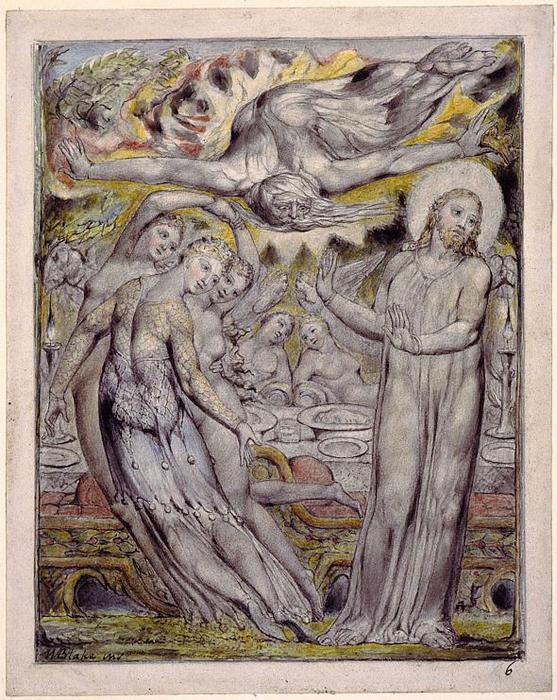
A Visionary’s Embrace: Exploring William Blake's “Christ Refusing the Banquet Offered by Satan”
William Blake remains an artist whose work defies easy categorization, stubbornly clinging to the edges of Romanticism while simultaneously anticipating modernist sensibilities. His singular vision—a blend of prophetic imagination and meticulous craftsmanship—found its most potent expression in paintings like “Christ Refusing the Banquet Offered by Satan,” completed in 1820, a piece that continues to resonate with audiences today. This monumental illustration, originally conceived for John Milton’s “Paradise Lost,” transcends mere retelling of biblical narrative; it becomes an intensely personal meditation on faith, temptation, and divine grace.
- Subject Matter & Narrative: Blake's depiction centers around Jesus Christ rejecting Satan’s invitation to partake in a feast—a symbolic rejection of worldly pleasures and desires that represent the antithesis of spiritual purity. The scene unfolds within a richly detailed landscape reminiscent of Milton’s Eden, establishing a palpable connection to the epic poem’s foundational myth.
- Style & Symbolism: Blake's style is unmistakably Symbolist, prioritizing evocative imagery and psychological depth over realistic representation. Satan appears as a shadowy figure dominating the left side of the canvas, embodying evil and deceit—a deliberate contrast with Christ’s radiant presence on the right. The inclusion of angels and figures representing humanity underscores the multifaceted nature of human experience within God's plan.
- Technique: Blake employed etching and aquatint techniques to achieve remarkable tonal gradations and textural nuances, mirroring the luminous qualities of Milton’s verse. These painstaking processes allowed him to capture not only the visual appearance but also the emotional atmosphere of the biblical tale—a testament to his unwavering commitment to artistic excellence.
- Historical Context: Created during Blake's final years, “Christ Refusing the Banquet Offered by Satan” reflects a profound engagement with theological debates surrounding predestination and free will. It aligns seamlessly with the broader Romantic preoccupation with spirituality and moral responsibility—a reaction against the mechanistic worldview championed by Enlightenment thinkers.
- Emotional Impact: The painting’s enduring power lies in its ability to evoke feelings of awe, contemplation, and spiritual yearning. Blake's masterful use of color and composition compels viewers to confront fundamental questions about human existence and divine providence—a challenge that continues to inspire artistic interpretation and scholarly debate.
Concluding Remarks: “Christ Refusing the Banquet Offered by Satan” stands as a cornerstone of Blake’s oeuvre, embodying his unwavering belief in the transformative potential of art. Its meticulous execution coupled with its profound symbolic resonance ensures that this masterpiece will endure as an emblem of Romantic idealism and a beacon of artistic innovation for generations to come. A reproduction of this iconic image offers not merely aesthetic pleasure but also access to a timeless exploration of faith and human consciousness—a gift worthy of any discerning collector or interior designer seeking inspiration from the heights of artistic achievement.