A Moment of Hesitation Before Descent: Exploring William Blake’s Dante About To Enter Into The Flames
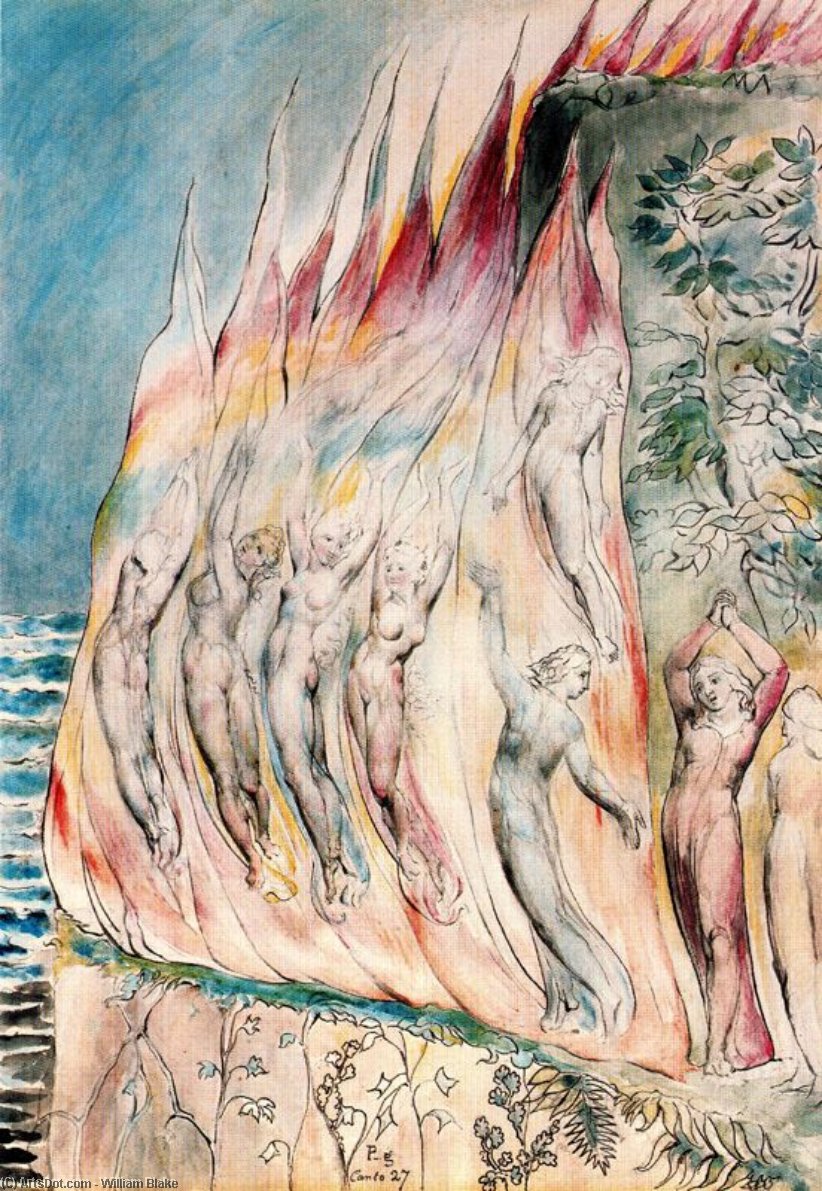
William Blake's "Dante About To Enter Into The Flames," painted sometime around 1820-1822, stands as a haunting testament to the Romantic spirit—a preoccupation with visionary experience and an unflinching confrontation with existential anxieties. This striking depiction captures a pivotal moment from Dante Alighieri’s Inferno, transforming the literary narrative into a powerfully symbolic visual representation of spiritual struggle and impending transformation.
- Subject Matter: The painting portrays Dante Gabriel Rossetti's interpretation of Dante Alighieri's Inferno, specifically the scene where Dante prepares to descend into Hell alongside Virgil. Blake meticulously captures the dramatic tension inherent in this moment—Dante poised on the precipice of confronting unimaginable horrors.
- Style and Technique: Blake’s signature style is characterized by its ethereal beauty combined with unsettling psychological depth. Employing watercolor and gouache on paper, he achieves a luminous quality that contrasts sharply with the dark hues of Hell itself. The delicate washes of color create an atmosphere of melancholy contemplation, emphasizing Dante's inner turmoil.
The painting’s historical context is inextricably linked to the burgeoning Romantic movement in England. Blake was deeply influenced by German Idealism and mystical traditions—philosophies that championed intuition over reason and sought transcendence beyond empirical observation. This intellectual fervor fueled his artistic endeavors, propelling him to explore themes of morality, mythology, and the subconscious mind.
- Symbolism: Blake’s masterful use of symbolism elevates “Dante About To Enter Into The Flames” far beyond a mere illustration. Virgil represents reason and guidance—a counterbalance to Dante's apprehension. The cliff edge symbolizes the threshold between life and death, innocence and corruption; Dante’s gaze outward embodies a yearning for understanding and acceptance of fate.
- Emotional Impact: Viewing this artwork evokes feelings of unease mingled with fascination. Blake skillfully conveys Dante’s psychological state—a blend of fear and determination—capturing the essence of human vulnerability confronted by overwhelming forces. The painting compels us to contemplate our own mortality and the importance of confronting inner demons.
Blake's Innovative Approach to Printmaking and Watercolor
Blake’s artistic vision extended beyond traditional painting; he revolutionized printmaking techniques, pioneering a method known as “aquatint.” This process involved etching a plate with acid lines and then applying a resin varnish that selectively protected certain areas from the etching fluid. Subsequent washes of ink revealed intricate tonal gradations—a technique Blake perfected to achieve unparalleled expressive power. He skillfully combined aquatint with watercolor, layering translucent pigments over the etched surface to create textures and hues that defied conventional artistic conventions.
- Interior Design Considerations: For those seeking inspiration in their homes, “Dante About To Enter Into The Flames” offers a captivating visual dialogue. Its muted palette—dominated by blues, greens, and browns—harmonizes beautifully with calming interior spaces. Consider framing it in a dark wood frame to accentuate its dramatic contrasts and imbue your room with an aura of contemplative grandeur.
Ultimately, Blake’s “Dante About To Enter Into The Flames” remains a profoundly evocative masterpiece—a testament to the enduring power of imagination and the artist's ability to translate complex philosophical ideas into emotionally resonant visual imagery. Its haunting beauty continues to inspire viewers today, prompting reflection on themes of spiritual journey and the confrontation with darkness.