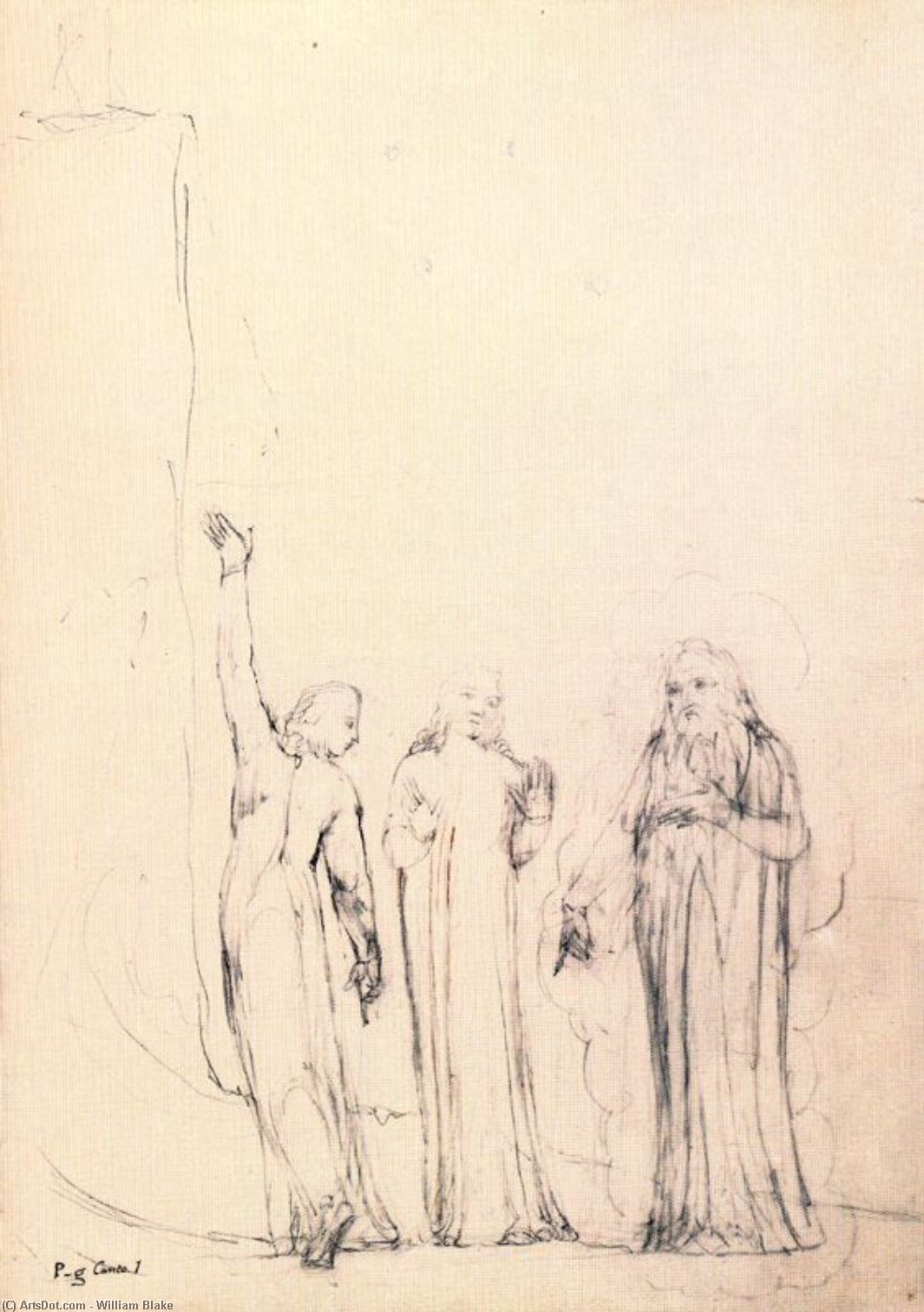
Blake's Dante, Virgil and Cato depicts three figures – Dante, Virgil, and Cato – confronting a wall symbolizing the challenges of spiritual enlightenment. The stark black and white print showcases Blake’s masterful engraving technique and reflects the Romantic preoccupation with mythic narratives and visionary art.
William Blake’s Dante, Virgil and Cato: A Journey Through Hell, Purgatory and Paradise
Blake's "Dante, Virgil and Cato" isn't merely an illustration; it’s a distillation of Dante Alighieri’s epic poem into a powerfully symbolic visual experience. Created in 1807-8, during Blake’s intensely productive period—a time when he wrestled with profound spiritual anxieties—the painting embodies the Romantic preoccupation with confronting darkness and striving for enlightenment. It's housed in Tate Britain, where visitors can marvel at its intricate detail and contemplate its enduring resonance.
- Subject Matter: The artwork depicts Dante Alighieri (dressed as a Roman), Virgil (representing classical wisdom), and Cato Uticus (symbolizing Stoic virtue) traversing the three realms of Hell, Purgatory, and Paradise—a direct adaptation of Dante’s Divine Comedy.
- Style: Blake's style is unmistakably visionary Romantic. Characterized by bold lines, flattened perspective, and a dreamlike atmosphere, it rejects academic conventions in favor of conveying emotional intensity and spiritual truth.
Blake employed a meticulous engraving technique—a process he perfected during his apprenticeship—to achieve remarkable precision while maintaining the expressive qualities demanded by his artistic vision. The etching plate was painstakingly prepared, utilizing aquatint to create tonal gradations that illuminate the textures of the figures’ robes and the starkness of the walls. Subsequent printing involved multiple passes through the press, layering ink to build up rich colors and deepen shadows—a testament to Blake's mastery of printmaking.
- Technique: Blake utilized aquatint etching combined with mezzotint shading to produce a stunning tonal range. This technique allowed him to capture both the luminous glow of Paradise and the oppressive darkness of Hell with equal conviction.
- Symbolism: Each figure represents a distinct philosophical ideal. Dante embodies faith, Virgil symbolizes reason, and Cato embodies moral fortitude—a deliberate juxtaposition designed to explore the complexities of human experience and the pursuit of spiritual perfection.
The painting’s emotional impact is palpable. The figures stand poised on the precipice of Paradise, bathed in ethereal light, yet shadowed by the lingering horrors of Hell behind them. Blake's masterful composition compels viewers to confront uncomfortable truths about mortality and redemption—a challenge that continues to inspire contemplation and artistic interpretation centuries later. It serves as a poignant reminder that true wisdom lies not merely in understanding the world around us but also in confronting our own inner demons, striving for moral integrity, and embracing the transformative power of faith.
- Emotional Impact: Blake’s intention was to provoke introspection and inspire awe—to convey the sublime beauty of Paradise alongside the terrifying realities of Hell. The painting's enduring appeal stems from its ability to resonate with viewers on a deeply emotional level.
“Dante, Virgil and Cato” remains an unparalleled achievement in Romantic art—a testament to William Blake’s singular genius and his unwavering commitment to exploring the profound mysteries of human consciousness. Its intricate detail, masterful technique, and enduring symbolism continue to captivate audiences worldwide, cementing its place as a cornerstone of Western artistic heritage.