A Vision of Faith and Renewal: Exploring William Blake's Masterpiece
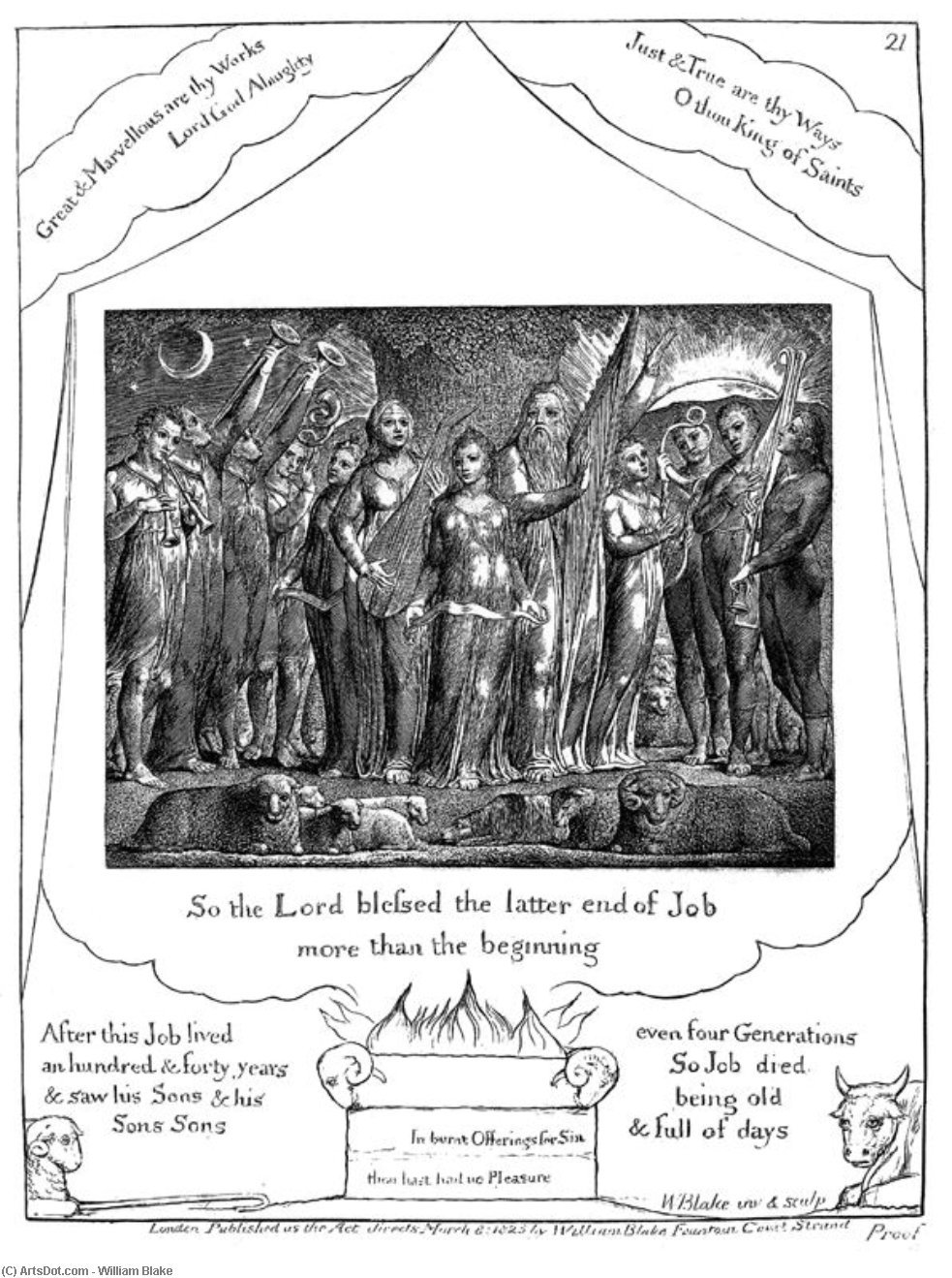
“Job and His Family Restored to Prosperity,” created in 1825 (and later reprinted in 1874), is more than just a biblical illustration; it’s a profound meditation on suffering, faith, and the enduring power of hope. William Blake, a visionary artist and poet operating at the fringes of the Romantic movement, doesn't offer a straightforward depiction of the Old Testament story. Instead, he presents a complex tapestry of figures enveloped in a landscape brimming with symbolic weight, inviting viewers to contemplate the human condition and the nature of divine grace.
The painting’s immediate impact is one of dense activity and emotional intensity. A central group, dominated by Job and his family, occupies the foreground, radiating an aura of relief and gratitude. They are not presented as triumphant figures, but rather as individuals experiencing a quiet, deeply felt joy—a testament to their ordeal having passed. Surrounding them are numerous other figures, some in repose, others engaged in various activities, creating a vibrant tableau that suggests a community reunited after hardship. Blake’s masterful use of line and shading imbues the scene with a remarkable sense of volume and texture; every garment folds realistically, every face expresses a distinct emotion.
The Language of Line: Technique and Style
Blake's technique is instantly recognizable—a meticulous approach to engraving that prioritizes intricate detail and expressive line. The image was created through etching tools on medium, slightly textured paper, resulting in a surface rich with subtle variations in tone. He employed hatching and cross-hatching extensively, creating a dynamic interplay of light and shadow that adds depth and drama to the composition. Notice how he uses fine lines to define the folds of clothing and the contours of faces, while broader strokes suggest the ruggedness of the landscape. This combination of precision and spontaneity is characteristic of Blake’s artistic style—a deliberate attempt to capture both the literal and the symbolic aspects of his subject matter.
- Engraving Technique: Blake's mastery lies in his ability to translate complex ideas into a linear medium.
- Hatching & Cross-hatching: These shading techniques create depth, texture, and emotional intensity.
- Detailed Linework: Every figure is rendered with meticulous care, emphasizing their individuality and the richness of the scene.
Symbolism and Interpretation
Beyond its narrative content, “Job and His Family Restored to Prosperity” is laden with symbolism. The landscape itself—a mix of trees and water—represents both earthly stability and spiritual renewal. The figures are not merely individuals; they embody broader themes of faith, resilience, and the cyclical nature of life. Job’s family, restored to prosperity, symbolizes the triumph of hope over despair. The numerous figures surrounding them suggest a community united in gratitude and shared experience. Blake's deliberate ambiguity invites viewers to interpret the painting through their own lens, prompting reflection on personal struggles and the search for meaning.
The painting’s roots lie firmly within the biblical story of Job, but Blake transcends simple illustration. He transforms a tale of suffering into a powerful allegory about the human spirit's capacity for endurance and faith. The inclusion of elements like the swirling clouds in the background hints at divine intervention—a subtle reminder that even in times of greatest adversity, there is always the possibility of redemption.
A Legacy of Vision: Blake’s Enduring Influence
William Blake remains one of the most enigmatic and influential figures in Western art. “Job and His Family Restored to Prosperity” stands as a testament to his unique artistic vision—a synthesis of poetry, painting, and printmaking that continues to captivate audiences today. Reproductions of this iconic work offer a window into Blake’s extraordinary imagination, inviting us to contemplate the timeless themes of faith, suffering, and the enduring power of hope. Its intricate detail and emotional depth make it a compelling addition to any collection, while its symbolic richness provides endless opportunities for interpretation and reflection.