William Blake’s Visionary Masterpiece
William Blake, a figure perpetually out of step with his time, yet destined to become one of the most celebrated artists and poets of the Romantic Age, left an indelible mark on the world of art with his profound and deeply symbolic works. One such masterpiece is
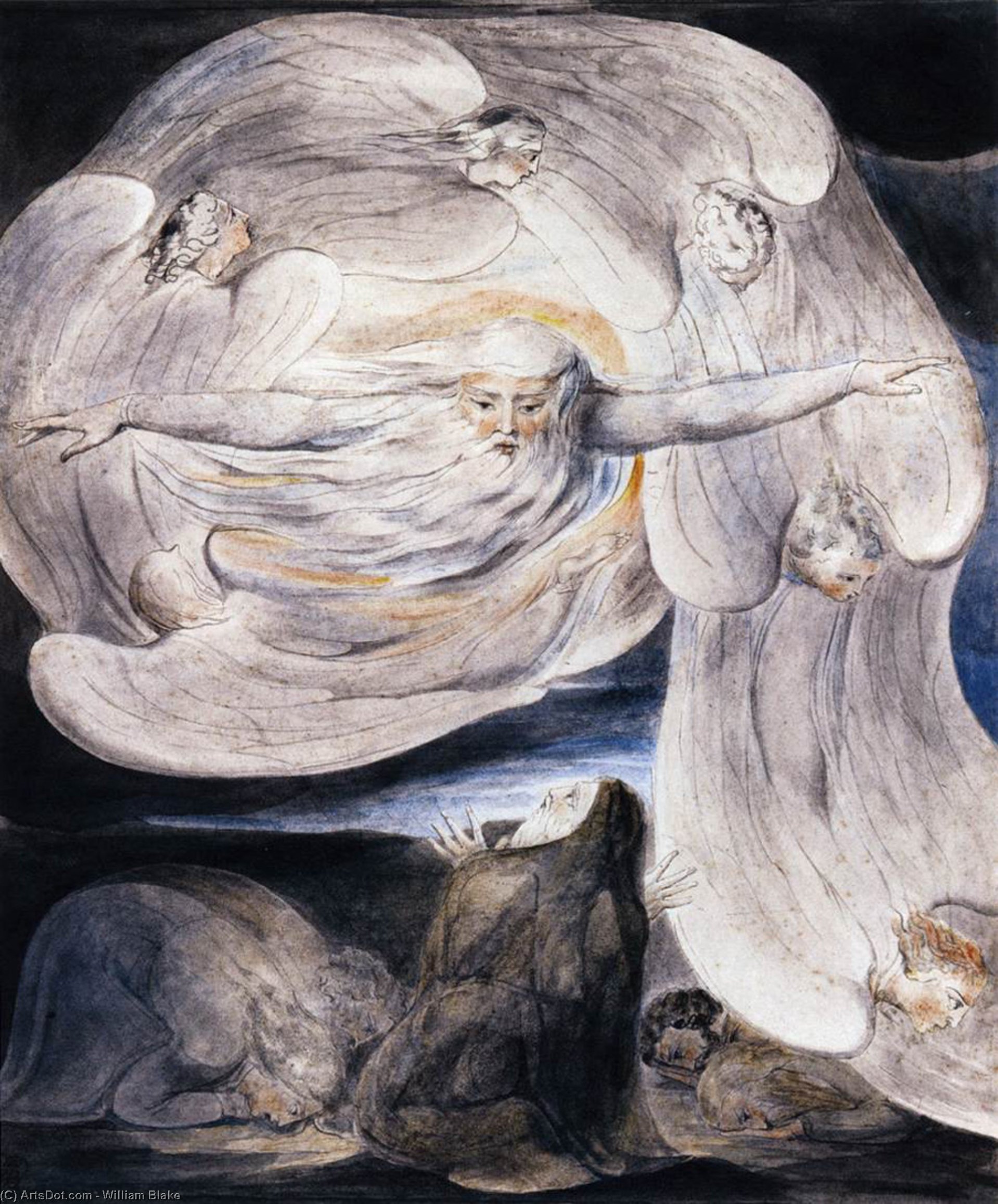
Job Confessing his Presumption to God who Answers from the Whirlwind, a painting that encapsulates the essence of his Romanticism style.
The Painting's Context
Created in 1803, this large-scale work measures 393 x 330 cm and is executed with meticulous detail using pen. It is currently housed at the
National Gallery of Scotland in Edinburgh, United Kingdom, a testament to Blake’s enduring legacy. This monumental canvas reflects the anxieties and aspirations of its era—a period grappling with industrialization, political upheaval, and shifting spiritual beliefs—and stands as a beacon of Romantic idealism amidst the burgeoning materialism of Victorian Britain.
Artistic Style and Technique
Blake's use of pen as his medium adds a layer of intricacy and depth to the painting. The Romanticism style is evident in the dramatic and emotive depiction of the scene, where Job kneels before an angelic figure with outstretched wings. The composition is rich with symbolism, reflecting Blake’s fascination with biblical narratives and their moral lessons. His technique—characterized by precise linework and subtle shading—creates a palpable sense of movement and spiritual intensity. Unlike the prevailing artistic conventions of his time, Blake eschewed academic realism in favor of imaginative representation, prioritizing emotional expression over accurate depiction. This stylistic choice underscores his belief that art should transcend mere imitation of nature to convey profound truths about human experience and divine revelation.
Symbolism and Interpretation
The painting is a visual representation of a pivotal moment in the Book of Job, where Job acknowledges his limitations and God responds from a whirlwind. This interaction symbolizes the human quest for understanding and the divine response that transcends human comprehension. Blake’s interpretation highlights the themes of humility, faith, and the mysteries of the universe. The swirling vortex represents divine power—a force beyond human grasp—while Job's posture embodies submission to God’s authority. The angel’s outstretched wings symbolize protection and guidance, offering solace to Job amidst his suffering. Ultimately, “Job Confessing his Presumption to God who Answers from the Whirlwind” serves as a meditation on faith in adversity and the acceptance of divine judgment—themes central to Blake's spiritual worldview.
Blake's Artistic Journey
William Blake was an unsung genius in his time but has since become a cornerstone of Romantic literature and art. His career spanned poetry, painting, and printmaking, showcasing his profound creative spirit. For more insights into Blake’s life and works, visit
William Blake on ArtsDot. He defied the conventions of his era, rejecting the patronage system and pursuing artistic independence—a courageous stance that cemented his reputation as a visionary artist ahead of his time. His unwavering commitment to his own unique aesthetic vision distinguishes him from many of his contemporaries, establishing him as an enduring symbol of Romantic idealism.
Other Notable Works by William Blake
- Newton by William Blake: A painting that reflects his fascination with the intersection of science and spirituality.
-
William Blake by Thomas Phillips: A portrait that captures the essence of Blake’s character.
Discovering Masterpieces at the Scottish National Gallery
The
Scottish National Gallery is a world-renowned art museum housing an impressive collection of fine and decorative arts. To explore more masterpieces, visit
Discovering the Masterpieces of Scottish National Gallery on ArtsDot.