Explore William Blake's visionary art & poetry (1757-1827). A Romantic icon known for mystical themes, illuminated printing, & works like 'The Tyger'. Discover his legacy!
A Descent into Darkness: Examining William Blake’s “Job’s Evil Dreams 2”
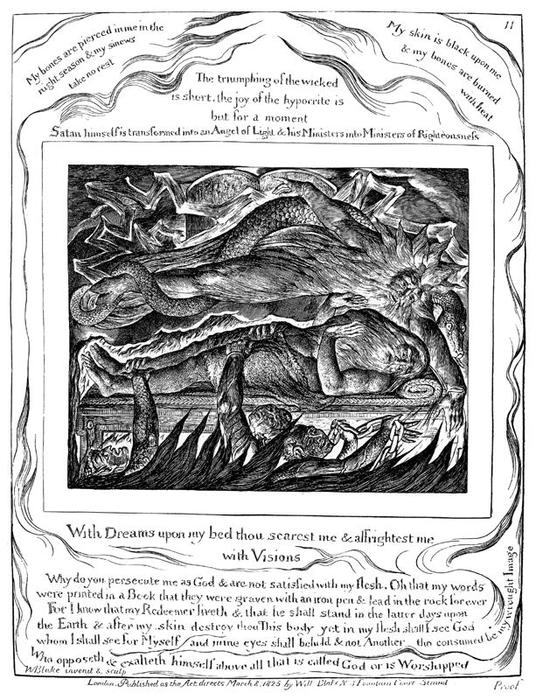
William Blake's "Job’s Evil Dreams 2," a monochrome etching meticulously crafted around 1816, stands as a chilling testament to the Romantic preoccupation with spiritual torment and visionary imagination. More than just a depiction of biblical narrative—the second installment in Blake’s monumental Book of Job series—it embodies a profound exploration of human suffering and confronts viewers with unsettling psychological depths. This artwork isn't merely observed; it’s felt, resonating with an emotional intensity that continues to captivate audiences today.
The Composition: A Cage of Fear
The image itself is strikingly simple yet powerfully evocative. Blake employs a tightly cropped rectangular frame, mirroring the claustrophobia inherent in Job’s tormented subconsciousness. At its core lies Job—a figure slumped upon a bed, rendered with painstaking detail—representing humanity grappling with existential despair. Above him dominates a demonic presence, characterized by swirling lines and sharp angles that convey palpable menace. This demon isn't presented as a monstrous caricature but rather as an embodiment of oppressive forces attempting to crush Job’s spirit. The surrounding figures are blurred and indistinct, contributing to the overall atmosphere of chaos and dread—a deliberate stylistic choice mirroring the fractured reality of nightmares.
Technique and Craftsmanship: Etching’s Silent Scream
Blake's mastery lies in his technique; he skillfully utilized etching – a process involving transferring an image onto metal plate using acid – allowing for exceptional precision and tonal control. The intricate hatching and crosshatching patterns adorning the composition aren’t merely decorative; they are integral to conveying texture and depth, simulating the unsettling surface of Job's dreamscape. Careful consideration was given to lighting—a diffused glow emanating from an unseen source—which casts dramatic shadows that heighten the emotional impact of the scene. The plate itself would have been painstakingly prepared by skilled craftsmen, ensuring a flawless impression on paper using ink. This meticulous process underscores Blake’s commitment to capturing not just visual likeness but also psychological truth.
Symbolism: Biblical Angst and Spiritual Struggle
“Job’s Evil Dreams 2” operates on multiple symbolic levels. The demon represents temptation and evil—forces actively attempting to undermine Job's faith and righteousness. The bed symbolizes vulnerability and helplessness, highlighting Job’s position as a victim of circumstance. Blake’s deliberate use of monochrome reinforces the bleakness of Job’s predicament, stripping away any comforting hues and focusing solely on the raw emotion of suffering. Drawing inspiration from biblical scripture, Blake delves into themes of divine justice versus human endurance—a timeless exploration of faith and despair that continues to resonate with viewers across centuries.
Emotional Resonance: A Window Into The Soul
Ultimately, “Job’s Evil Dreams 2” succeeds in conveying a visceral sense of anxiety and dread. It compels us to confront uncomfortable truths about the human condition – our susceptibility to pain, our battles against inner demons, and our unwavering belief in something greater than ourselves. Like its predecessor, this etching serves as a poignant reminder that beauty can coexist with darkness, prompting contemplation on the complexities of faith and the enduring power of artistic expression. It’s an artwork destined not merely for admiration but for genuine emotional engagement—a captivating glimpse into Blake's profound understanding of human psychology and spiritual yearning.