A Moment Frozen in Celestial Wonder
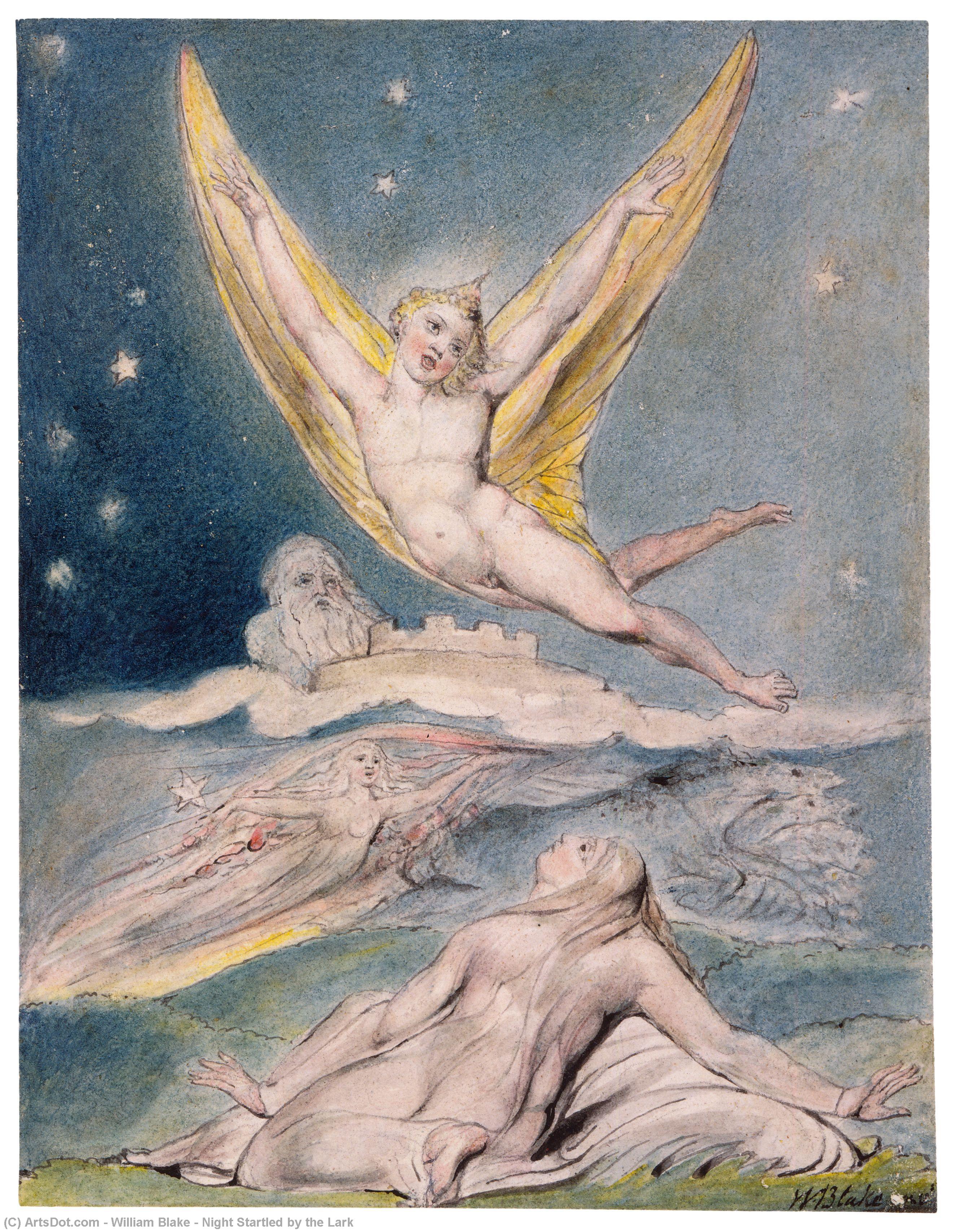
William Blake’s “Night Startled by the Lark,” painted circa 1820, is more than just a depiction of a woman; it's an embodiment of Romantic idealism distilled onto canvas. This haunting image captures a pivotal moment within Blake’s expansive mythological universe—a scene brimming with spiritual significance and rendered in a strikingly innovative technique that continues to fascinate art historians.
Subject Matter and Composition
The painting portrays a woman lying prone on the earth, her legs outstretched in an unsettling pose. Her nudity isn't merely anatomical; it represents vulnerability and exposure before divine judgment. Above her, two angels ascend into the starry expanse—one positioned to the left, radiating warmth and compassion, while the other drifts towards the right, conveying solemn contemplation. This juxtaposition of earthly fragility and celestial grace establishes a dynamic tension that underscores Blake’s preoccupation with themes of innocence lost and redemption.
Style and Technique: Blake's Revolutionary Approach
Blake’s artistic style defies easy categorization. He eschewed academic conventions, prioritizing intuition and imagination over meticulous observation. Instead of relying on traditional oil painting methods, he employed a technique known as mezzotint engraving—a process developed by Rembrandt centuries earlier but perfected by Blake himself. This method allowed for unparalleled tonal subtlety and nuanced shading effects, capturing the ethereal glow of the night sky with remarkable precision. The intricate detail achieved through mezzotint is particularly evident in the depiction of the angels’ wings and the luminous stars.
Historical Context: Romanticism's Quest for Transcendence
“Night Startled by the Lark” emerged during the height of the Romantic movement, a period characterized by an intense reaction against Enlightenment rationalism. Artists like Blake sought solace in visionary experiences and explored realms beyond empirical observation—drawing inspiration from folklore, mythology, and biblical narratives. This painting reflects the broader Romantic fascination with spirituality, morality, and the sublime beauty of nature. It speaks to a yearning for connection with something greater than oneself, mirroring the anxieties and aspirations of an era grappling with profound social and intellectual transformations.
Symbolism: Angels, Innocence, and Divine Awakening
The angels in “Night Startled by the Lark” represent divine messengers—symbols of hope and spiritual guidance. Their presence signifies a moment of awakening, jolted from slumber by the lark’s song—a sound associated with joy and renewal. The woman's nudity symbolizes vulnerability and purity, highlighting her susceptibility to divine influence. Blake deliberately employed symbolism to convey complex theological ideas, inviting viewers to contemplate questions of morality, faith, and the eternal struggle between darkness and light.