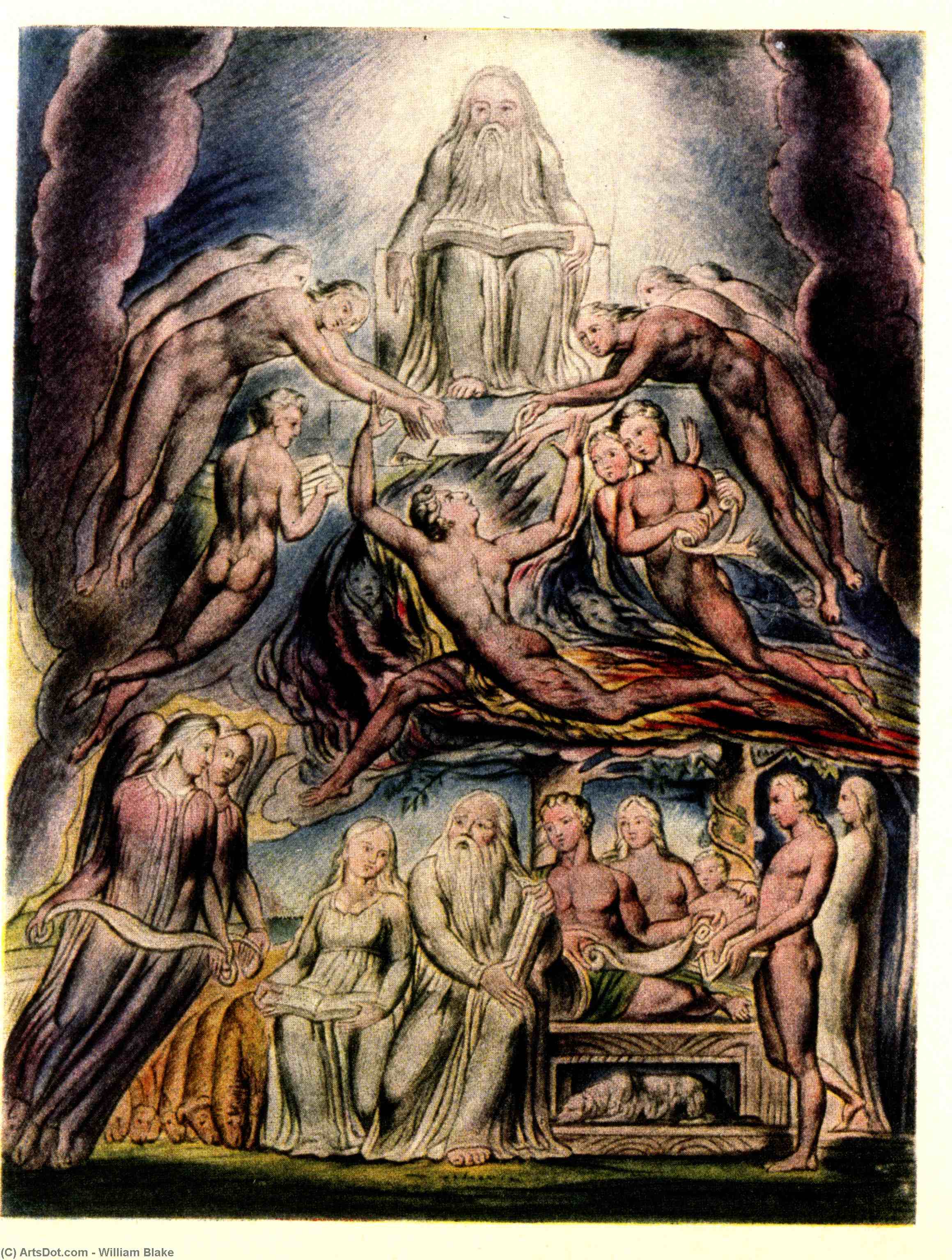
A Confrontation of Divine Justice and Human Fallibility: Examining William Blake’s “Satan Before the Throne of God”
William Blake's "Satan Before the Throne of God," created in 1825, stands as a monumental achievement in printmaking and a cornerstone of Romantic art. More than just a depiction of biblical narrative—the Fall of Adam and Eve—it’s an intensely symbolic exploration of theological conflict and the human condition itself. This engraving, now housed within the Tate Collection, offers a profound meditation on themes of righteousness versus wickedness, obedience versus defiance, and ultimately, the inescapable consequences of transgression.
- Subject Matter: The artwork portrays Satan, depicted as a towering figure dominating God’s throne—a visual representation of Lucifer's rebellion against divine authority. Alongside him are Adam and Eve, seated on a bench, symbolizing innocence corrupted by temptation.
- Style & Technique: Blake employed the masterful technique of line engraving on paper, utilizing meticulous hatching and cross-hatching to convey texture and depth. The resulting image possesses an unsettling grandeur, achieved through careful consideration of composition and tonal gradation—a hallmark of Blake’s distinctive artistic vision.
The historical context surrounding “Satan Before the Throne of God” is crucial to understanding its significance. Produced during Blake's mature period, it reflects the anxieties of a society grappling with Enlightenment rationalism alongside burgeoning spiritual fervor. Blake rejected the mechanistic worldview championed by thinkers like Voltaire and Rousseau, instead embracing visionary experiences rooted in mystical Christianity—beliefs that fueled his artistic output and solidified his reputation as an eccentric genius.
- Symbolism: Satan’s posture embodies pride and defiance against God's supreme power. The bench upon which Adam and Eve sit represents vulnerability and innocence, tragically overshadowed by the encroaching influence of evil. Furthermore, the inclusion of angels—one positioned on the left, presumably representing divine compassion—highlights the duality inherent in Blake’s theological perspective.
- Emotional Impact: “Satan Before the Throne of God” evokes a palpable sense of drama and unease. Blake's masterful use of chiaroscuro – the interplay between light and shadow – amplifies the psychological tension within the scene, compelling viewers to confront uncomfortable truths about human nature and divine judgment.
This engraving continues to resonate with audiences today due to its enduring exploration of fundamental moral dilemmas. Its powerful imagery and masterful execution serve as an inspiration for interior designers seeking to infuse spaces with artistic grandeur and intellectual depth. A high-quality reproduction allows one to appreciate the intricacies of Blake’s technique and contemplate the profound philosophical questions posed by this unforgettable masterpiece.