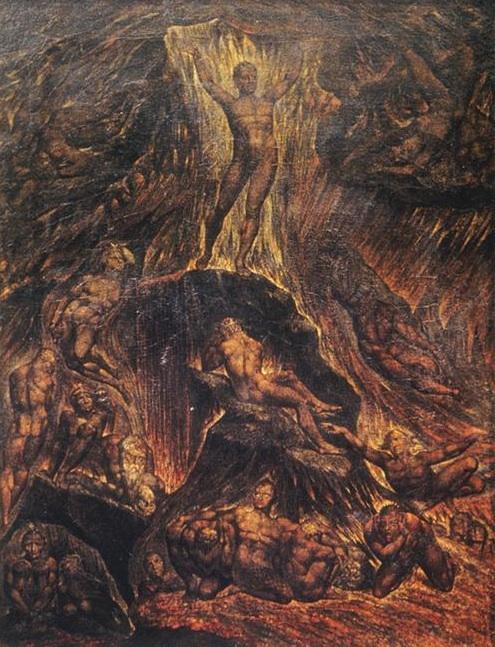
William Blake’s “The Garden of Innocence” – A Testament to Mythic Imagination
Blake's "The Garden of Innocence," completed in 1804, stands as an unparalleled achievement of Romantic art and poetry—a luminous exploration of primal innocence juxtaposed against the encroaching darkness of experience. Painted on canvas with meticulous detail, it embodies Blake’s distinctive style: a blend of fantastical imagery rooted in Hebrew mythology and Christian symbolism executed with bold color palettes and expressive brushstrokes. The painting depicts Adam and Eve in their idyllic Edenic state—a serene tableau bathed in ethereal light, reflecting Blake's belief that true beauty resides in untainted spiritual purity.
- Style: Blake’s style is characterized by its visionary grandeur and symbolic richness. He eschewed academic conventions, prioritizing emotional intensity over realistic representation. The painting exemplifies this approach through its dreamlike atmosphere and stylized figures.
- Technique: Blake employed encaustic—a technique combining beeswax, resin, and pigment—to create a surface that is remarkably durable and capable of capturing subtle tonal variations. This method lends the canvas an unparalleled luminosity and textural depth, enhancing the painting’s expressive qualities.
The historical context surrounding “The Garden of Innocence” is crucial to understanding its significance. Blake was deeply influenced by Milton's "Paradise Lost," which reimagined the biblical narrative as a cosmic drama—a confrontation between good and evil that mirrored the anxieties of Victorian England regarding moral decline and social reform. Blake’s depiction of Eden reflects this preoccupation with theological themes, portraying it not merely as a pastoral landscape but as a microcosm of divine order and spiritual contemplation.
Symbolism: The painting overflows with symbolic references—the radiant light emanating from God symbolizes divine grace, while the serpent represents temptation and deceit. Blake’s meticulous attention to detail underscores his conviction that every element within the artwork carries profound spiritual meaning.
Finally, “The Garden of Innocence” resonates powerfully with viewers on an emotional level—evoking feelings of wonder, nostalgia, and yearning for a transcendent state of being. Its luminous colors and evocative brushstrokes transport us back to a primordial realm where innocence reigns supreme, prompting reflection on the enduring quest for spiritual illumination. It remains a cornerstone of Blake’s oeuvre and a testament to his unwavering commitment to expressing the deepest recesses of human consciousness.
Blake's Encaustic Method: A Revolutionary Approach to Painting
Blake's use of encaustic was groundbreaking for its time. Unlike oil paint, which relies on solvents and can obscure tonal subtleties, encaustic preserves color vibrancy and creates a surface that is remarkably resistant to cracking and fading—a characteristic that ensures the painting’s longevity and maintains its visual impact across generations. The process involved heating beeswax mixed with resin and pigment simultaneously, resulting in an astonishingly rich and textured finish.
Blake's Influence on Romantic Art
William Blake exerted a considerable influence on subsequent Romantic artists—inspiring painters like John Everett Millais and Dante Gabriel Rossetti to embrace visionary aesthetics and explore mythological narratives. His uncompromising artistic vision challenged prevailing conventions and paved the way for a new era of creative expression.