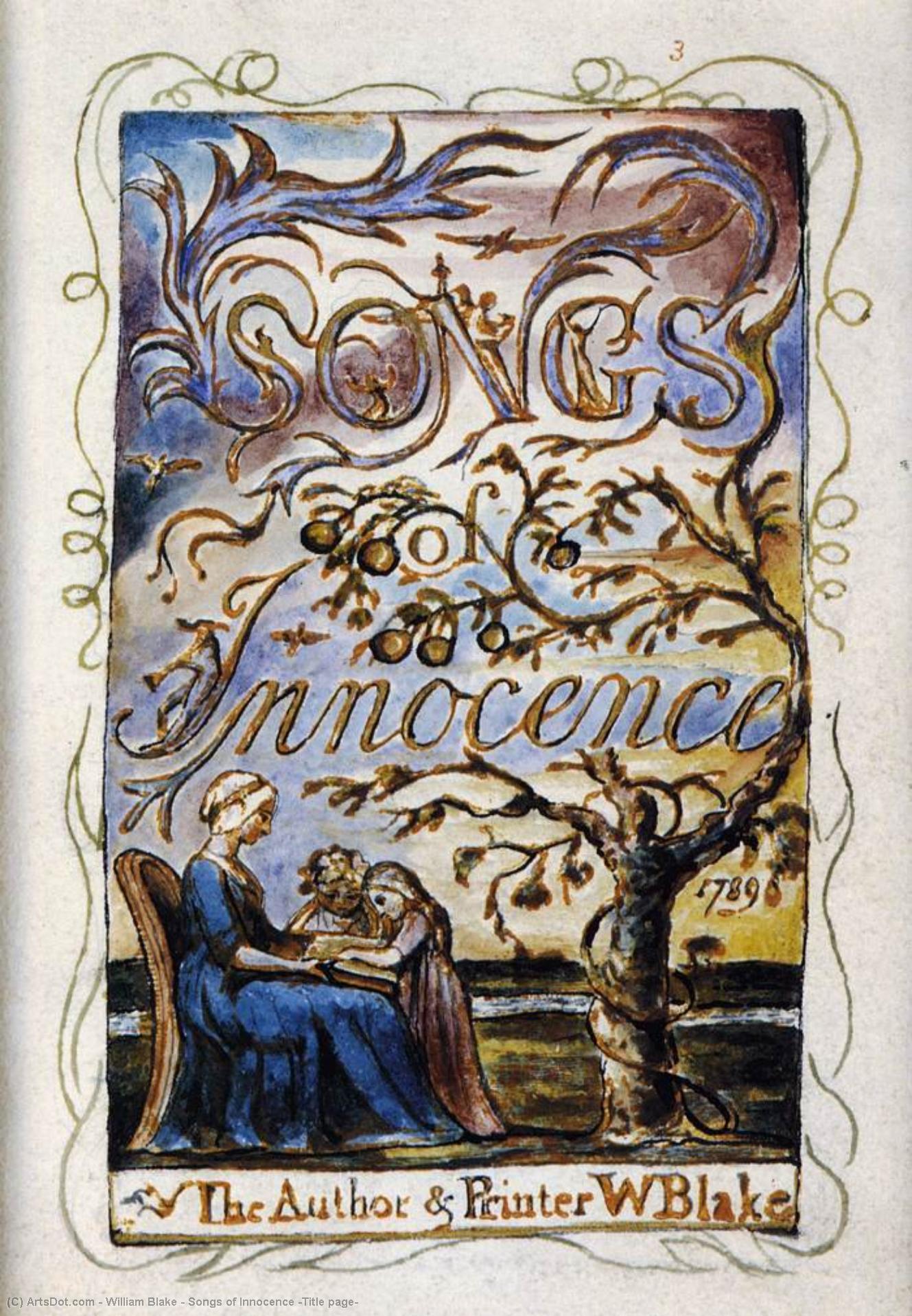
Songs of Innocence (Title page) – A Visionary Echo Through Time
William Blake’s “Songs of Innocence,” published in 1789, stands as a cornerstone of Romantic art and literature—a testament to the artist's singular ability to fuse poetic imagination with meticulous artistic execution. This striking title page image captures the essence of Blake’s aesthetic philosophy: an unwavering belief in the transformative power of dreams and visions, mirroring his conviction that “human existence itself” embodies God’s creative spirit.
The Composition & Technique – Blake's Revolutionary Printmaking
Blake didn’t merely depict a scene; he orchestrated it. The artwork showcases two women seated beneath a blossoming tree—a deliberate choice reflecting the Romantic preoccupation with pastoral tranquility and idealized beauty. Surrounding them are birds, meticulously rendered in watercolor and ink, symbolizing freedom and spiritual aspiration. Blake's groundbreaking technique involved etching copper plates by hand before applying vibrant watercolor pigments, resulting in unparalleled detail and luminosity – a method that defied convention and established him as a pioneer of illuminated printing.
Symbolism & Narrative Depth – Exploring Childhood Innocence
More than just aesthetically pleasing, “Songs of Innocence” delves into profound philosophical themes. The central figures embody innocence and contemplation, while the tree represents nurturing growth and spiritual enlightenment. Blake’s masterful storytelling utilizes visual cues to convey moral lessons—a subtle critique of societal injustices viewed through the lens of childhood vulnerability. Consider the inclusion of a man in the background; he embodies authority and perhaps represents the constraints imposed upon imagination by established institutions.
Historical Context – Romanticism's Embrace of Imagination
Blake’s work emerged during the fervent fervor of the Romantic Age, a period characterized by rebellion against Enlightenment rationalism and an ardent devotion to emotion and intuition. Influenced by thinkers like Rousseau and Coleridge, Blake sought to liberate art from academic constraints, prioritizing subjective experience over objective representation. This artistic impulse resonated deeply with audiences grappling with societal upheaval—industrialization’s rapid pace and the questioning of religious dogma—establishing “Songs of Innocence” as a seminal expression of Romantic idealism.
Emotional Resonance – A Timeless Appeal
"Songs of Innocence" continues to captivate viewers today due to its enduring emotional power. The serene depiction of women beneath the tree evokes feelings of peace and contemplation, while the birds’ flight symbolizes aspiration and transcendence. Blake's masterful use of color and texture invites us into a realm where imagination reigns supreme—a reminder that true beauty lies not merely in visual splendor but also in intellectual depth and spiritual resonance. Reproductions of this artwork offer an opportunity to bring this iconic image into your home, fostering contemplation and celebrating the enduring legacy of William Blake’s visionary genius.