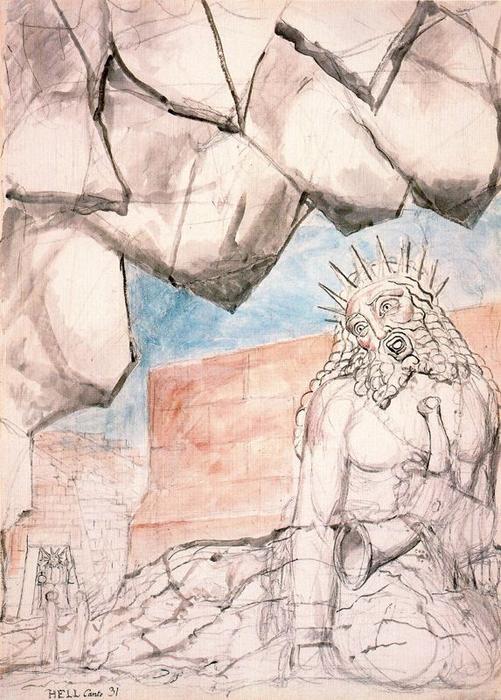
The giant Nimrod by William Blake depicts a man adorned with horns and beard, wielding a sword aloft against a rocky landscape reminiscent of the Tower of Babel myth. This visionary painting showcases Blake’s mastery of engraving and embodies Romantic ideals of imagination and spiritual exploration.
William Blake’s “The Tyger”: A Symphony of Darkness and Divine Terror
William Blake’s “The Tyger,” etched in exquisite mezzotint by Henry Corbould in 1821, stands as a monumental achievement within the Romantic canon—a testament to Blake’s unparalleled ability to distill complex philosophical ideas into arresting visual form. More than just a depiction of a fearsome feline predator, it operates on multiple levels, inviting contemplation about God’s nature and humanity's moral predicament.
- Subject Matter: The poem itself centers around the tiger—a creature embodying both beauty and terror—representing primal instinct and divine power. Blake meticulously captures this duality in the printmaking process.
- Style & Technique: Blake’s mezzotint technique is remarkable for its precision and tonal range. Corbould skillfully employed a complex layering of burrs to create incredibly detailed textures, capturing the tiger's musculature with astonishing accuracy. The resulting image possesses an unsettling luminescence—a ghostly glow that underscores the poem’s thematic concerns.
- Historical Context: Blake penned “The Tyger” during a period of intense intellectual ferment in England. The Industrial Revolution was reshaping society, fostering anxieties about progress and challenging traditional religious beliefs. Blake's work responded directly to these developments, questioning whether God is benevolent or malevolent—a debate that continues to resonate today.
Symbolism: The tiger’s fiery eyes are arguably the print’s most potent symbol—representing divine omniscience and judgment. Blake juxtaposes it with the lamb—a creature symbolizing innocence and meekness—creating a jarring contrast that encapsulates the poem's central dilemma. This deliberate pairing forces viewers to confront uncomfortable questions about morality and faith.
- Emotional Impact: “The Tyger” evokes a profound sense of unease and wonder. Its unsettling beauty compels us to grapple with existential anxieties—to consider whether God’s goodness is absolute or whether darkness resides within the divine realm. The print's luminous surface contributes to this emotional experience, mirroring the poem’s haunting atmosphere.
- Interior Design Considerations: For collectors and interior designers alike, “The Tyger” offers a captivating centerpiece—a piece that embodies Romantic grandeur and intellectual depth. Its textural richness lends itself beautifully to textured wallpaper or fabric upholstery, creating an environment imbued with symbolic resonance.
Ultimately, Blake’s “The Tyger” transcends mere representation; it is an invitation to engage in a dialogue about the fundamental mysteries of existence—a timeless masterpiece that continues to inspire awe and provoke contemplation centuries after its creation.