Explore William Blake's visionary art & poetry (1757-1827). A Romantic icon known for mystical themes, illuminated printing, & works like 'The Tyger'. Discover his legacy!
William Blake: A Visionary Ahead of His Time
William Blake (1757-1827) stands apart from his contemporaries as a figure whose artistic genius blossomed posthumously, securing him a revered place in Romantic literature and art. More than just an artist, he was a poet, engraver, printmaker, and visionary—a man who wrestled with profound spiritual questions and translated them into breathtaking visual narratives. His oeuvre defies easy categorization, resisting the constraints of stylistic labels yet undeniably embodying the spirit of the era that birthed it.
Style and Composition: Echoes of Mythological Imagination
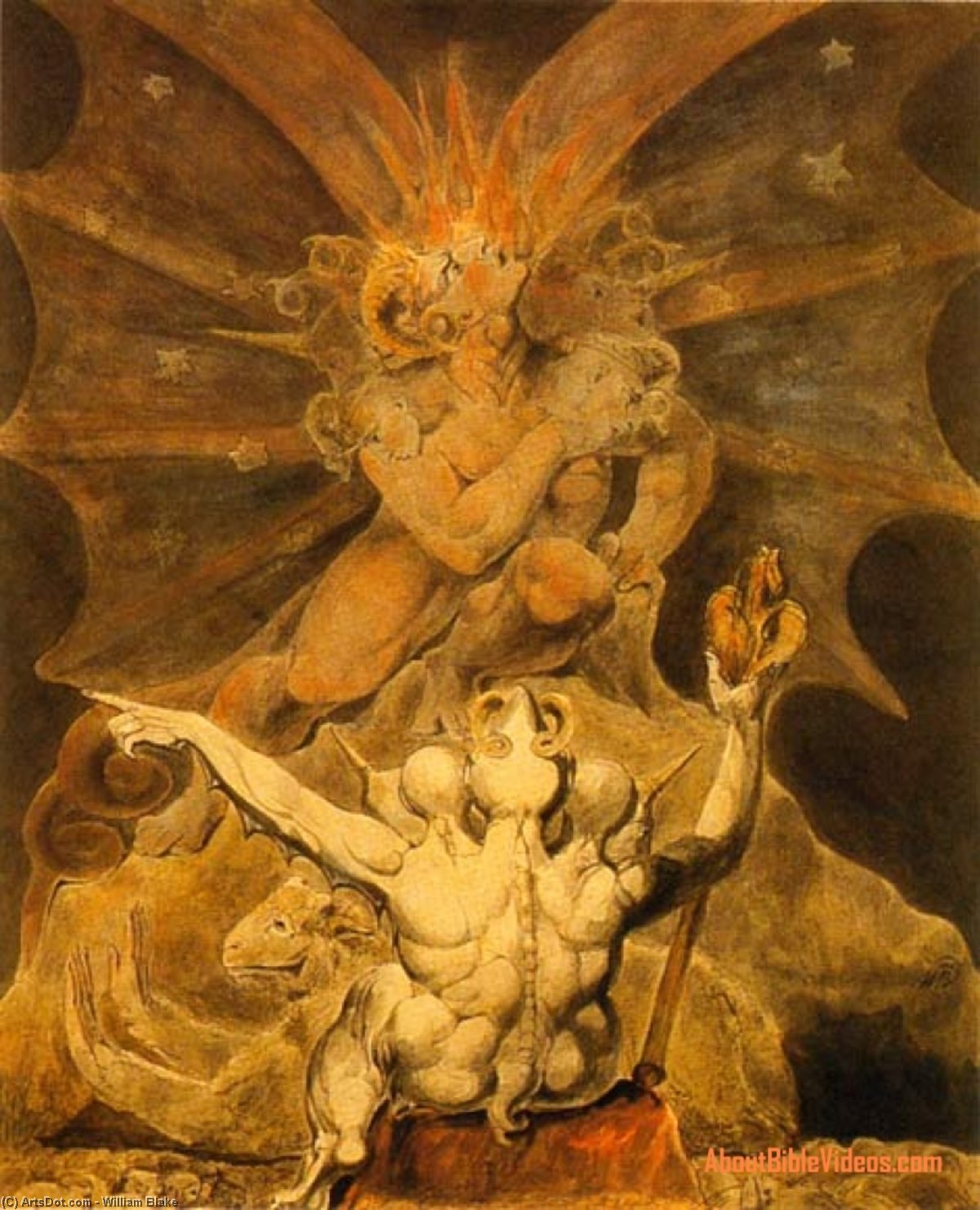
Blake’s artistic style is instantly recognizable for its intensely symbolic nature and rejection of prevailing neoclassical conventions. He eschewed realism, favoring instead a dreamlike aesthetic infused with mythology and folklore—drawing heavily from sources like Dante Alighieri's Inferno and Paradise Lost. The composition of paintings such as “The Number of the Beast Is 666” is deliberately complex, layering figures and imagery to convey multiple levels of meaning simultaneously. Two prominent figures dominate the frame, positioned on opposing sides, engaging in a dynamic interplay that suggests conflict and contemplation. Surrounding these central figures are smaller elements—a dragon-like creature symbolizing primal chaos at the bottom left corner, birds soaring above representing aspiration and divine grace—creating an immersive experience for the viewer. Blake’s meticulous attention to detail reflects his belief in the power of imagination as a conduit to spiritual truth.
Neo-Romanticism: Embracing Emotion and Symbol
Blake's artistic endeavors firmly situate him within the Neo-Romantic movement, which emerged in reaction to Enlightenment rationalism. Rejecting the emphasis on reason and empirical observation championed by thinkers like Voltaire and Rousseau, Romantic artists prioritized emotion, intuition, and subjective experience—values that resonated deeply with Blake’s worldview. Unlike his predecessors who sought to depict the natural world accurately, Blake employed symbolism extensively, transforming familiar motifs into emblems of profound spiritual concepts. The recurring motif of the serpent embodies temptation and transgression, while images of angels represent purity and divine benevolence. This deliberate distortion of reality serves not to deceive but to illuminate—to reveal hidden truths beneath the surface of appearances.
Symbolism in “The Number of the Beast Is 666”: Decoding Darkness and Light
“The Number of the Beast Is 666,” specifically, delves into themes of duality – good versus evil, innocence versus corruption – mirroring Blake’s broader philosophical concerns. The titular number itself carries significant symbolic weight, referencing Satanic numerology and representing ultimate darkness. However, Blake's interpretation transcends simplistic readings of evil; it speaks to the inherent contradictions within human nature—the struggle between our desire for transcendence and our susceptibility to earthly temptations. The dragon figure embodies this primal force, while the birds symbolize hope and spiritual ascension. Through meticulous detail and evocative imagery, Blake invites contemplation on these fundamental questions about existence and morality.
Legacy: An Artist Who Continues to Inspire
Blake’s influence extends far beyond his own lifetime, shaping subsequent generations of artists and writers. His pioneering use of illuminated printing—a technique he perfected alongside Catherine Boucher—established a new standard for artistic craftsmanship and visual storytelling. Furthermore, Blake's unwavering conviction in the transformative power of imagination continues to inspire artists today who seek to explore the depths of human consciousness and grapple with existential dilemmas. Reproductions of “The Number of the Beast Is 666” offer viewers an opportunity to engage with this enduring legacy—to experience firsthand the breathtaking beauty and profound symbolism of a visionary artist whose work transcends time.