A Moment Frozen in Faith: Exploring William Blake’s “The Soldiers Casting Lots for Christ’s Garments”
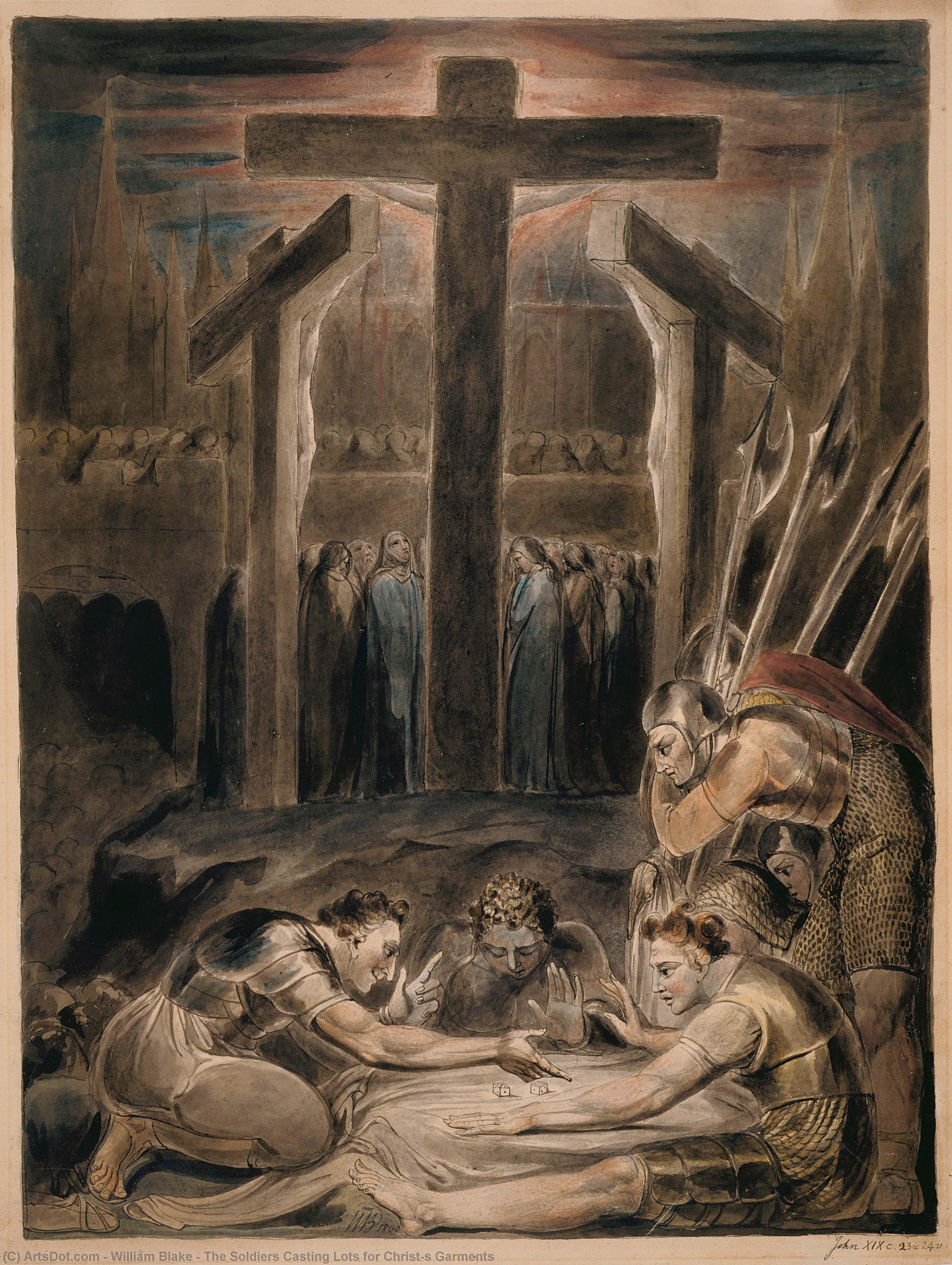
William Blake's "The Soldiers Casting Lots for Christ’s Garments," painted around 1800, transcends mere depiction; it embodies the spirit of Romantic idealism and offers a captivating glimpse into the intellectual currents shaping Britain during its industrial revolution. This monumental canvas captures an arresting tableau—a group of men gathered solemnly around a wooden cross on the ground, engaged in a ritualistic process of division. The scene unfolds with remarkable detail, inviting viewers to contemplate not just what is seen but also what lies beneath the surface of symbolism and artistic innovation.
- Subject Matter: The painting portrays a biblical episode—the casting of lots for Christ’s garments after his crucifixion—a poignant reminder of the Passion narrative and the profound theological questions surrounding sacrifice and divine providence. Blake deliberately eschewed grand historical narratives, opting instead for a psychologically charged portrayal of faith and contemplation.
- Style: Blake's style is unmistakably Romantic, characterized by its expressive brushwork, dramatic chiaroscuro (the interplay of light and shadow), and an otherworldly atmosphere that distinguishes it from the prevailing academic conventions of the time. He prioritized emotional intensity over precise realism, striving to convey spiritual truths rather than simply documenting observable events.
- Technique: Blake employed a masterful combination of etching and watercolor—a technique he pioneered—to achieve his distinctive visual effect. The etching provided an underlying tonal grid that ensured uniformity across the canvas, while the watercolor layers added luminous color and textural richness, creating a mesmerizing interplay between light and dark hues. This innovative approach was revolutionary for its time, demonstrating Blake’s commitment to pushing artistic boundaries.
Historical Context: Britain at the Crossroads
The painting emerged during a period of significant social and intellectual upheaval in Britain. The Industrial Revolution was transforming the nation's economy and society, accelerating urbanization and challenging traditional beliefs. Blake’s preoccupation with spiritual symbolism—particularly his fascination with alchemy and biblical mythology—represents a reaction against these materialistic forces. He sought to reaffirm humanity’s connection to the divine realm through visionary art that tapped into primal instincts and explored universal themes of suffering, redemption, and transcendence. The image reflects anxieties about societal change alongside an earnest desire for moral renewal.
Symbolism: Layers of Meaning Beyond Appearances
“The Soldiers Casting Lots for Christ’s Garments” is replete with symbolic imagery that invites careful interpretation. The cross itself symbolizes sacrifice, faith, and divine grace—central tenets of Christian theology. The men casting lots represent the division of Christ's garments among the disciples, symbolizing humility and acceptance of God’s will. Furthermore, the open book lying on the ground signifies knowledge and enlightenment—a deliberate allusion to Blake’s belief in the transformative power of imagination and spiritual contemplation. Each element contributes to a complex tapestry of meaning that elevates the artwork beyond a simple depiction of biblical history.
Emotional Impact: A Resonance of Contemplation
Ultimately, “The Soldiers Casting Lots for Christ’s Garments” succeeds in conveying a profound sense of solemnity and contemplation. Blake's masterful use of color and light evokes an atmosphere of reverence and invites viewers to engage in introspection—to ponder the mysteries of faith and the enduring relevance of biblical narratives. The painting speaks to our deepest anxieties about mortality and our yearning for spiritual solace, cementing its place as a cornerstone of Romantic art and continuing to inspire audiences today. Its haunting beauty resides not merely in its visual splendor but also in its ability to provoke profound emotional responses—a testament to Blake’s unparalleled artistic vision.