William Blake’s ‘Un diablo llevando al prevaricador de Lucca al Lago de Pez Hirviente’: A Descent into Moral Turmoil
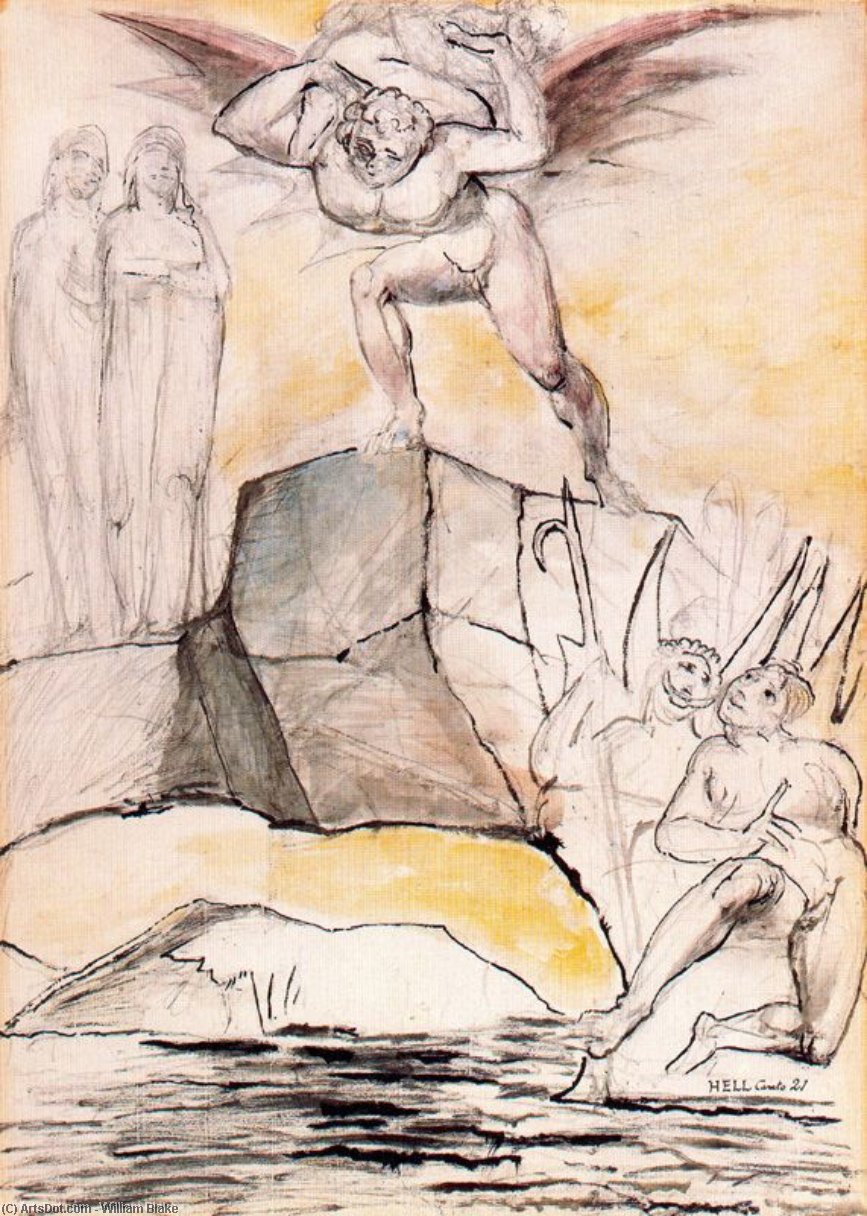
William Blake's Un diablo llevando al prevaricador de Lucca al Lago de Pez Hirviente (A Devil Carrying the Prevaricator of Lucca to the Boiling Fish Lake) is a profoundly unsettling image, a visual distillation of moral corruption and divine retribution that speaks directly to the anxieties of the Romantic era. Painted around 1819-1820, this work exemplifies Blake’s intensely personal and often apocalyptic vision, drawing upon biblical narratives, mythological allusions, and his own deeply held spiritual beliefs. The scene depicts a dramatic confrontation – a demon carrying a man, identified as ‘Prevaricator of Lucca,’ towards a lake shimmering with an ominous, boiling heat. This isn't merely a fantastical illustration; it’s a powerful allegory for the consequences of deceit and transgression.
- Subject Matter: The painting centers on a narrative rooted in Blake’s interpretation of biblical stories, particularly those concerning temptation and judgment. The ‘Prevaricator of Lucca,’ likely a reference to a figure from the Gospels or Dante's *Inferno*, is being dragged towards a fiery punishment – a lake representing damnation.
- Style & Technique: Blake’s distinctive style is immediately recognizable through his meticulous use of engraving and watercolor. The image was originally conceived as an etching, and this influence is evident in the crisp lines and detailed rendering of the figures and landscape. The watercolor washes contribute to a sense of ethereal unease, blurring the boundaries between reality and nightmare.
Symbolism: Layers of Interpretation
Blake’s work is notoriously rich in symbolism, inviting multiple interpretations. The demon itself represents temptation, evil, and perhaps even the darker aspects of human nature. Its grotesque features – exaggerated musculature, a leering expression – amplify its menacing presence. The ‘Prevaricator of Lucca,’ carried helplessly towards his fate, embodies sin, deception, and the consequences of straying from righteousness. The lake of boiling fish is a particularly potent symbol, evoking images of purification through fire, but also hinting at a brutal and inescapable judgment. The angels present in the background, seemingly observing this horrific event, represent divine witness and perhaps a sense of detached sorrow or even indifference to human suffering.
- Color Palette: The predominantly dark palette – deep reds, blacks, and browns – reinforces the themes of sin, damnation, and impending doom. The use of white highlights emphasizes key elements, such as the demon’s form and the shimmering surface of the lake, drawing the viewer's eye to the central drama.
- Composition: Blake employs a dynamic composition, with diagonal lines creating a sense of movement and instability. This contributes to the overall feeling of unease and impending catastrophe.
Historical Context & Romantic Vision
Un diablo llevando al prevaricador de Lucca al Lago de Pez Hirviente emerged during a period of intense intellectual and spiritual ferment in England, aligning perfectly with the tenets of the Romantic movement. The late 18th and early 19th centuries witnessed a rejection of Enlightenment rationalism in favor of emotion, intuition, and a renewed interest in folklore, mythology, and visionary experiences. Blake’s work reflects this shift, embracing subjective truth and exploring profound questions about morality, faith, and the human condition. His art was deeply influenced by his own spiritual practices, including his belief in visions and prophetic dreams. This painting is a testament to his ability to translate these intensely personal experiences into powerful visual narratives.
Emotional Impact & Artistic Value
This artwork possesses a visceral emotional impact that continues to resonate with viewers today. It’s not simply a depiction of a scene; it's an exploration of fundamental human anxieties – the fear of judgment, the consequences of wrongdoing, and the inevitability of death. Blake’s masterful use of line, color, and symbolism creates a truly unforgettable image, one that invites contemplation and evokes a profound sense of unease. A hand-painted reproduction offers a unique opportunity to experience the full power of this iconic work, bringing its dramatic intensity into your home or studio.