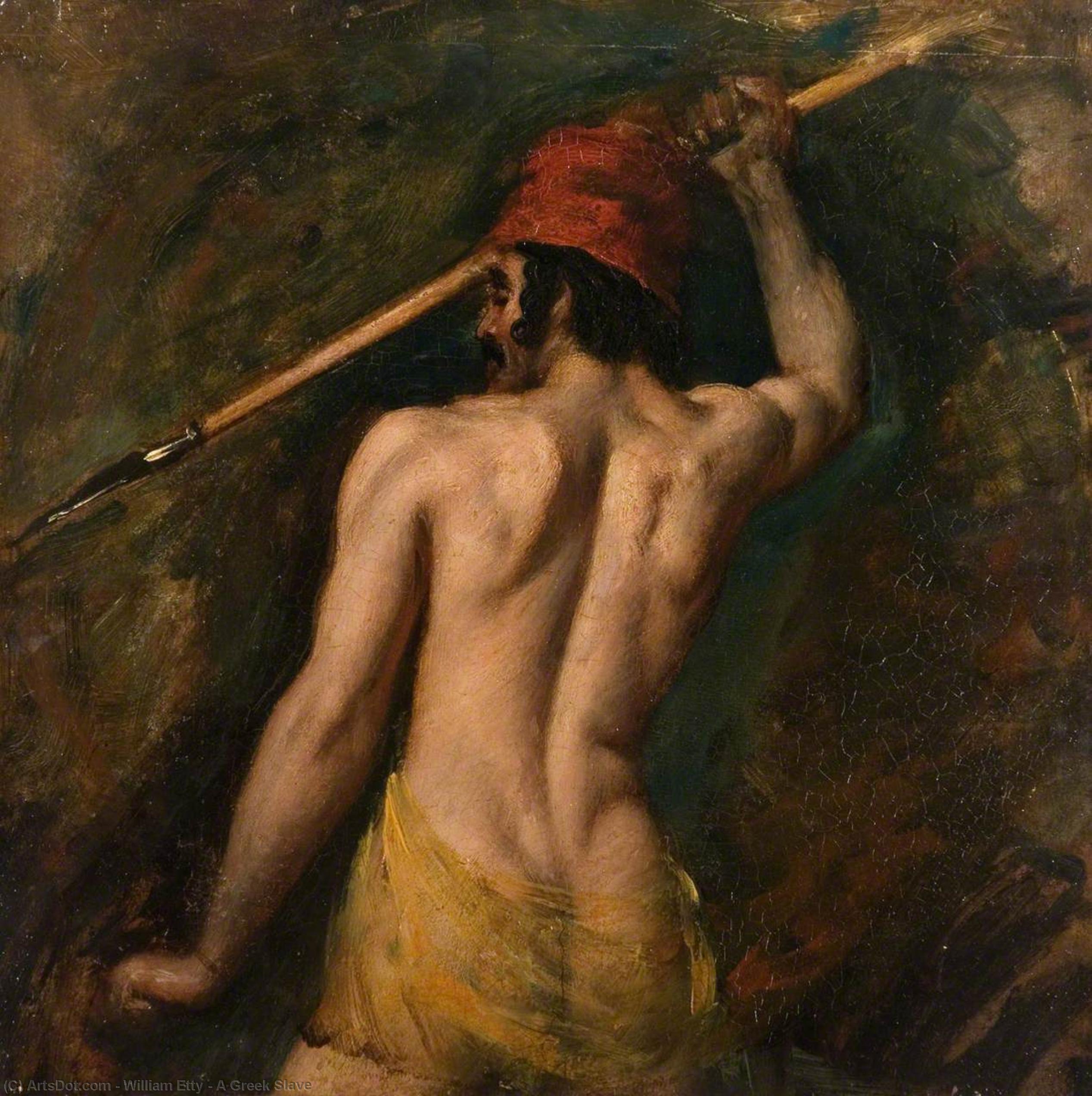
A Monument to Strength and Suffering: William Etty’s ‘A Greek Slave’
William Etty's ‘A Greek Slave’ (1812) is not merely a depiction of a female figure; it’s a profound meditation on resilience, vulnerability, and the enduring power of the human spirit. This arresting oil painting, measuring 43 x 43 cm, immediately commands attention with its dramatic lighting and intensely focused composition. Etty, a pivotal figure in British art who pioneered the depiction of nudes, eschews idealized beauty for a raw, almost brutal realism that speaks to the subject’s harrowing experience – a young woman held captive, awaiting an uncertain fate.

The composition itself is strikingly direct. Etty’s masterful use of light and shadow – a hallmark of the Romantic movement – sculpts the figure with dramatic intensity. The strong contrasts highlight the muscularity of her body, emphasizing both her physical strength and the palpable tension of her situation. Her posture, rigid yet defiant, speaks volumes about her inner resolve. Note the loose brushstrokes that contribute to a textured surface, adding dynamism and preventing the image from feeling static or overly polished – a deliberate choice reflecting Etty’s commitment to capturing raw emotion.
A Romantic Vision: Style and Technique
Etty's style firmly resides within the Neoclassical tradition, yet infused with the emotional fervor of Romanticism. The subject matter—a powerfully rendered nude figure—was considered highly controversial at the time, reflecting Etty’s willingness to challenge societal norms. The painting’s shallow perspective draws the viewer into the immediate space surrounding the slave, intensifying the sense of her isolation and vulnerability. Etty's technique is characterized by a deliberate lack of refinement; visible brushstrokes create a tactile quality, suggesting an unfinished state that amplifies the work’s emotional impact. The earthy color palette – dominated by browns, reds, and ochres – further enhances this feeling of realism and adds to the painting’s dramatic intensity.
Symbolism and Historical Context
‘A Greek Slave’ transcends a simple narrative; it's laden with symbolic meaning. The sculpture, inspired by Hiram Powers’ original marble statue (1843), quickly became associated with the abolitionist movement in America, representing enslaved people enduring unimaginable suffering. The chains binding her hands and feet, the cross hanging from her wrist, and the locket she clutches – all contribute to a poignant narrative of resilience and faith amidst oppression. Etty’s choice to depict a fully nude figure was particularly significant, challenging prevailing artistic conventions and aligning with the burgeoning Romantic interest in raw emotion and human experience.
A Legacy of Innovation
William Etty's ‘A Greek Slave’ remains a powerful testament to his artistic vision and his willingness to push boundaries. His pioneering work in British painting, particularly his unflinching depictions of the nude form, paved the way for future generations of artists. This reproduction offers an exceptional opportunity to experience this iconic artwork firsthand, capturing not only its aesthetic beauty but also the profound emotional depth that continues to resonate with viewers today.