A Scathing Satire: Decoding Hogarth’s “Credulity, Superstition, and Fanaticism”
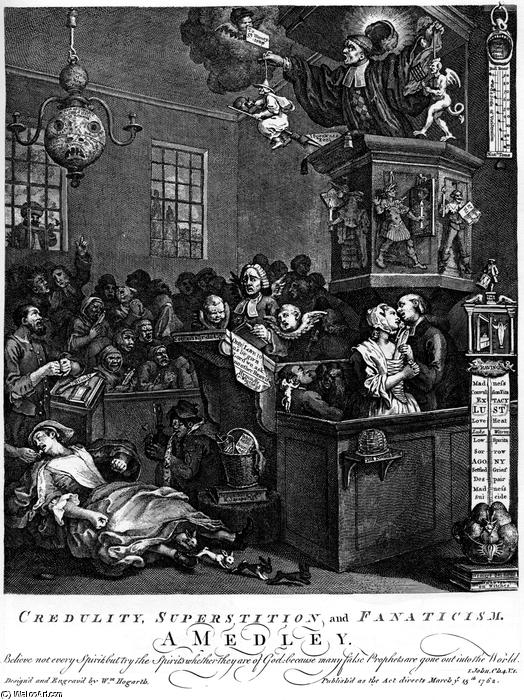
William Hogarth’s 1762 engraving, “Credulity, Superstition, and Fanaticism,” is a masterclass in satirical social commentary. This densely packed scene isn't merely an image; it’s a visual essay dissecting the follies of 18th-century society, specifically targeting religious extremism and widespread gullibility. Hogarth, a pioneer of modern narrative art, delivers his critique with biting wit and meticulous detail.
Subject & Historical Context
The artwork directly responds to the fervent religious atmosphere of its time, particularly the rise of Methodism and anxieties surrounding irrational belief. While initially titled “Enthusiasm Delineated” in 1761, Hogarth reworked it before publication, sharpening its focus on fanaticism. The print also engages with contemporary art debates, subtly mocking both popular enthusiasm for Old Master paintings *and* the critical writings of figures like Roger de Piles. It echoes Hogarth’s earlier work, “The Sleeping Congregation,” which similarly satirized unengaging religious sermons. This piece isn't simply anti-religious; it’s a condemnation of blind faith and manipulative preaching.
Style & Technique
Hogarth’s style is uniquely his own – a blend of realism, caricature, and narrative storytelling. He masterfully employs the engraving technique, utilizing precise lines to create depth, texture, and dramatic lighting. The composition is deliberately chaotic, mirroring the disordered state of mind he critiques. Figures are crammed together, their exaggerated gestures and expressions amplifying the sense of frenzy. This isn’t about aesthetic beauty; it's about impactful communication. The black and white palette further intensifies the starkness of Hogarth’s judgment.
Decoding the Symbolism
Every element within “Credulity, Superstition, and Fanaticism” is laden with symbolic meaning:
- The Preacher: Elevated on a platform, he embodies manipulative rhetoric, his open mouth measured by a "scale of vociferation." He clutches puppets representing demonic forces, revealing the theatricality of his “enthusiasm.”
- Religious Artifacts & Ghosts: References to famous ghost stories and supernatural events populate the scene, highlighting the prevalence of superstitious belief.
- The Globe & Scientific Instruments: A discarded globe symbolizes the rejection of worldly knowledge in favor of irrational faith.
- The “Religious Thermometer”: This bizarre device measures emotional states, charting a descent from lukewarm piety to madness and despair.
- Diverse Figures: The inclusion of figures representing different faiths (Jew, Turk) underscores Hogarth’s critique as being directed at *all* forms of unreasoning belief.
Emotional Impact & Lasting Legacy
“Credulity, Superstition, and Fanaticism” evokes a sense of unease and moral outrage. The frantic energy of the scene is unsettling, forcing viewers to confront uncomfortable truths about human vulnerability and the dangers of unchecked belief. Hogarth doesn’t offer easy answers; he presents a complex and challenging vision of society.
This engraving remains powerfully relevant today, serving as a timeless reminder of the importance of critical thinking and skepticism. Its influence can be seen in political cartoons and satirical art for generations to come. A reproduction of this work would serve as a striking focal point in any collection, sparking conversation and intellectual engagement. It’s not just a piece of art; it's a historical document and a potent warning against the perils of fanaticism.