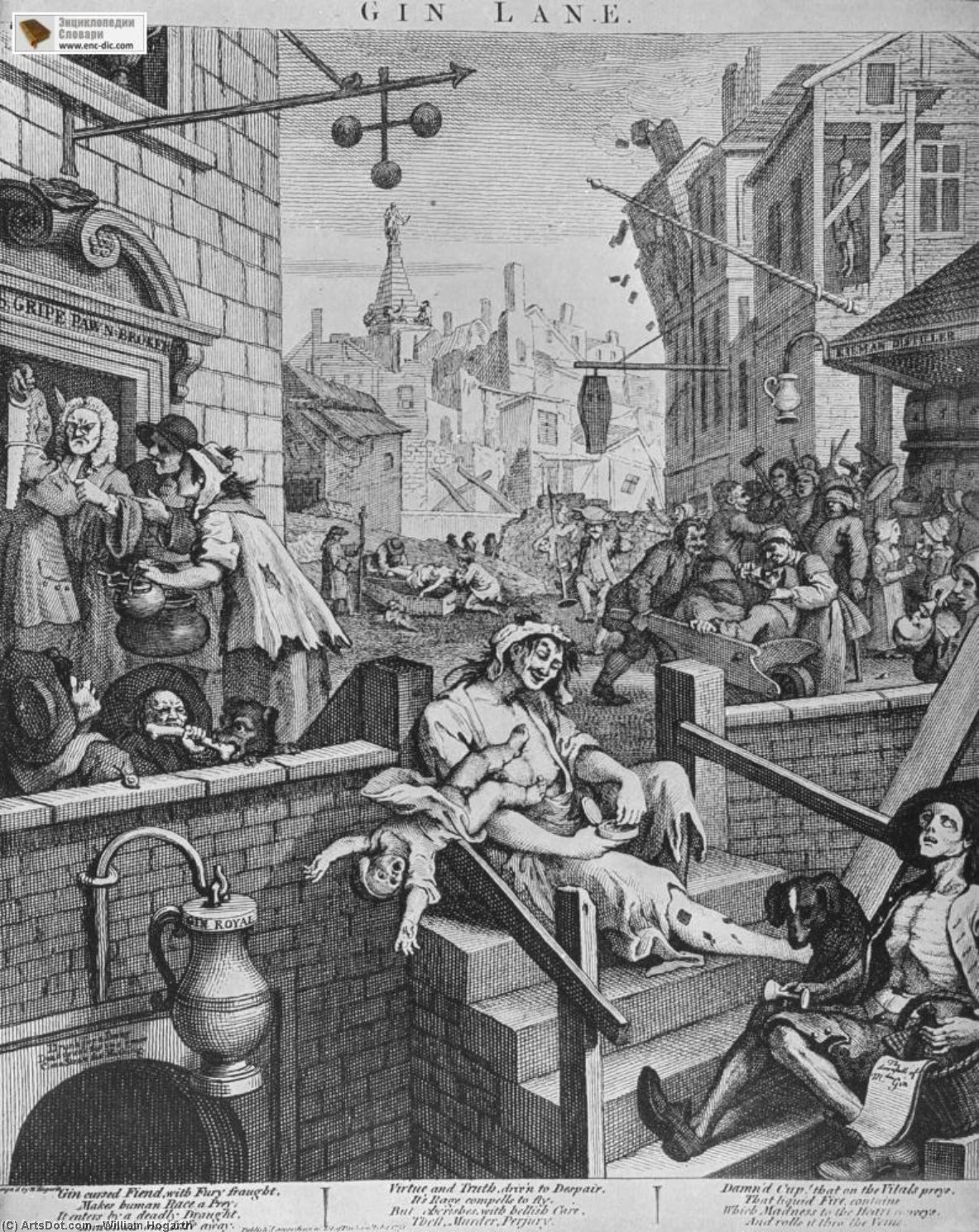
Explore William Hogarth’s "Gin Lane," a stark 1750 engraving depicting London’s social decay & gin addiction. A powerful, detailed masterpiece of English moralistic art.
Gin Lane: A Chronicle of London’s Moral Decay
William Hogarth's “Gin Lane,” completed in 1751, stands as a monumental achievement in English moralistic engraving—a searing indictment of societal ills rendered with unparalleled detail and psychological acuity. More than just a depiction of poverty; it’s a meticulously crafted tableau designed to provoke contemplation on the corrosive influence of vice upon the human spirit.
- Subject Matter: The print confronts viewers with an unflinching portrayal of London's underbelly during the Gin Craze. Hogarth focuses on the devastating consequences of gin consumption – rampant illness, despair, and ultimately death—captured within a claustrophobic lane teeming with figures consumed by addiction.
- Style & Technique: Hogarth’s masterful use of engraving exemplifies the precision and expressive power of the medium. Employing hatching and cross-hatching techniques, he achieves remarkable tonal variation, conveying the grim atmosphere of the scene with palpable realism. Strong, decisive lines delineate forms, emphasizing the urgency and drama inherent in the narrative.
- Composition: The print’s composition is deliberately chaotic—a densely populated lane where figures overlap, creating a sense of overwhelming misery. Architectural elements recede into the background, reinforcing the feeling of confinement and highlighting the oppressive social conditions depicted.
- Historical Context: “Gin Lane” emerged during a period of profound societal transformation in Britain – the burgeoning Enlightenment alongside anxieties about moral decline. Hogarth’s intention was to galvanize public opinion against gin drinking and its detrimental effects on the populace, aligning with the broader reformist movement of his time.
- Symbolism: Beyond mere observation, Hogarth imbues “Gin Lane” with symbolic significance. Overflowing gin barrels serve as emblems of excess and corruption; decaying bodies underscore the tragic consequences of moral negligence; and the overall bleak landscape embodies hopelessness—a deliberate provocation to confront viewers with uncomfortable truths about human behavior.
The emotional impact of “Gin Lane” is profound. It’s a visceral experience that compels us to confront the darker side of human nature and acknowledges the devastating repercussions of societal failings. Hogarth's artistic vision transcends mere documentation; it aspires to moral instruction, cementing its place as one of the most enduring images of Victorian London.
For those seeking inspiration or considering a luxurious reproduction, explore this masterpiece at Tate Britain and delve deeper into Hogarth’s legacy at Historic and Modern British Art.