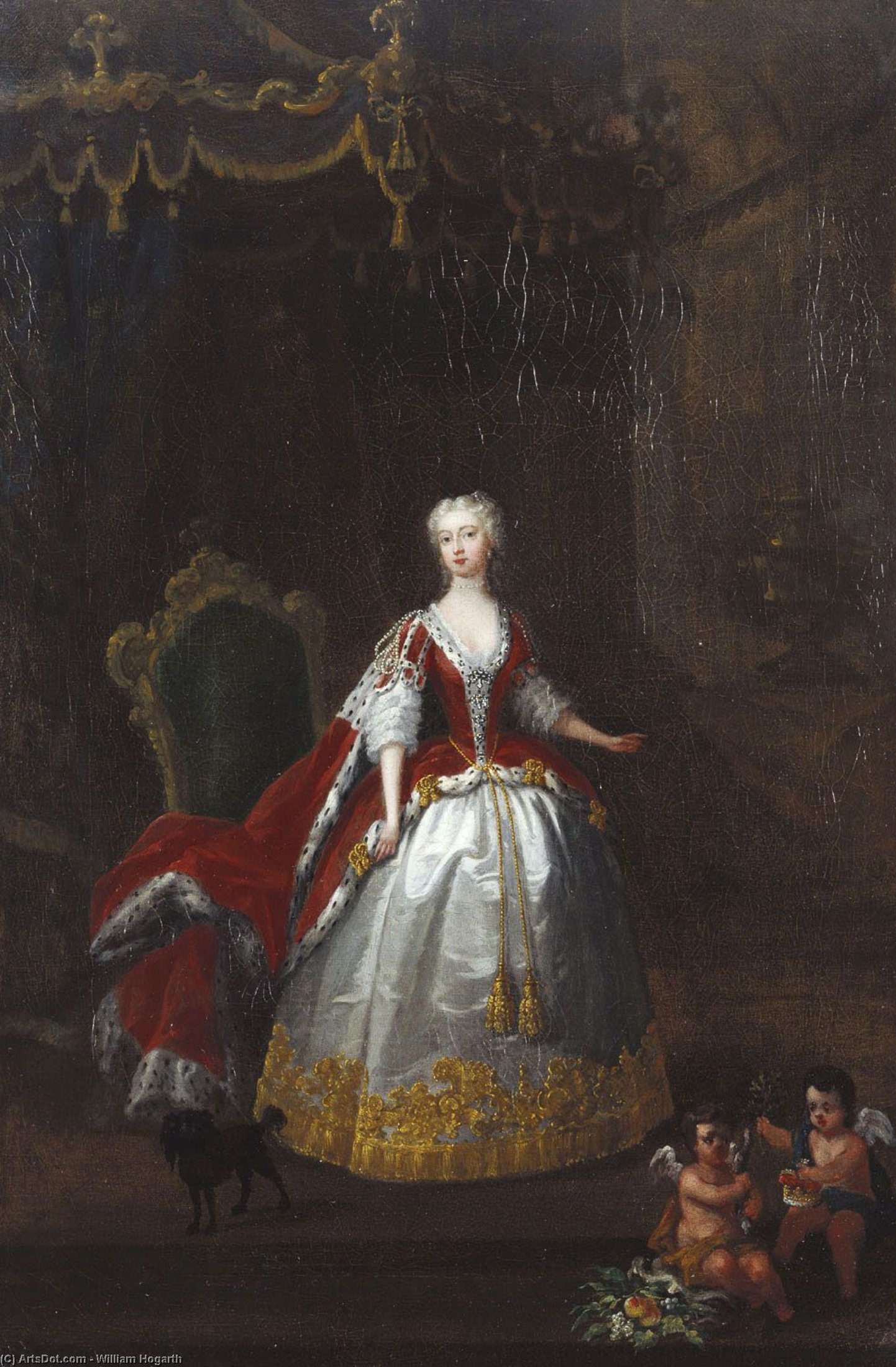
William Hogarth's 'Portrait of Augusta of Saxe-Gotha' (1738) is a stunning Rococo portrait showcasing elegance and formality. Admire the intricate details, rich colors, and regal atmosphere in this masterpiece.
Explore the satirical world of William Hogarth (1697-1764), pioneering English painter & engraver. Discover *A Harlot's Progress* & insightful social commentary.
Portrait of Augusta of Saxe-Gotha: A Window into Georgian Society
William Hogarth’s “Portrait of Augusta of Saxe-Gotha” is more than just a likeness; it's a meticulously crafted snapshot of 18th-century life, brimming with social commentary and the subtle elegance characteristic of the Rococo style. Painted in 1738, this captivating work offers a rare glimpse into the world of European nobility – specifically, the court of Saxony-Gotha – revealing not only the sitter’s beauty but also the intricate layers of power, expectation, and decorum that defined the era. The painting immediately draws the eye with Augusta's striking presence: she stands poised on a grand staircase, radiating an air of quiet authority despite her youth. Her crimson gown, adorned with delicate gold embroidery and lace, speaks volumes about her status and wealth – a visual declaration of her importance within the social hierarchy. The careful rendering of fabric, light, and shadow demonstrates Hogarth’s mastery of technique, showcasing his ability to capture both texture and depth on canvas.
A Stage for Social Observation
Hogarth was renowned not just for his portraits but also for his “moral subjects,” a series of prints that satirized the follies and vices of London society. This portrait, however, transcends simple social commentary; it’s imbued with a sense of theatricality. The staircase itself becomes a stage, framing Augusta within a carefully constructed scene. The two dogs flanking her – one near the bottom left corner, the other slightly to the right – are not merely decorative elements but subtly reinforce themes of loyalty and domesticity, qualities highly valued in aristocratic circles. A chair sits discreetly in the background on the left, hinting at the comfort and leisure afforded by her position. The composition isn’t haphazard; every element is deliberately placed to contribute to a larger narrative about social standing and expectation.
Symbolism and the Language of Portraiture
Beyond the immediate visual details, “Portrait of Augusta of Saxe-Gotha” is rich in symbolic meaning. Her outstretched hand, poised as if offering a greeting, suggests both grace and readiness – she’s prepared to engage with the world around her, yet maintains an air of dignified reserve. The lighting, carefully orchestrated by Hogarth, highlights her face and gown, drawing attention to her beauty while subtly obscuring details in the background, reinforcing the focus on the subject's importance. The use of red, a color associated with royalty and passion, further emphasizes Augusta’s elevated status. The inclusion of the dogs is particularly noteworthy; they represent fidelity and companionship – virtues expected of a noblewoman managing a household and family.
A Legacy of Insightful Observation
William Hogarth's “Portrait of Augusta of Saxe-Gotha” stands as a testament to his extraordinary talent for capturing not just appearances but also the underlying currents of society. It’s a work that invites contemplation, prompting us to consider the social dynamics at play within its carefully constructed scene. The painting reflects the Rococo style's emphasis on elegance and ornamentation, while simultaneously offering a critical perspective on the conventions and expectations of aristocratic life. Reproductions by ArtsDot.com allow you to bring this remarkable piece into your home or office, appreciating its beauty and historical significance for generations to come. The detail and color fidelity of our hand-painted reproductions ensure that you experience the full impact of Hogarth’s masterful artistry – a true window into Georgian society.