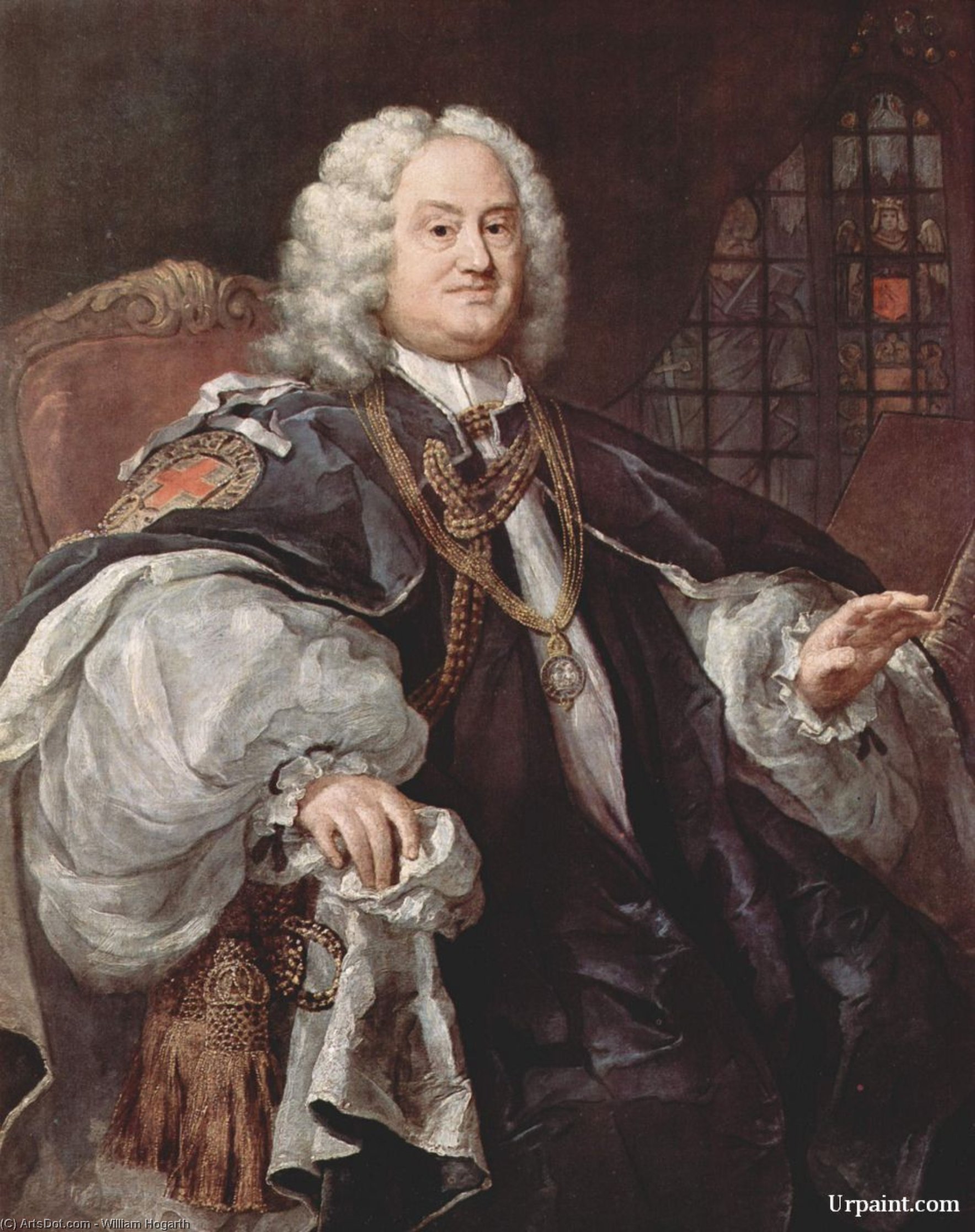
A Window into Georgian London: Examining Hogarth’s Portrait of Bischofs Benjamin Hoadly
William Hogarth's "Portrait of Bischofs Benjamin Hoadly," completed in 1743, transcends mere likeness; it embodies the spirit of Georgian England—a society grappling with moral complexities and striving for social advancement. Executed during a period marked by Enlightenment ideals yet shadowed by entrenched societal prejudices, this painting offers a fascinating glimpse into the aspirations and anxieties of the era’s elite. Hogarth's meticulous observation of human behavior distinguishes him from many of his contemporaries, transforming his canvases into powerful commentaries on contemporary life.
- Subject Matter: The portrait depicts Bischofs Benjamin Hoadly, a clergyman recognized for his piety and moral integrity—a figure embodying the virtues championed by the Church of England during Hogarth’s time.
- Style & Technique: Hogarth employed a distinctly realistic style, prioritizing accuracy in anatomical detail and capturing subtle expressions of emotion. His technique involved layering oil paint with remarkable precision, utilizing glazing to achieve luminous effects that illuminate the sitter's face and clothing. The artist’s masterful handling of light contributes significantly to the painting’s dramatic impact.
Historical Context: London’s Moral Landscape in 1743
The year 1743 witnessed London undergoing considerable social change, fueled by burgeoning commerce and intellectual ferment. However, beneath the veneer of prosperity lurked persistent inequalities—particularly concerning religious observance and moral conduct. Hogarth's artistic endeavors were deeply influenced by this societal milieu; he sought to portray individuals within their environment, exposing both their triumphs and failings. The inclusion of a clock on the wall serves as a poignant reminder of time’s relentless march and underscores the importance of ethical behavior in navigating life’s challenges.
- Symbolism: The book held by Bischofs Hoadly symbolizes erudition, faith, and adherence to moral principles—values considered paramount within the Anglican Church. Simultaneously, the windows behind him represent enlightenment and access to natural light, symbolizing spiritual illumination and intellectual curiosity.
Emotional Impact & Artistic Legacy
“Portrait of Bischofs Benjamin Hoadly” resonates with viewers today not merely as a depiction of a historical figure but as an embodiment of Hogarth’s broader artistic vision. The painting's subdued palette and careful composition convey a sense of dignified contemplation—a reflection of the sitter’s moral stature. More importantly, it exemplifies Hogarth’s pioneering approach to portraiture, rejecting idealized representations in favor of unflinching realism that captures the complexities of human psychology. His work continues to inspire artists and designers alike, cementing his place as one of England's most influential painters.