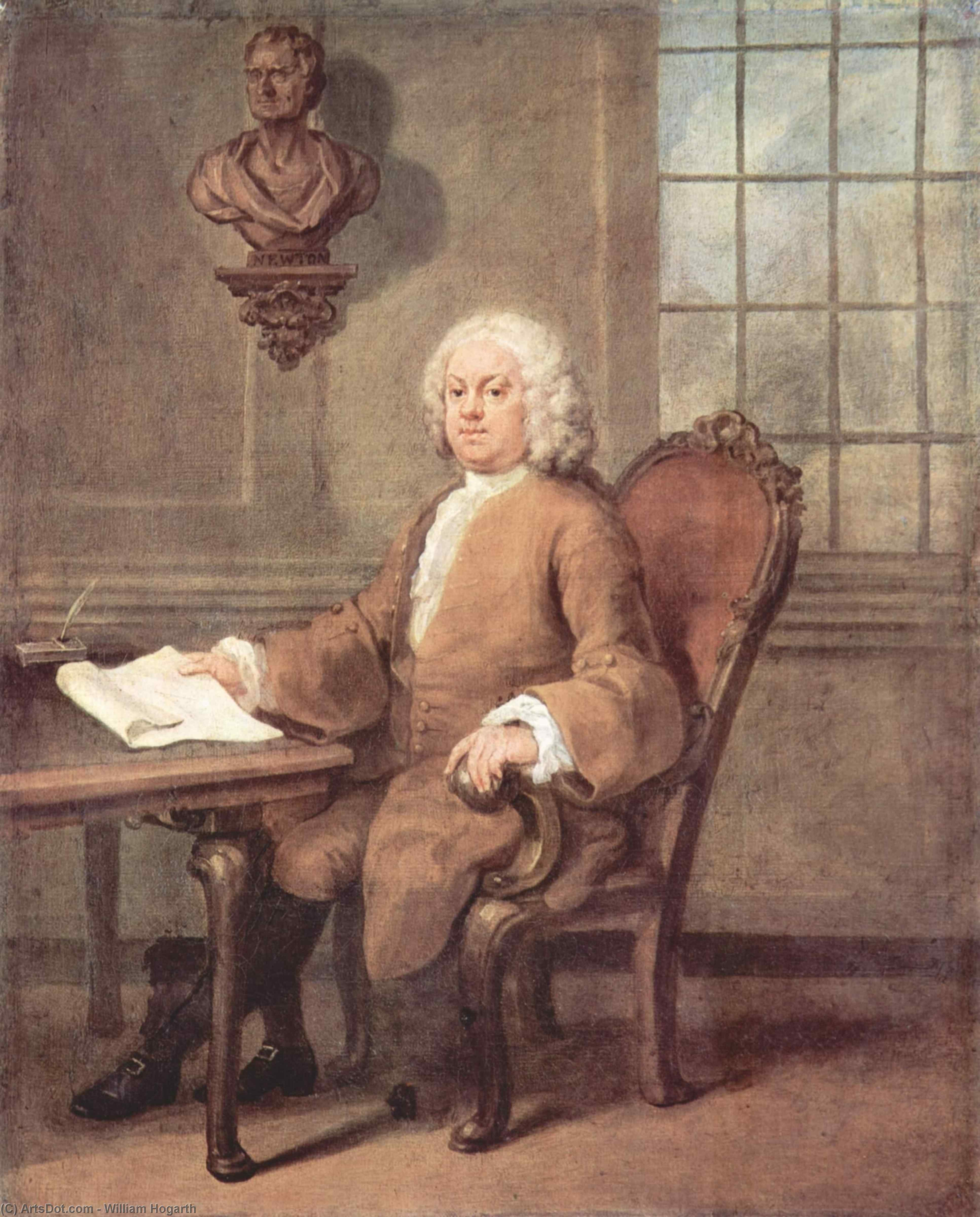
A Window into Enlightenment: Examining William Hogarth’s Portrait of Dr. Benjamin Hoadly
William Hogarth's “Portrait of Dr. Benjamin Hoadly,” completed around 1738, stands as a remarkable testament to the burgeoning intellectual fervor of the Rococo era and Hogarth’s unparalleled ability to distill complex psychological states into visual form. More than merely depicting a man—albeit a prominent figure in his time—the painting offers a glimpse into the societal values and aspirations that defined Georgian England.
- Subject Matter: The portrait focuses on Dr. Benjamin Hoadly, Bishop of Winchester, a respected clergyman known for his scholarly pursuits and unwavering commitment to moral philosophy. Hogarth skillfully captures Hoadly’s dignified posture and contemplative gaze, conveying an aura of intellectual seriousness.
- Style & Technique: Executed in oil paint on canvas, “Portrait of Dr. Benjamin Hoadly” embodies the Rococo style—characterized by delicate ornamentation, pastel hues, and a focus on idealized beauty—though Hogarth subtly resists its overtly decorative tendencies. His meticulous brushwork reveals an impressive command of tonal gradation and texture, particularly evident in the rendering of Hoadly’s clothing and the subtle sheen of the canvas surface.
- Composition & Setting: The painting's composition is thoughtfully balanced, placing Dr. Hoadly centrally within a modestly furnished room. A dining table occupies the left side, adorned with tableware—a deliberate inclusion that speaks to the importance of social rituals and hospitality during Hogarth’s time. Notably, a bust of Isaac Newton dominates the wall above Hoadly's head, symbolizing the Enlightenment’s fascination with scientific inquiry and rational thought.
- Symbolism: Beyond its formal depiction, “Portrait of Dr. Benjamin Hoadly” is laden with symbolic significance. The bishop’s gaze directs upward toward Newton’s bust, suggesting a desire for spiritual enlightenment rooted in intellectual understanding. Hogarth's careful positioning of the chair and crossed legs reinforces notions of stability and contemplation—qualities deemed essential for cultivating virtue and pursuing knowledge.
Historical Context: The Age of Reason
Painted during a period marked by profound societal shifts, “Portrait of Dr. Benjamin Hoadly” reflects the broader intellectual currents of the Enlightenment. Hogarth’s work aligns with the movement's emphasis on rationalism, empiricism, and moral reform—values championed by thinkers like Newton and Voltaire. The portrait serves as an emblem of Georgian England’s aspiration to elevate itself intellectually and morally amidst the opulent excesses of aristocratic society.
Hogarth’s Mastery: Observation & Psychological Insight
What distinguishes Hogarth from many of his contemporaries is his unwavering commitment to portraying human psychology with unflinching honesty. Unlike idealized depictions prevalent in other artistic circles, “Portrait of Dr. Benjamin Hoadly” presents a nuanced portrait of intellect and dignity—a testament to Hogarth’s profound understanding of the complexities of human character. His ability to convey emotion through subtle gestures and facial expressions elevates the painting beyond mere visual representation, transforming it into a compelling meditation on the human condition.
Emotional Impact & Legacy
"Portrait of Dr. Benjamin Hoadly" continues to resonate with viewers today due to its masterful blend of formal elegance and psychological depth. It serves as an enduring reminder that art can illuminate not only aesthetic beauty but also the intellectual and moral values that shape our understanding of ourselves and the world around us. Its meticulous detail and evocative atmosphere invite contemplation—a fitting tribute to Hogarth’s legacy as one of England's most astute social commentators and artistic innovators.