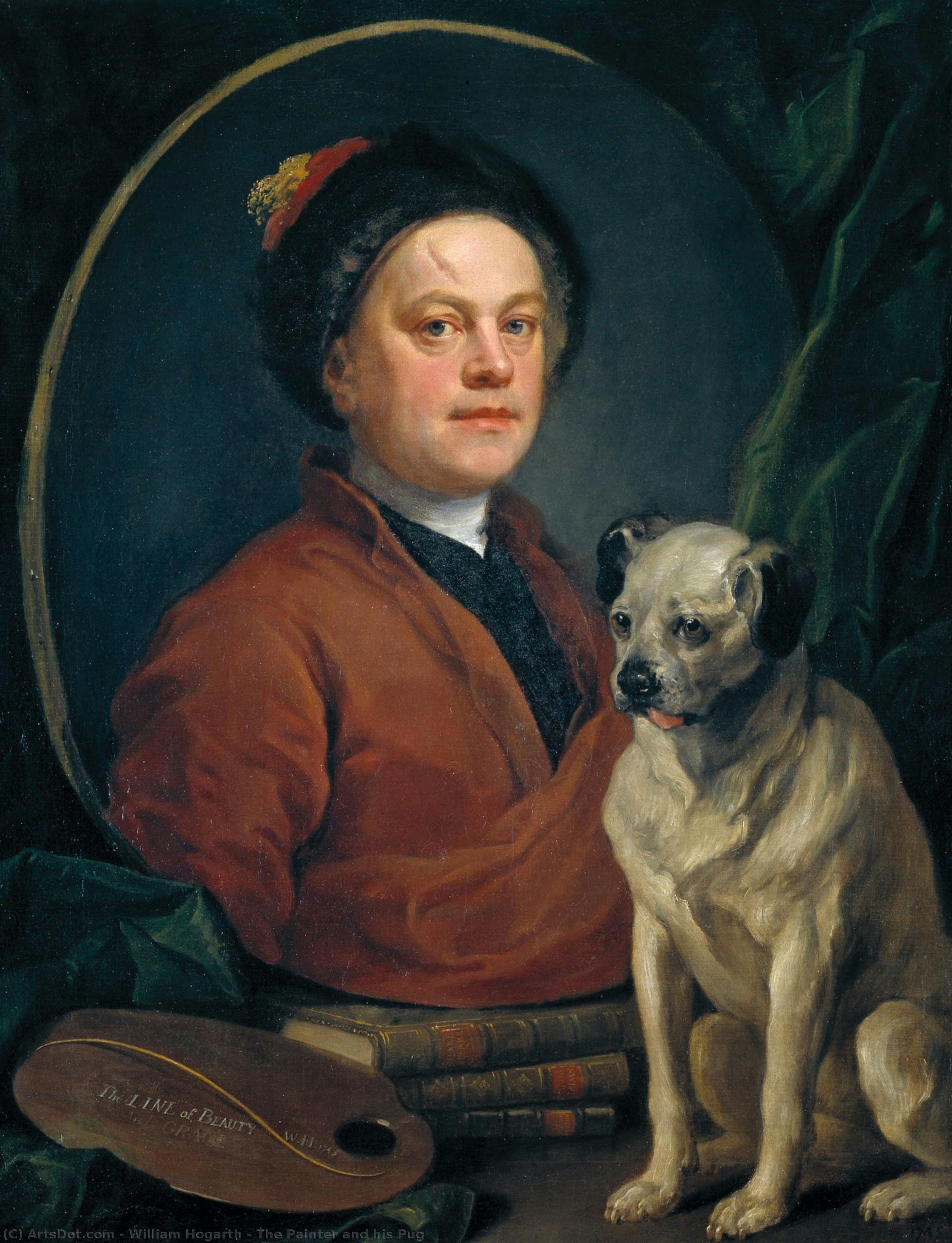
The Painter and his Pug

Discover Hogarth's self-portrait 'The Painter and his Pug'! A captivating glimpse into the artist’s life, featuring his beloved dog Trump & showcasing Baroque realism.


William Hogarth (1697 - 1764)

Explore the satirical world of William Hogarth (1697-1764), pioneering English painter & engraver. Discover *A Harlot's Progress* & insightful social commentary.

Tate Britain (London, United Kingdom)

Discover modern & contemporary art at Tate Britain! Explore British masterpieces from medieval times to today, amidst stunning architecture and engaging exhibitions. Free admission!

The Painter and his Pug: A Portrait of Artistic Identity

  • Overview: William Hogarth’s "The Painter and his Pug" (1745) is more than just a self-portrait; it's a carefully constructed statement about the artist, his craft, and his place in society. This oil on canvas painting offers a glimpse into the life of one of Britain’s most significant satirical artists, showcasing not only his likeness but also his intellectual pursuits and personal character through symbolic details.

A Shifting Self-Portrait: From Formal to Intimate

  • The genesis of "The Painter and his Pug" reveals a fascinating evolution in Hogarth’s artistic approach. Initially conceived in the mid-1730s, the portrait depicted the artist in more formal attire – a wig and coat. However, Hogarth later revised this, opting for a more relaxed depiction featuring a cap and everyday clothes. This shift suggests a move away from rigid formality towards a greater emphasis on authenticity and personal expression.
  • The setting itself is laden with meaning. Hogarth’s self-portrait rests upon volumes by Shakespeare, Swift, and Milton – literary giants who profoundly influenced his own commitment to drama, satire, and epic storytelling. These authors represent the intellectual foundations of Hogarth's artistic vision, highlighting his engagement with narrative and social commentary.

Symbolism and Character: The Line of Beauty and Trump

  • Hovering above Hogarth’s palette is a significant element – the ‘Line of Beauty and Grace.’ This represents Hogarth's own theories on aesthetics, a guiding principle in his artistic practice. It signifies his belief in order, harmony, and proportion as essential components of beautiful art.
  • Trump, the Pug: Perhaps the most endearing element of the portrait is Hogarth’s pug dog, Trump. More than just a pet, Trump serves as an emblem of the artist's own character – “pugnacious,” meaning assertive and confrontational. The dog’s features bear a striking resemblance to Hogarth’s, further blurring the lines between artist and subject, suggesting a shared spirit.
  • Notably, Trump is depicted with a distinct lack of engagement with the artistic surroundings—indifferent to the books, the palette, and even the painting itself. This detail has led some art historians to interpret the scene as a subtle Vanitas still life, a reminder of the fleeting nature of earthly pursuits.

Artistic Technique and Historical Context

  • Hogarth’s masterful use of chiaroscuro – the dramatic contrast between light and shadow – sculpts the figures and creates depth within the composition. The pyramidal structure, with Hogarth as the central figure balanced by Trump, lends a sense of stability and formality to the portrait.
  • The painting exemplifies the style of 18th-century British portraiture, characterized by its realism, attention to detail, and formal presentation. Hogarth’s technique involved layering oil paints meticulously to build texture and achieve subtle gradations in tone, resulting in a rich and visually compelling image.
  • “The Painter and his Pug” provides valuable insight into the life and artistic philosophy of William Hogarth, a pivotal figure in British art history. It’s a testament to his skill as a portraitist and his ability to infuse personal details with symbolic meaning, creating a work that continues to resonate with viewers today.

About the Artist: William Hogarth

  • Born: November 10, 1697, in London, United Kingdom.
  • Hogarth’s early life was marked by a practical upbringing. His father, a Latin schoolmaster and publisher, instilled in him a love for learning, though he showed an early inclination towards artistic pursuits.
  • In 1718, he began an apprenticeship with Ellis Gamble, an engraver in Leicester Fields. This experience proved crucial, honing his technical skills in trade card engraving and laying the foundation for his future career.
  • This early exposure to commercial art significantly influenced Hogarth’s artistic tone, often characterized by a sharp, critical edge.
  • Hogarth's creative range was remarkably diverse. He excelled in realistic portraiture but is most celebrated for his pioneering comic-like picture series, which