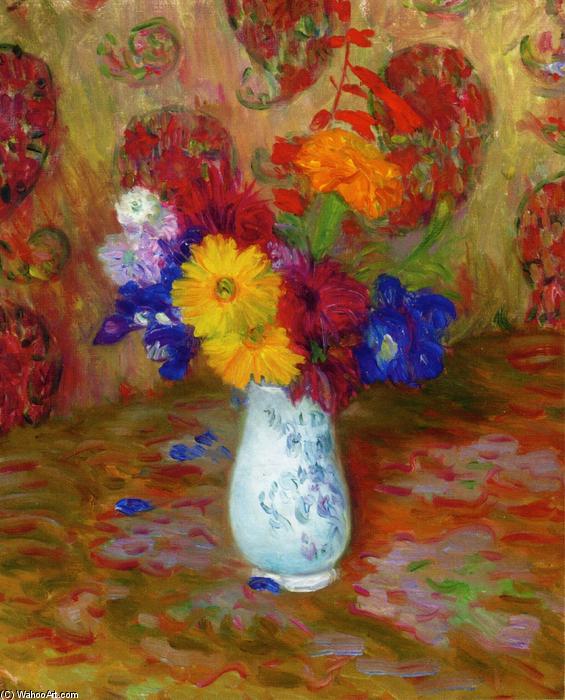
Vibrant yellow, orange, and purple flowers burst from a patterned vase in this 1920 oil painting by Ashcan School master William James Glackens, offering a timeless elegance for your collection.
A Symphony of Color and Texture
In the delicate dance of light and pigment, William James Glackens’ Flowers Against a Palm Leaf Pattern emerges as a breathtaking testament to the beauty found in the quiet corners of domestic life. Created in 1920, this exquisite oil on canvas invites the viewer into a world where the mundane is elevated to the magnificent. The composition centers on a vibrant vase, intricately adorned with blue and white floral motifs, which serves as the anchor for an exuberant bouquet. A kaleidoscope of hues—ranging from sun-drenched yellows and fiery oranges to deep purples and soft pinks—bursts from the vessel, creating a rhythmic movement that guides the eye across the canvas. The background, a rich and commanding red, provides a dramatic stage that pushes the floral arrangement forward, imbuing the scene with an almost palpable energy.
Beyond the immediate brilliance of the blossoms, Glackens masterfully introduces layers of complexity through texture and pattern. The presence of a palm leaf pattern on the tablecloth adds a sophisticated depth to the work, creating a fascinating dialogue between the organic shapes of the flowers and the structured geometry of the textile. This interplay of patterns is not merely decorative; it reflects the artist's ability to weave disparate elements into a cohesive, visually stimulating tapestry. The technique employed here showcases Glackens’ mastery of the brush, using bold strokes and thoughtful layering to capture the velvety texture of petals and the smooth sheen of ceramic alike.
The Legacy of the Ashcan School
To understand the soul of this painting, one must look toward the historical currents that shaped Glackens’ vision. As a prominent figure of the Ashcan School, Glackens was part of a revolutionary movement in American art that sought to move away from idealized subjects and instead embrace the vitality of real life. While his contemporaries often focused on the gritty, bustling streets of New York, this particular still life demonstrates his profound ability to apply that same observational intensity to the intimate setting of a tabletop. There is no pretension here, only an honest and celebratory gaze at the fleeting beauty of nature.
The influence of European masters, particularly the luminous touch of Renoir, can be felt in the way Glackens handles light and color in this piece. This fusion of American realism with a more impressionistic, vibrant palette allows the painting to transcend simple documentation. It becomes an emotional experience—a celebration of vitality that remains strikingly relevant in the modern era. For the collector or the interior designer, this work offers more than just aesthetic pleasure; it provides a focal point of warmth and sophistication. Whether placed in a sunlit gallery or as a centerpiece in a contemporary living space, Flowers Against a Palm Leaf Pattern continues to radiate an enduring charm that speaks to the timeless human desire to surround ourselves with beauty.