Explore the realist paintings of William James Glackens (1870-1938), a pioneer of the Ashcan School. Discover vibrant depictions of early 20th-century New York & Paris, capturing everyday life with striking detail.
Museum of Art
(Fort Lauderdale, United States of America)
Explore NSU Art Museum Fort Lauderdale’s diverse collection – Picasso ceramics, CoBrA art, Latin American masterpieces & more! A vibrant hub of contemporary and regional art in South Florida.
A Celebration of Domestic Light: William James Glackens' Floral Still Life
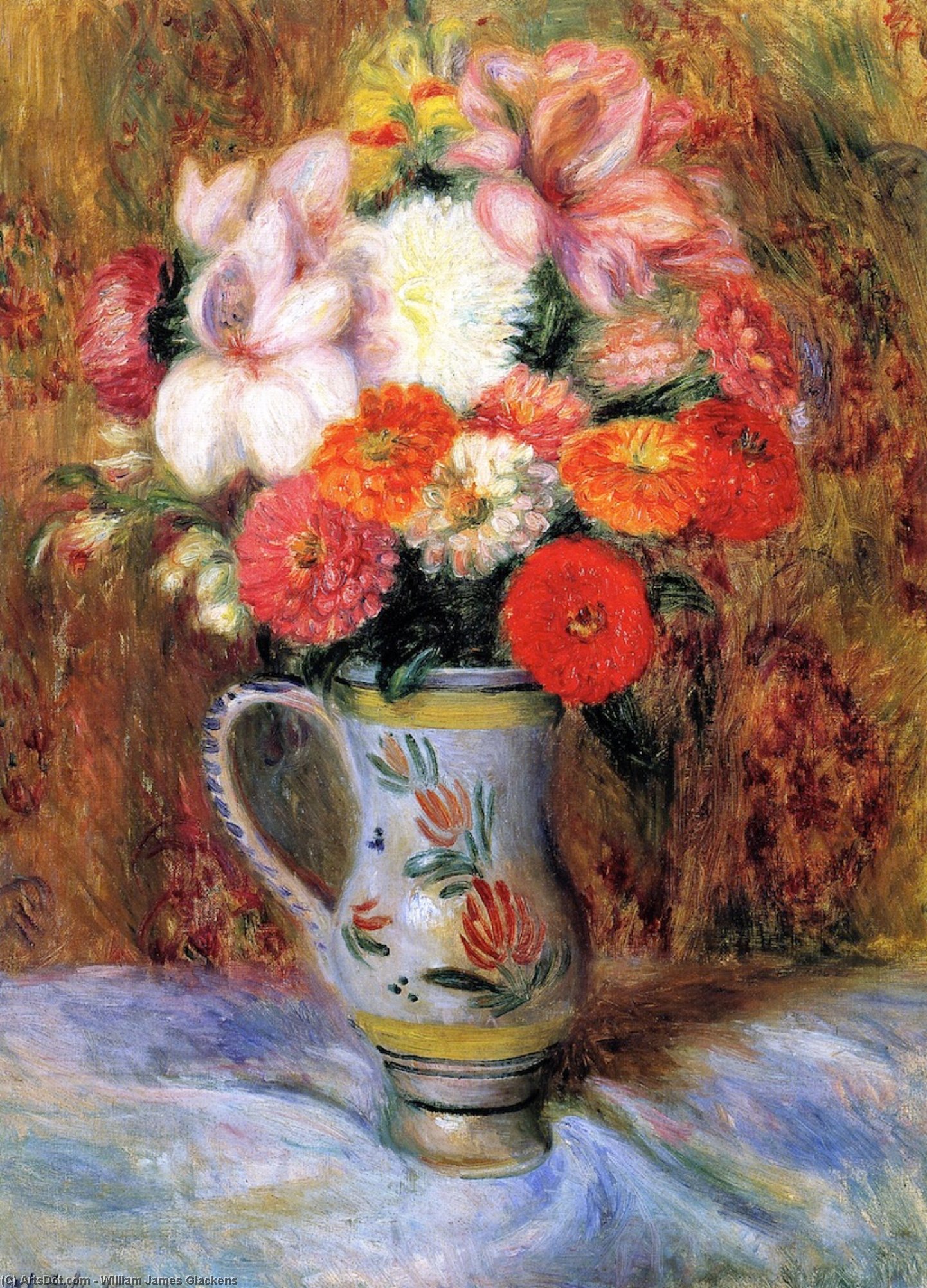
To gaze upon Flowers in a Quimper Pitcher is to step into a moment suspended between the vibrant energy of daily life and the quiet contemplation found within a sunlit room. This exquisite oil on canvas, painted by William James Glackens in 1930, transcends the mere depiction of flowers; it captures the very essence of domestic beauty. The composition centers around a cheerful yellow Quimper Pitcher, overflowing with an exuberant arrangement of red and pink blooms. Beneath this charming vessel lies a swath of deep blue cloth, providing a grounding contrast that makes the riotous colors of the blossoms seem to sing against the cool fabric.
Echoes of Impressionism in American Realism
William James Glackens is historically celebrated as a pioneer of the Ashcan School, an artist whose early work immersed viewers in the gritty, compelling narratives of metropolitan life. Yet, in this later piece, there is a noticeable and delightful shift. While his roots lie in the robust realism of American street scenes, Flowers in a Quimper Pitcher reveals the unmistakable influence of masters like Pierre-Auguste Renoir. This stylistic evolution allows Glackens to employ bolder, more luminous brushstrokes than might be expected from an Ashcan master. The technique is masterful; one can almost feel the texture of the petals and the smooth glaze of the pitcher. It speaks to an artist who remained deeply connected to his subject matter while embracing a lighter, more lyrical palette.
Symbolism of Abundance and Ephemerality
The still life genre has always been a meditation on time itself. Here, the profusion of flowers symbolizes abundance, joy, and the fleeting nature of beauty. The vibrant reds and pinks speak to passion and vitality, while the structured placement within the pitcher suggests order amidst natural chaos. The contrast between the enduring ceramic form—the yellow Quimper Pitcher—and the transient life cycle represented by the blossoms creates a beautiful tension. It invites the viewer to pause, not just to admire the craftsmanship of the arrangement, but to reflect on moments of perfect, temporary grace.
Bringing Parisian Light Home: Decorating with Art
For collectors and interior designers alike, this painting offers more than just aesthetic pleasure; it offers a mood. The bright, cheerful quality—a hallmark of Glackens' later period—makes it an ideal focal point for any space needing an infusion of warmth and color. Imagine this piece gracing a dining room or a sun-drenched parlor. Reproductions of Flowers in a Quimper Pitcher allow you to bring the sophisticated, light-filled ambiance of early 20th-century European painting into your modern sanctuary. It is a work that speaks eloquently of enduring beauty and the simple pleasures found at home.