A Glimpse into the Heart of American Realism
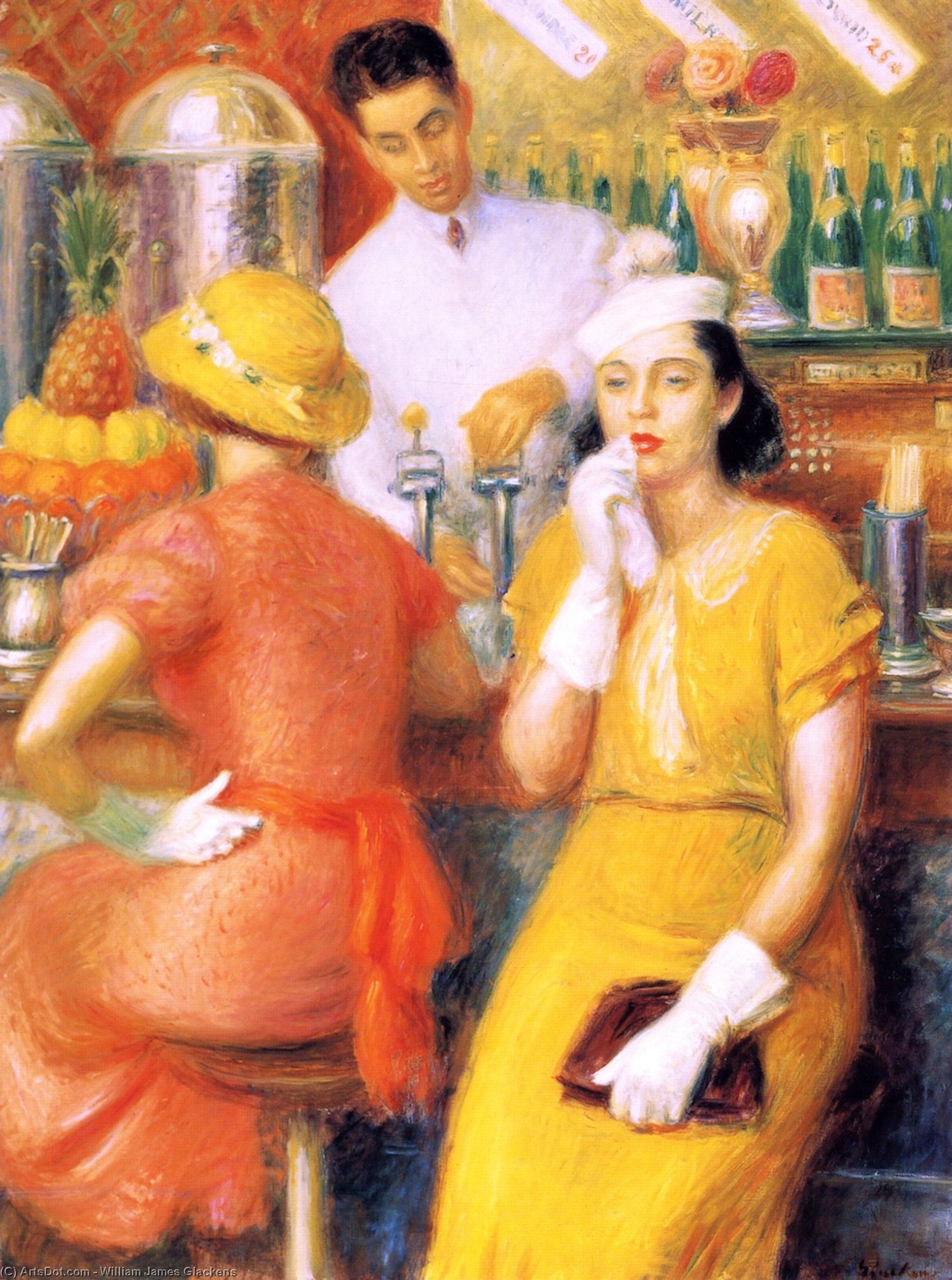
In the quiet, bustling corners of early twentieth-century life, there existed moments of profound connection and simple beauty that often escaped the gaze of the traditional academy. William James Glackens, a visionary pioneer of the Ashcan School, dedicated his brush to capturing these very fragments of existence. His 1935 masterpiece, The Soda Fountain, serves as a poignant window into a bygone era, inviting viewers to step into a world where the rhythm of daily life was measured by the clinking of glass and the soft murmur of conversation. This oil on canvas painting is not merely a depiction of a commercial space; it is an intimate portrait of social cohesion and the warmth found in the mundane.
The scene unfolds around a well-stocked soda fountain, a centerpiece that acts as both a physical anchor and a symbolic hearth for the characters within. Glackens masterfully arranges a small group of individuals—some perched on stools, others standing in contemplative or social stances—creating a composition that feels both spontaneous and meticulously balanced. The presence of various bottles, cups, and even the bright touch of oranges scattered across the counter adds a layer of tactile reality to the work. Through his expert use of light, Glackens imbues the setting with a sense of cozy nostalgia, casting a glow that transforms a simple cafe into a sanctuary of comfort.
Technique, Texture, and the Ashcan Legacy
As a founding member of the Ashcan School, Glackens famously rejected the rigid, often sterile boundaries of formal artistic beauty. Instead, he embraced a style characterized by dark-hued, vibrantly painted scenes that celebrated the gritty yet luminous reality of metropolitan life. In The Soda Fountain, one can observe this signature technique through the rich, layered application of oil paint. The artist utilizes a palette that balances deep, atmospheric shadows with sudden bursts of color, drawing the eye toward the essential elements of the scene: the glint of light on glassware and the soft textures of clothing.
The brushwork in this piece reflects a sophisticated command over American Realism. There is a rhythmic quality to how the bottles are rendered, creating a sense of abundance and vitality. This technique does more than just replicate sight; it evokes feeling. For the collector or interior designer, the painting offers a profound emotional resonance. It possesses the rare ability to ground a room with its historical weight while simultaneously providing an inviting, warm atmosphere that stimulates conversation and reflection.
An Enduring Inspiration for Modern Spaces
For those looking to curate a collection or design a sophisticated interior, The Soda Fountain offers much more than mere decoration. It is a piece of American history, representing a pivotal moment when artists began to find the extraordinary within the ordinary. The painting’s ability to evoke warmth and nostalgia makes it an ideal centerpiece for spaces intended to feel lived-in, cultured, and soulful. Whether placed in a contemporary gallery setting or a classic study, the work commands attention through its narrative depth.
Owning a high-quality reproduction of this Glackens masterpiece allows one to preserve the spirit of the Ashcan School within a modern home. It serves as a constant reminder of the beauty found in our shared human experiences—the simple joy of a gathering, the comfort of a familiar setting, and the artistry required to immortalize them. As an investment in art and atmosphere, The Soda Fountain remains a timeless testament to the enduring power of American Realism.