Explore the realist paintings of William James Glackens (1870-1938), a pioneer of the Ashcan School. Discover vibrant depictions of early 20th-century New York & Paris, capturing everyday life with striking detail.
Museum of Art
(Fort Lauderdale, United States of America)
Explore NSU Art Museum Fort Lauderdale’s diverse collection – Picasso ceramics, CoBrA art, Latin American masterpieces & more! A vibrant hub of contemporary and regional art in South Florida.
A Moment Frozen in Impressionistic Brilliance
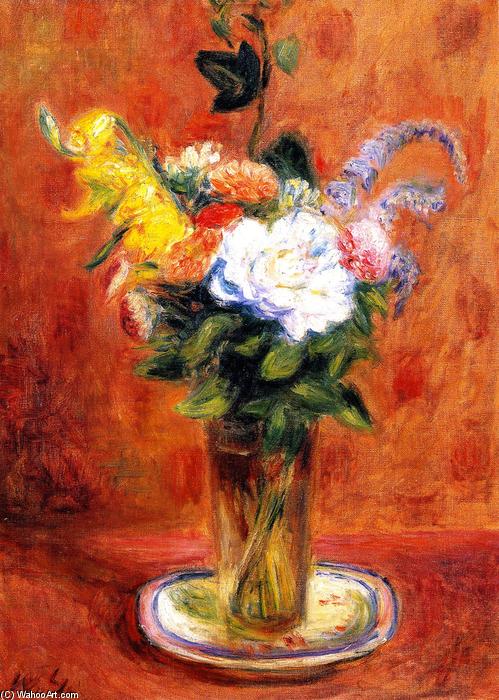
William James Glackens’ “White Rose & Other Flowers,” painted in 1937, stands as a quintessential example of Ashcan School realism infused with the ethereal beauty characteristic of Claude Monet. More than just a depiction of floral arrangement—a simple vase holding a bouquet of white roses intertwined with other blossoms—it encapsulates a profound appreciation for fleeting moments of light and color, mirroring Glackens’ unwavering commitment to capturing the essence of everyday life.
The Ashcan School Aesthetic: Rejecting Convention
Born in Philadelphia in 1870, Glackens emerged as a pivotal figure within the Ashcan School movement. Dissatisfied with the idealized landscapes and grand narratives favored by academic art circles, this group sought to portray urban America—particularly New York City—with unflinching honesty. They rejected polished surfaces and meticulous detail, prioritizing raw emotion and capturing the gritty realities of industrial life.
Technique and Impressionistic Vision
Glackens’ masterful technique exemplifies the core principles of Impressionism. He employed loose brushstrokes – short, broken strokes—to build up texture and imbue the canvas with a sense of movement. These strokes weren't intended to precisely render form; instead, they aimed to convey the impression of light and atmosphere, as Monet himself would strive to achieve. The warm orange-red hue of the background serves as an integral element in this illusionistic approach.
Symbolism Beneath Surface Beauty
Beyond its visual splendor, “White Rose & Other Flowers” carries subtle symbolic resonance. White roses traditionally represent purity and innocence—a poignant contrast to the bustling cityscape depicted beneath. The arrangement itself speaks to a quiet contemplation, inviting viewers to pause and appreciate the simple elegance of nature amidst urban chaos. It’s a testament to Glackens' ability to distill complex emotions into a deceptively serene composition.
A Legacy of Realistic Impressionism
Influenced by artists like Pierre Auguste Renoir and Thomas Anshutz, Glackens honed his skills at the Pennsylvania Academy of Fine Arts before establishing himself as a leader within the Ashcan School. His enduring legacy resides in his ability to fuse realism with Impressionistic sensibilities—creating artworks that are both emotionally resonant and aesthetically captivating. “The Shoppers,” another masterpiece from Glackens’ oeuvre, exemplifies this distinctive style and is now housed in the Chrysler Museum of Art.