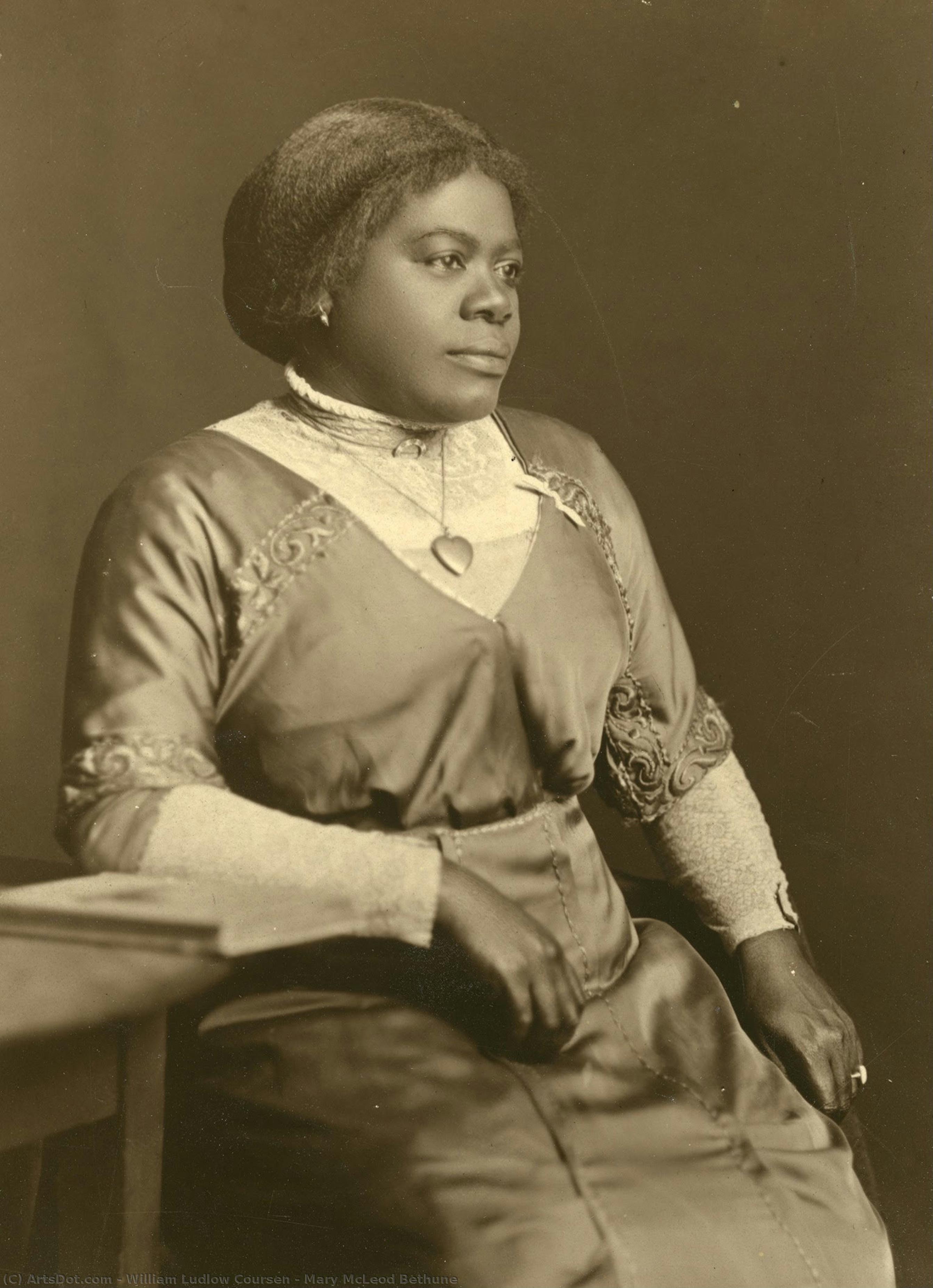
Mary McLeod Bethune

A dignified portrait of Mary McLeod Bethune by William Ludlow Coursen captures the spirit of early 20th-century American activism and education. This evocative black and white photograph showcases Bethune's unwavering dedication to empowering African American girls, cementing Coursen’s place as a masterful chronicler of his time.


william ludlow coursen (1867 - 1952)

Discover William Ludlow Coursen (1867-1952), a celebrated American photographer known for elegant portraits of notable figures like Mary McLeod Bethune. Explore his gelatin silver prints & legacy!

National Portrait Gallery (Washington, D.C., United States of America)

Explore American history through the faces of its most influential figures at the Smithsonian National Portrait Gallery! Discover iconic portraits – presidents, artists, activists & more – and witness a unique blend of art, history, and identity in Washington D.C.

A Portrait of Resilience: Mary McLeod Bethune by William Ludlow Coursen

  • Subject Matter: This striking black and white photograph captures Mary McLeod Bethune, an influential African American educator, author, and political activist. Bethune stands as a beacon of determination and leadership—a testament to the unwavering spirit of Black women striving for advancement during a pivotal period in American history.
  • Style: Coursen’s photographic style embodies the aesthetic sensibilities of his time – characterized by meticulous detail and an understated elegance. He eschews dramatic lighting or elaborate compositions, prioritizing instead a direct gaze that conveys Bethune's inner strength and conviction.
    • Technique: Coursen skillfully employs albumen printing, a photographic process prevalent in the early 20th century. This technique involves immersing paper in a solution of egg whites and ferric chloride, resulting in tonal gradations that imbue the image with depth and nuance. The careful manipulation of light and shadow enhances Bethune’s features and creates an atmosphere of quiet contemplation.
  • Historical Context: Taken in 1911, Coursen's portrait aligns perfectly with the burgeoning Black Women’s Club Movement—a concerted effort to empower African American women through collective action and advocacy. Bethune herself was a central figure within this movement, tirelessly campaigning for suffrage and addressing pressing social issues facing her community.
  • Symbolism: The photograph's composition speaks volumes about Bethune’s character. Her posture exudes confidence and composure—a visual representation of her unwavering commitment to education and social justice. Furthermore, the simple backdrop underscores Bethune’s focus on her mission: uplifting Black girls and fostering leadership within their communities.
  • Emotional Impact: Coursen's photograph transcends mere documentation; it evokes a profound sense of admiration for Bethune’s perseverance and embodies the spirit of empowerment. The image resonates with viewers today, reminding us of the importance of role models—individuals who inspire courage and compassion in pursuit of meaningful change.