A Portrait of Command: The Presence of General John Withington Adams
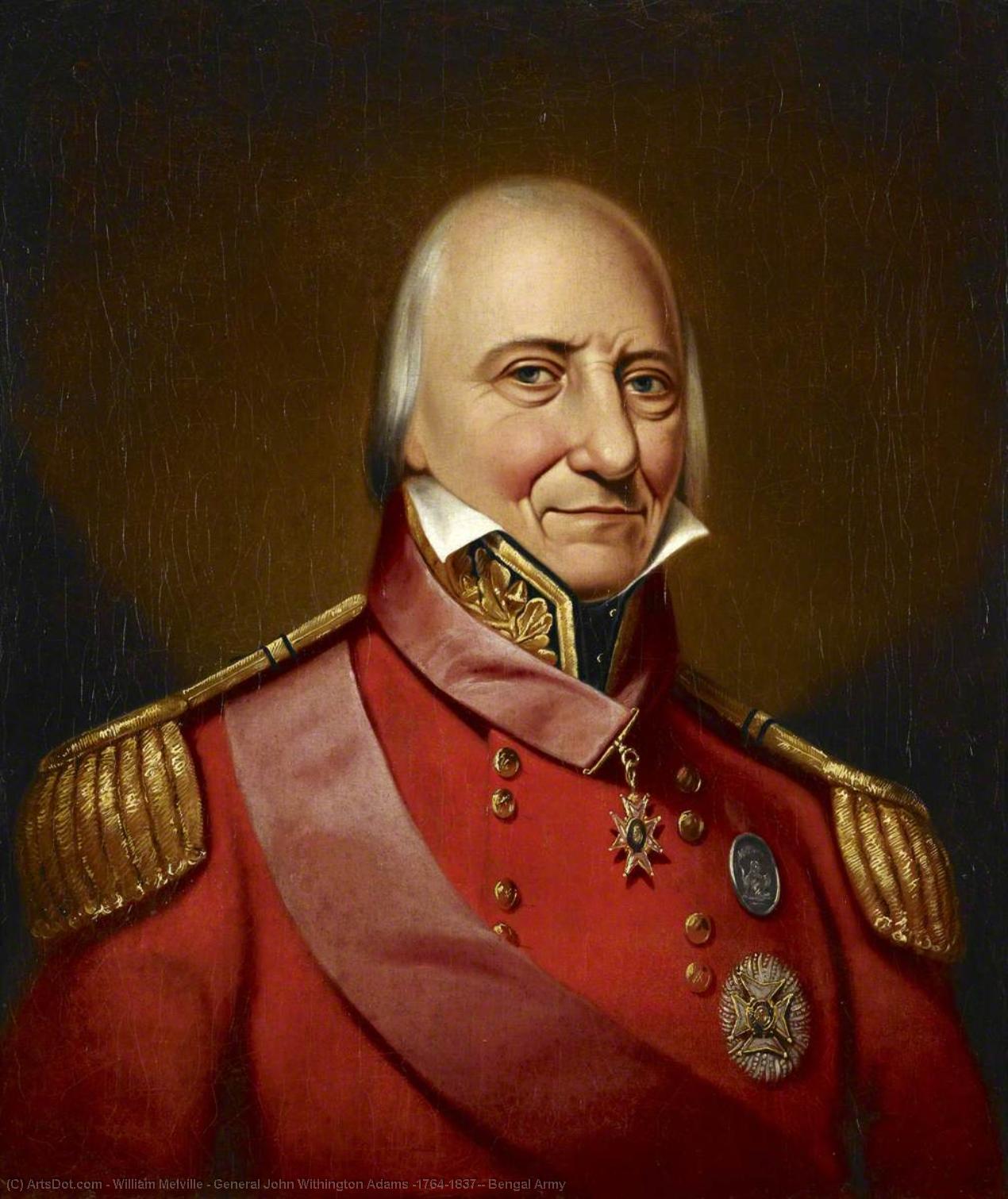
In the quiet, commanding presence of General John Withington Adams, we encounter more than just a likeness; we encounter the very essence of nineteenth-century military prestige. Painted in 1837 by the evocative William Melville, this portrait serves as a profound window into an era defined by imperial expansion and the rigid hierarchies of the Bengal Army. The subject sits with an unmistakable air of authority, his gaze steady and resolute, embodying the weight of leadership during a transformative period in British colonial history. Through Melville’s masterful hand, the canvas transcends mere documentation, becoming a psychological study of a man shaped by duty and the complexities of command.
The visual impact of the piece is immediately striking, driven by a sophisticated use of contrast and color. The deep, shadowy background acts as a void, pushing the figure forward and demanding the viewer's undivided attention. This technique, reminiscent of classical portraiture traditions, ensures that every detail of the General’s attire is rendered with exquisite clarity. The vibrant crimson of his uniform provides a bold splash of color against the darkness, while the crisp white of his cape and the intricate gold lace create a rhythmic interplay of light and texture. These elements do more than just signify rank; they symbolize the splendor and the heavy burden of the officer class during the height of the British Raj.
Beyond the grandeur of the uniform, Melville captures the human element with remarkable sensitivity. The fine details of the General’s facial features—the texture of his beard, the subtle lines around his eyes, and the dignified set of his mouth—offer a glimpse into the character of a man who lived through decades of global upheaval. There is a palpable sense of gravity in his expression, a reflection of the strategic responsibilities held by high-ranking officials in the Bengal Army. For the discerning collector or interior designer, this painting offers a sophisticated focal point that brings a sense of historical weight and timeless elegance to any space.
Integrating such a piece into a contemporary interior allows for a captivating dialogue between the past and the present. Whether placed in a formal study, a library, or a grand hallway, the portrait of General Adams acts as an anchor of tradition. Its rich palette and dramatic composition provide a sense of depth and narrative complexity that modern minimalist works often lack. As a high-quality reproduction, this artwork allows enthusiasts to possess a fragment of history, inviting conversation about empire, identity, and the enduring power of the painted portrait to capture the human spirit across the centuries.