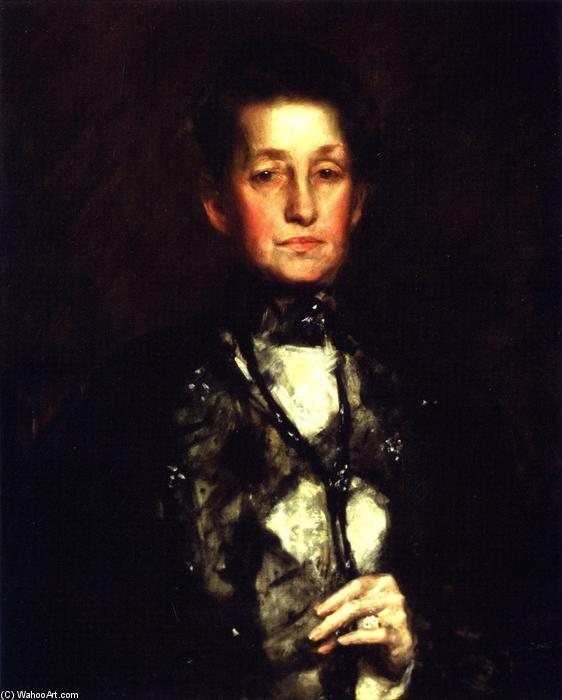
Mrs. (Marianna) B.W. Taylor: A Portrait of Quiet Dignity
William Merritt Chase's "Mrs. (Marianna) B.W. Taylor," painted in 1903, is a captivating portrait that exemplifies the artist’s mastery of Impressionistic techniques and his ability to capture the essence of his subjects. Housed within the esteemed Columbia Museum of Art, this oil on canvas piece offers a glimpse into the late 19th-century American society and showcases Chase's skill in portraying both physical likeness and subtle emotional depth.
The Artist’s Style and Technique
Chase was a leading figure in the American Impressionist movement, known for his bold brushstrokes, vibrant color palettes, and focus on capturing fleeting moments. In "Mrs. (Marianna) B.W. Taylor," these characteristics are readily apparent. The portrait depicts Mrs. Taylor with a composed expression, yet her eyes hold a depth that hints at a complex inner life. Chase’s loose, expressive brushwork creates a sense of movement and vitality, while the carefully chosen colors contribute to the overall mood of quiet dignity.
The use of oil on canvas allows for rich layering and texture, enhancing the realism of the portrait while maintaining an Impressionistic feel. Chase's technique is reminiscent of his other notable works such as "Lady with Orchids" and "Woman of Holland," demonstrating a consistent ability to portray human emotion through subtle nuances in expression and posture.
Historical Context and Symbolism
The portrait was created during a period of significant social change in America, marked by industrialization, urbanization, and evolving societal norms. Mrs. Taylor's attire and demeanor reflect the refined sensibilities of the upper class at the time. While the painting doesn’t contain overt symbolic elements, her posture and gaze convey a sense of strength, intelligence, and quiet confidence – qualities valued in women of that era.
Chase was known for his ability to capture the spirit of his subjects, and "Mrs. (Marianna) B.W. Taylor" is no exception. The portrait serves as a valuable historical document, offering insight into the lives and appearances of prominent individuals during the Gilded Age.
Emotional Impact and Artistic Legacy
"Mrs. (Marianna) B.W. Taylor" evokes a sense of timeless elegance and quiet contemplation. The painting’s skillful execution and evocative portrayal of its subject create an emotional connection with the viewer, inviting reflection on themes of identity, social status, and personal character.
As a significant work within William Merritt Chase's oeuvre, this portrait solidifies his reputation as one of America's foremost Impressionist painters. It stands as a testament to his artistic talent and his ability to capture the essence of human experience on canvas, continuing to inspire art enthusiasts and collectors alike.
- Medium: Oil on Canvas
- Date: 1903
- Location: Columbia Museum of Art