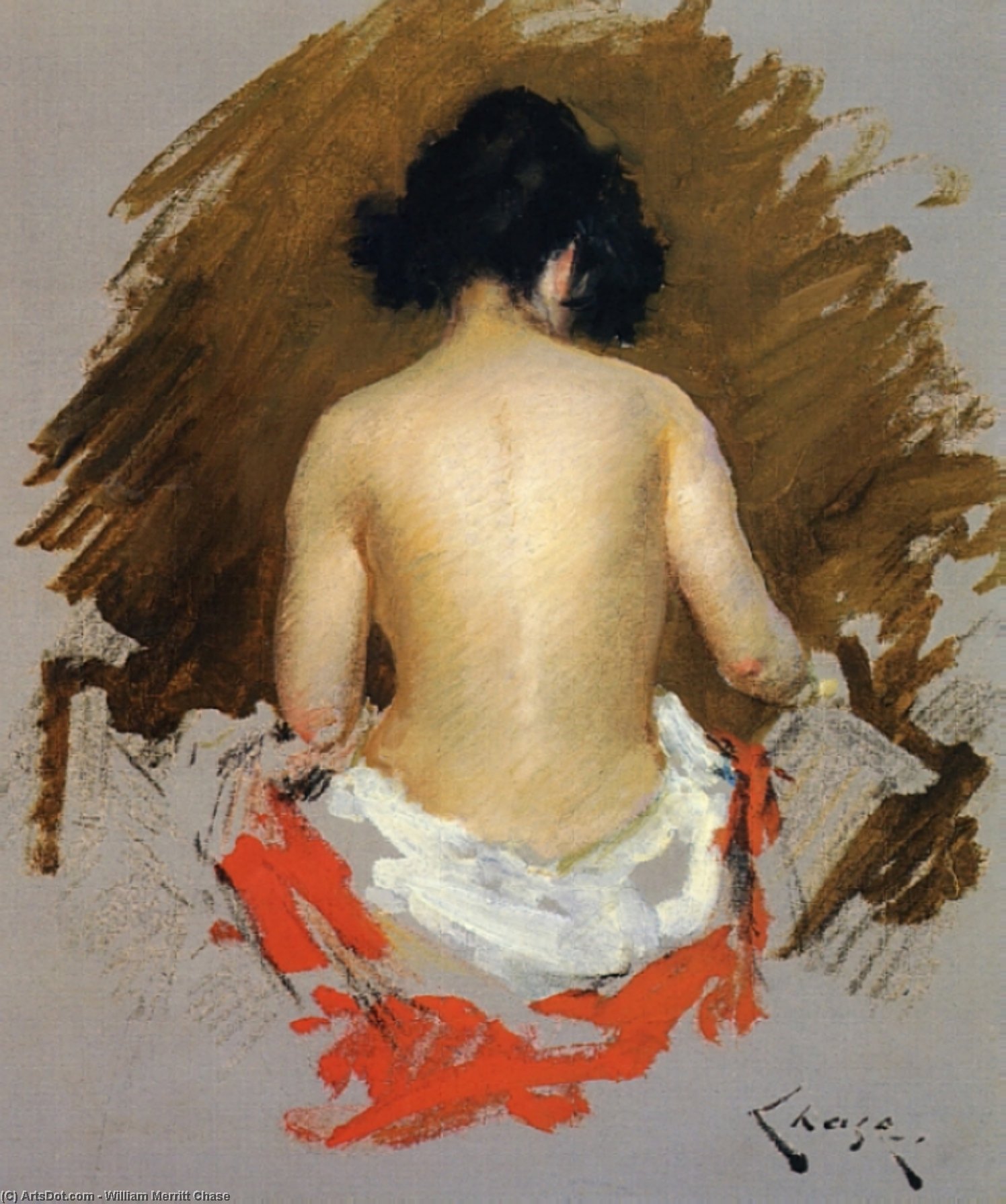
Experience the serene beauty of William Merritt Chase’s Impressionist pastel masterpiece—a captivating nude figure bathed in soft light against a textured chair backdrop. Explore this iconic artwork and its legacy on ArtsDot.
Discover William Merritt Chase (1849-1916), a leading American Impressionist & art educator! Explore his vibrant portraits, landscapes & legacy as founder of Parsons School of Design.
A Moment Frozen in Pastel Light: Exploring William Merritt Chase’s “Nude”
The pastel painting "Nude" by William Merritt Chase stands as a cornerstone of American Impressionism, capturing not merely an image but an essence—a fleeting glimpse into quiet contemplation and sensual beauty. Executed in 1888, this artwork transcends mere representation; it embodies the spirit of its time and continues to resonate with viewers today. Measuring precisely 50 x 40 cm, Chase’s masterpiece invites us into a space defined by subtle hues and masterful brushstrokes—a deliberate departure from the grand narratives favored by academic painting.
The Impressionistic Embrace: Style and Technique
Chase's stylistic choices firmly situate “Nude” within the burgeoning Synthetism movement, spearheaded by artists like Paul Gauguin. Unlike the meticulous realism championed by earlier generations, Synthetism prioritized capturing the subjective experience of light and color—a principle perfectly realized in this pastel composition. The artist eschews harsh outlines, favoring instead a diffused palette that blends seamlessly across the canvas. Notice how Chase utilizes layering techniques to build up tonal variations, creating an illusion of depth and texture without resorting to traditional glazing methods. This deliberate simplification is characteristic of Impressionism’s quest for immediacy and emotional resonance.
Historical Context: The Dawn of Modern Art in America
“Nude” emerged during a period of significant artistic upheaval in the United States. Following the influence of European Impressionists like Monet and Renoir, American artists were actively experimenting with new approaches to painting—abandoning academic conventions for explorations of light, color, and atmosphere. Chase’s decision to depict a nude figure wasn't merely an aesthetic choice; it represented a bold assertion of artistic freedom and challenged prevailing societal norms regarding depictions of the human form. The painting reflects the broader cultural shift toward valuing individual expression and embracing natural beauty—themes that would become central to American art history.
Symbolism Beneath the Surface: Gesture and Vulnerability
Beyond its technical brilliance, “Nude” possesses a profound symbolic dimension. The woman’s posture—seated on the floor with her back turned—suggests vulnerability and introspection. Her relaxed stance conveys a sense of repose, inviting viewers to contemplate the quiet dignity of stillness. The red sheet draped over her body serves as both a visual anchor and a subtle emblem of passion and desire. Chase skillfully utilizes gesture – the movement implied by the woman’s pose – to imbue the painting with emotional depth. It's a portrait not just of flesh, but of spirit.
Emotional Resonance: Capturing Light and Feeling
Ultimately, “Nude” succeeds in conveying an unforgettable emotional experience. The pastel hues—particularly the delicate reds and pinks—evoke feelings of warmth and tenderness. Chase’s masterful rendering of light captures the subtle nuances of illumination, creating a luminous effect that enhances the painting's ethereal quality. Viewing this artwork is akin to stepping into a moment frozen in time—a testament to Chase’s ability to transform pigment onto canvas into an enduring expression of beauty and contemplation.