William Mulready’s Horses Baiting: A Pastoral Echo of Victorian Sentiment
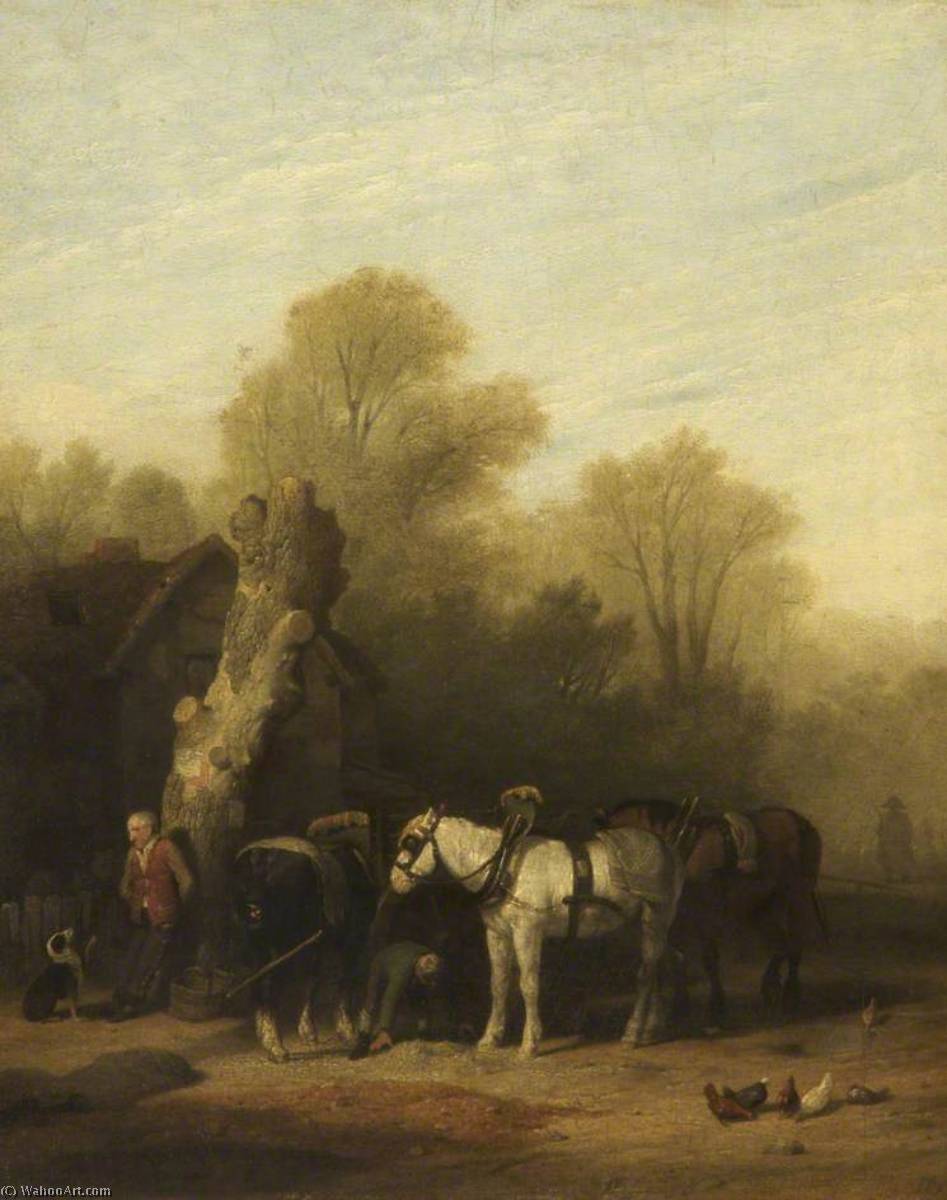
Horses Baiting by William Mulready (1786–1863), 1816, from The Whitworth, The University of Manchester is a deceptively tranquil depiction of rural life that speaks volumes about the Victorian fascination with nature and its role in shaping human emotion. Painted during a period marked by industrial expansion and social upheaval, Mulready’s artwork offers a respite from urban anxieties—a carefully crafted tableau designed to evoke feelings of serenity and idealized beauty. The painting's enduring appeal lies not merely in its visual charm but also in its subtle articulation of Victorian sensibilities concerning morality and the sublime.
- Subject Matter: The scene portrays a simple pastoral setting featuring three horses gathered around a trough, accompanied by a solitary figure overseeing their activities. This deliberate choice of subject matter aligns perfectly with the Romantic movement’s emphasis on unspoiled landscapes and the contemplation of natural grandeur—a reaction against the perceived ugliness and corruption of industrial society.
- Style: Mulready's style is firmly rooted in Realism, yet imbued with a Romantic spirit. He meticulously captures the textures of the horses’ coats, the rough bark of the ancient tree dominating the background, and the weathered appearance of the barn—details that convey an impression of authenticity while simultaneously elevating the scene to a level of aesthetic contemplation.
- Technique: Employing oil paint on wood, Mulready utilizes layering techniques to achieve remarkable depth and luminosity. Careful blending creates soft gradations of color, enhancing the overall atmosphere of calm and inviting viewers into the depicted environment. The artist’s meticulous attention to detail underscores his commitment to portraying nature accurately—a hallmark of Victorian artistic practice.
Historical Context: Victorian Ideals of Landscape and Domestic Tranquility
The painting emerged from a broader cultural context characterized by anxieties surrounding industrialization and social reform. However, Mulready consciously sought to counter these concerns by presenting an image of rural harmony—a deliberate affirmation of traditional values and beliefs. The Whitworth Gallery’s acquisition of Horses Baiting reflects the Victorian appreciation for landscapes that embodied moral virtue and spiritual solace. It exemplifies the movement's conviction that communion with nature could nurture the soul and instill a sense of ethical responsibility.
Symbolism: Horses as Embodiments of Strength, Fertility, and Pastoral Virtue
Horses themselves hold significant symbolic weight within Victorian art and literature—representing strength, fertility, and nobility. In Mulready’s depiction, they symbolize not only physical prowess but also the pastoral ideal—a vision of rural life characterized by simplicity, contentment, and connection to the natural world. The presence of the solitary figure suggests a contemplative gaze upon this idyllic scene—reflecting Victorian belief in the importance of moral reflection and spiritual contemplation amidst the bustle of urban existence.
Emotional Impact: A Balm for Industrial Anxiety
Ultimately, Horses Baiting succeeds in transporting viewers to a realm of tranquility and beauty—offering a poignant counterpoint to the anxieties prevalent during the Victorian era. The muted palette contributes to the painting’s overall mood—creating an atmosphere of understated elegance and inviting contemplation. Mulready's masterful execution captures not just what is seen but also what is felt—affirming the enduring power of art to evoke emotion and inspire wonder. It stands as a testament to Victorian artists’ ability to distill complex philosophical ideas into accessible visual representations—a celebration of nature’s restorative qualities and its capacity to nourish the human spirit.