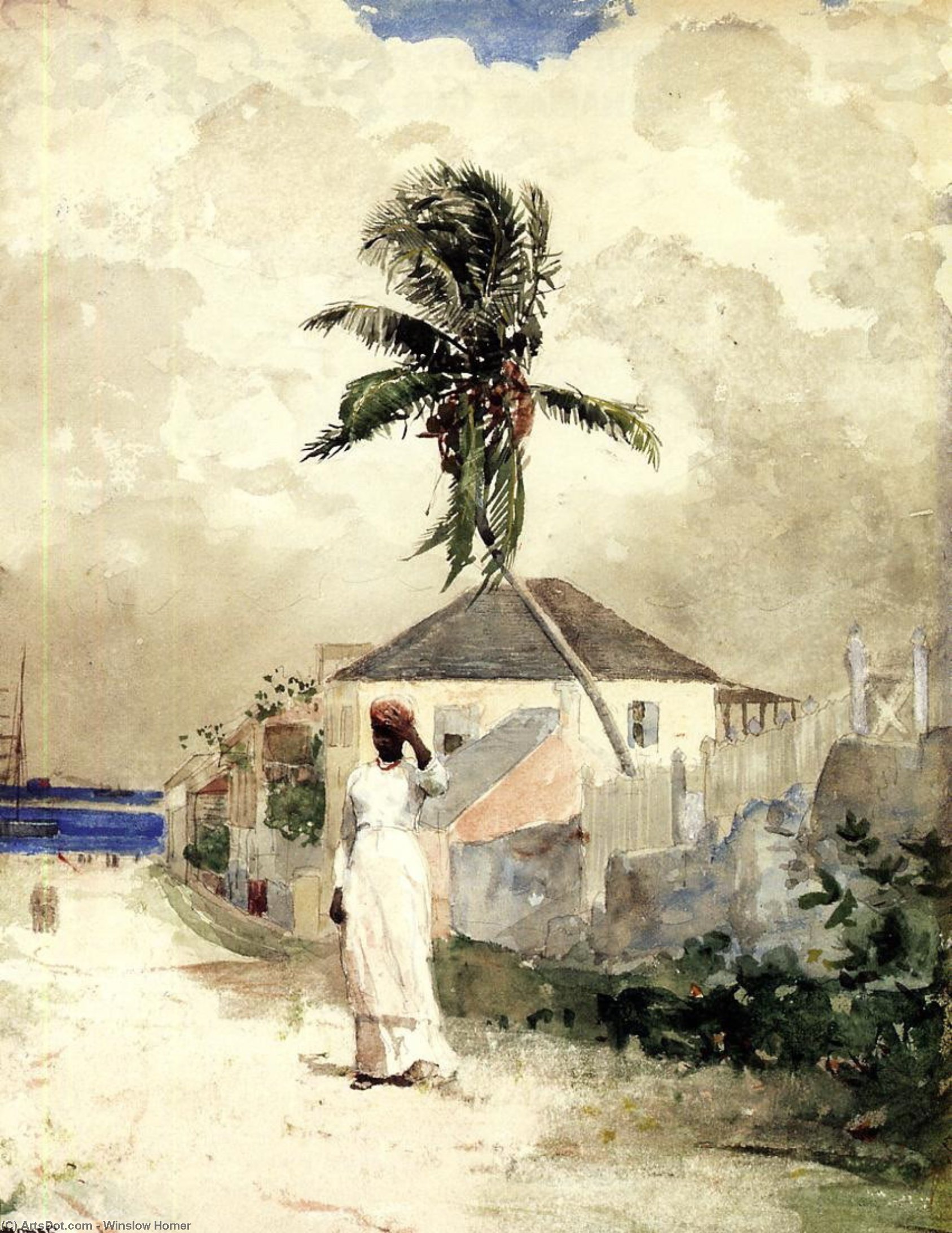
Along the Road, Bahamas

Winslow Homer’s evocative watercolor captures a vibrant Bahamian street scene—a woman carrying bananas amidst bustling figures and boats—reflecting the artist's masterful observation of American life during the late 19th century. Explore this stunning reproduction and bring Homer’s vision home.


Winslow Homer (1836 - 1910)

Winslow Homer (1836-1910): Explore the iconic American Realist's powerful paintings of marine life, landscapes & 19th-century life. Discover masterpieces like 'The Gulf Stream' and 'Breezing Up'.

A Window Into Bahamian Life: Winslow Homer’s “Along the Road”

  • Subject Matter: Winslow Homer's "Along the Road," painted circa 1893, captures a quintessential moment of rural American life in the Bahamas. The focal point is a woman carrying a substantial bunch of bananas on her head as she traverses a sunlit street – an image that speaks volumes about daily routines and agricultural traditions within this tropical locale.
  • Style: Homer’s style exemplifies Realism, prioritizing accurate representation over idealized beauty. He eschewed the romantic conventions prevalent in European art of his time, opting instead for a grounded observation of the natural world and human experience. This deliberate choice aligns perfectly with the burgeoning American spirit of self-reliance and connection to the land.
    • Technique: Homer masterfully employed watercolor on canvas—a technique he favored throughout his prolific career. Watercolor’s transparency allows for subtle gradations of color and luminosity, creating an ethereal quality that contrasts beautifully with the solidity of the canvas. The artist meticulously blended pigments to achieve remarkable tonal accuracy, capturing the nuances of light and shadow with impressive precision.
    • Historical Context: Painted during Homer's mature period, “Along the Road” reflects the broader artistic trends of Impressionism and Post-Impressionism. While Homer didn’t fully embrace Impressionistic brushstrokes—he maintained a more controlled approach—the painting nonetheless embodies the movement’s emphasis on capturing fleeting moments of sensory experience. It emerged from a time when America was grappling with industrialization and urbanization, yet Homer steadfastly championed the beauty and dignity of simpler rural life.
  • Symbolism: Beyond its depiction of everyday activity, “Along the Road” carries symbolic weight. The bananas represent prosperity and abundance—a visual reminder of the Bahamas’ agricultural heritage. Furthermore, the woman herself embodies resilience and practicality – qualities admired in American culture during Homer's era. Her posture conveys determination and grace as she navigates her surroundings.
  • Emotional Impact: Homer’s painting evokes a profound sense of tranquility and nostalgia. The soft light filtering through the foliage, combined with the muted palette, creates an atmosphere of serene contemplation. Viewers are invited to consider not just what is seen but also *how* it feels—a testament to Homer's ability to convey emotion through visual detail.