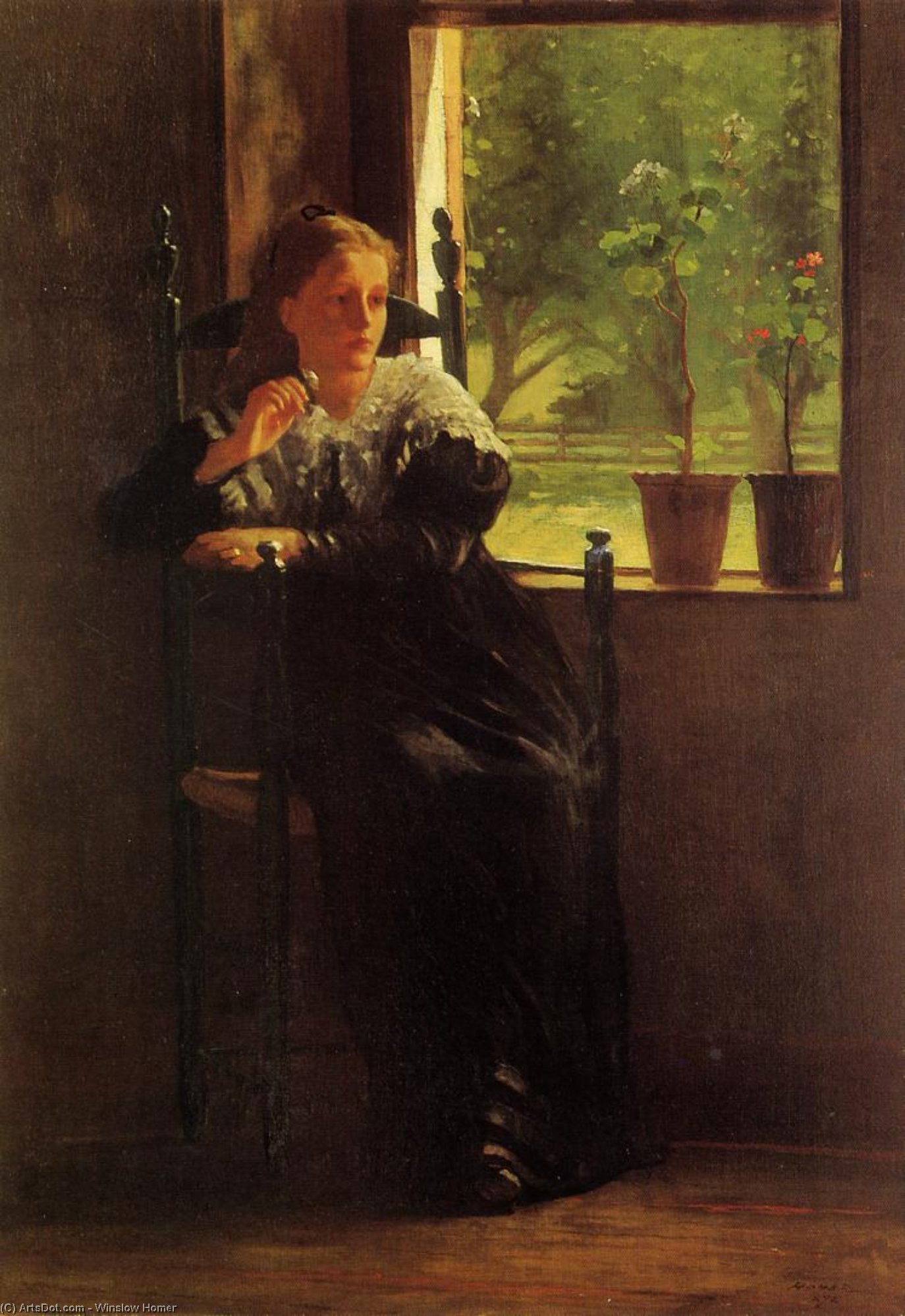
'At the Window' by Winslow Homer captures serene beauty with meticulous detail—a lone woman gazing out at a garden through a window, bathed in soft light. Explore this masterpiece and discover more Realism art on WikiArt.
Winslow Homer (1836-1910): Explore the iconic American Realist's powerful paintings of marine life, landscapes & 19th-century life. Discover masterpieces like 'The Gulf Stream' and 'Breezing Up'.
A Moment Frozen in Time: Exploring Winslow Homer’s “At the Window”
Winslow Homer's "At the Window," painted in 1872, isn’t merely a depiction of a woman gazing out at a garden; it’s a masterful distillation of American Realism—a movement that championed honest observation and eschewed romantic embellishment. More than just capturing a picturesque scene, Homer achieves something deeper: he freezes a fleeting moment of contemplation within the quiet grandeur of rural New England. This piece resides in the Princeton University Art Museum, offering visitors a chance to experience firsthand the profound impact of this iconic artwork.
The Essence of Realism: Technique and Detail
Homer’s approach is strikingly direct. He employs oil paints on canvas with meticulous attention to texture—notice the rough grain of the wooden window frame juxtaposed against the smooth sheen of the woman's garment. The artist skillfully renders light, bathing her face in a soft glow that emphasizes her stillness and introspection. Homer’s technique prioritizes accuracy; every element contributes to an overall impression of understated beauty and palpable atmosphere. This dedication to realism distinguishes “At the Window” from its predecessors, rejecting idealized representations for a grounded portrayal of everyday life.
Symbolism Within Simplicity: The Garden Motif
Beyond mere visual representation lies a subtle layer of symbolism. The garden itself—represented with carefully positioned flowering plants—serves as a powerful emblem of growth, renewal, and the passage of time. It’s a deliberate choice that invites viewers to consider themes of serenity, solitude, and perhaps even longing. Homer doesn't spell out these ideas; instead, he presents them organically within the frame, allowing the viewer to interpret their significance personally. The woman’s posture—head resting gently against her hand—further reinforces this mood of quiet contemplation.
Historical Context: The Rise of American Realism
“At the Window” emerged during a pivotal moment in American art history – the burgeoning influence of Realism. Artists like Homer rejected the conventions of Romanticism, favoring instead an unflinching gaze upon the realities of American life. This movement sought to depict subjects truthfully, without idealization or sentimentality, reflecting the spirit of the era’s social and intellectual currents. The painting's placement within Princeton University Art Museum underscores its importance as a cornerstone of this influential artistic movement.
A Legacy of Quiet Beauty: Why “At the Window” Endures
The enduring appeal of Homer’s masterpiece lies in its ability to convey emotion through understated visual language. It’s a portrait not of grand gesture or dramatic narrative, but of quiet dignity and profound introspection—qualities that resonate powerfully across generations. "At the Window" continues to inspire artists and collectors alike, reminding us that beauty can be found in simplicity and that true art captures the essence of human experience with remarkable precision. If you’re seeking a stunning oil painting reproduction of this masterpiece, visit /art/list/?Filter=8BX2FW-Winslow-Homer-At-the-Window/.