A Symphony of Serenity: The Tender World of Winslow Homer
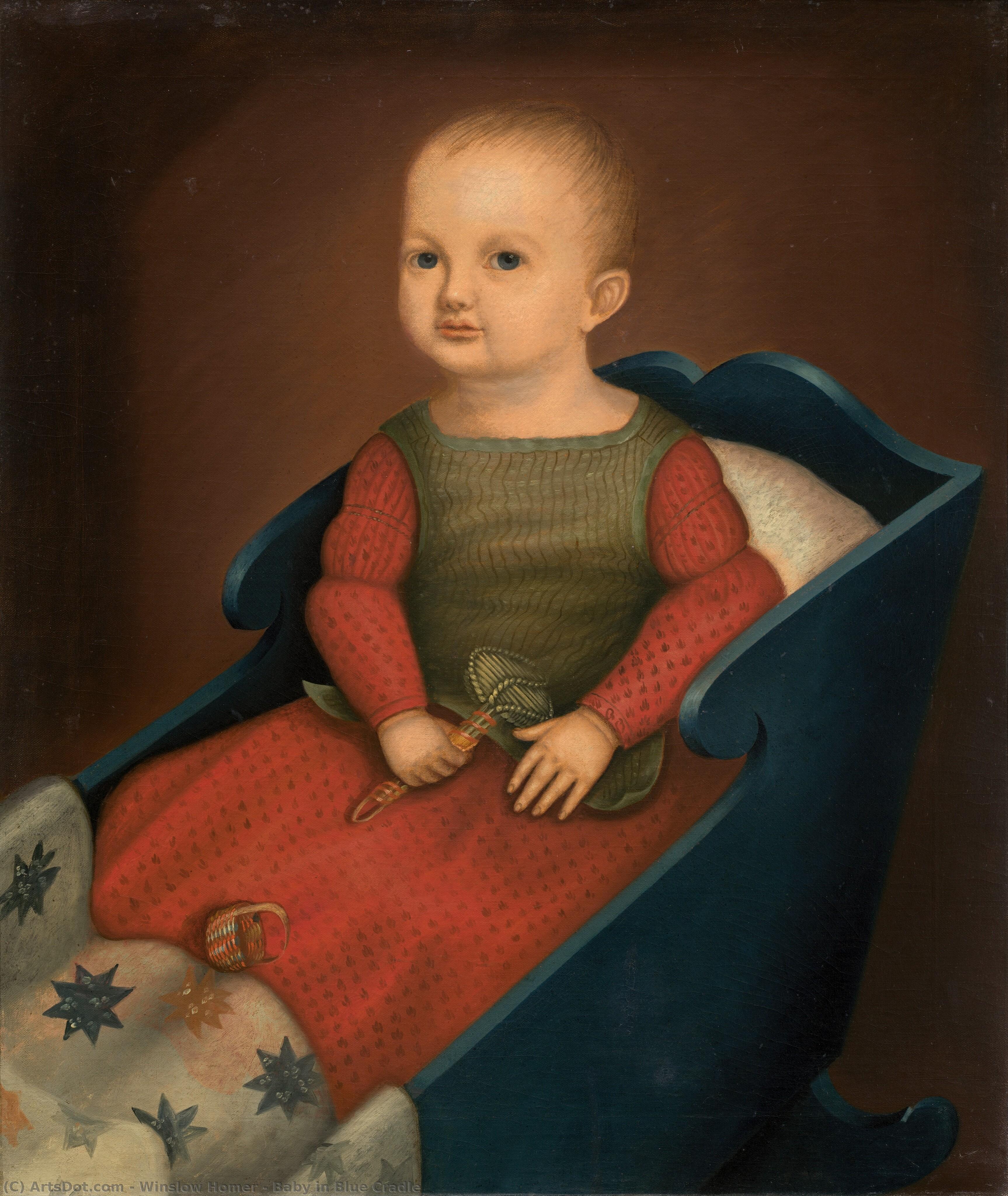
In the vast landscape of American Realism, few moments possess the quiet, heart-stopping intimacy found in Winslow Homer’s “Baby in Blue Cradle.” Completed in 1840, this exquisite oil on canvas serves as a profound testament to the artist's early ability to distill the monumental essence of life into a singular, breathless moment. The painting invites the viewer into a private sanctuary of domestic peace, where the outside world—with all its industrial clamor and social upheaval—simply ceases to exist. At its heart lies a scene of remarkable simplicity: a young infant nestled within the protective embrace of a weathered blue cradle, a composition that achieves a poetic balance between the fragility of new life and the enduring strength of the objects that surround it.
The visual language of the piece is defined by a masterful command of color and light. Homer employs a restrained yet deeply emotive palette, where the cool, tranquil blues of the cradle harmonize with soft washes of red and pink. These hues do more than merely decorate the canvas; they breathe warmth into the scene, evoking the very sensation of a nursery's gentle heat. Through deliberate and understated brushstrokes, Homer achieves a tactile richness, particularly in the textured grain of the wooden cradle frame. The artist’s handling of light is nothing short of transformative, casting soft, diffused shadows that wrap around the infant like a silken veil, enhancing the sense of profound intimacy and security that defines this masterpiece.
Symbolism and the American Spirit
Beyond its surface beauty, “Baby in Blue Cradle” resonates with a deep symbolic weight that continues to captivate collectors and historians alike. The cradle itself, rendered with a sense of weathered resilience, acts as a powerful metaphor for protection, nurturing, and the continuity of generations. The baby’s gaze, directed toward the viewer with an expression of innocent curiosity, creates an emotional bridge, pulling the observer into this sacred space of maternal care. This direct engagement transforms the painting from a mere observation of life into a shared experience of wonder.
To understand the depth of this work, one must consider the historical landscape of mid-19th century America. As a period marked by rapid industrial expansion and shifting societal values, Homer’s focus on the quiet dignity of rural and domestic life offered a necessary anchor to the American identity. His ability to document these fleeting moments of tranquility with unwavering honesty reflects a spirit of realism that sought truth in the everyday. For the discerning interior designer or art enthusiast, this painting offers more than just aesthetic appeal; it provides a focal point of emotional stability and timeless grace, making it an incomparable addition to any curated collection seeking to evoke peace and reflection.