A Glimpse into American Childhood: Winslow Homer’s “Brother and Sister”
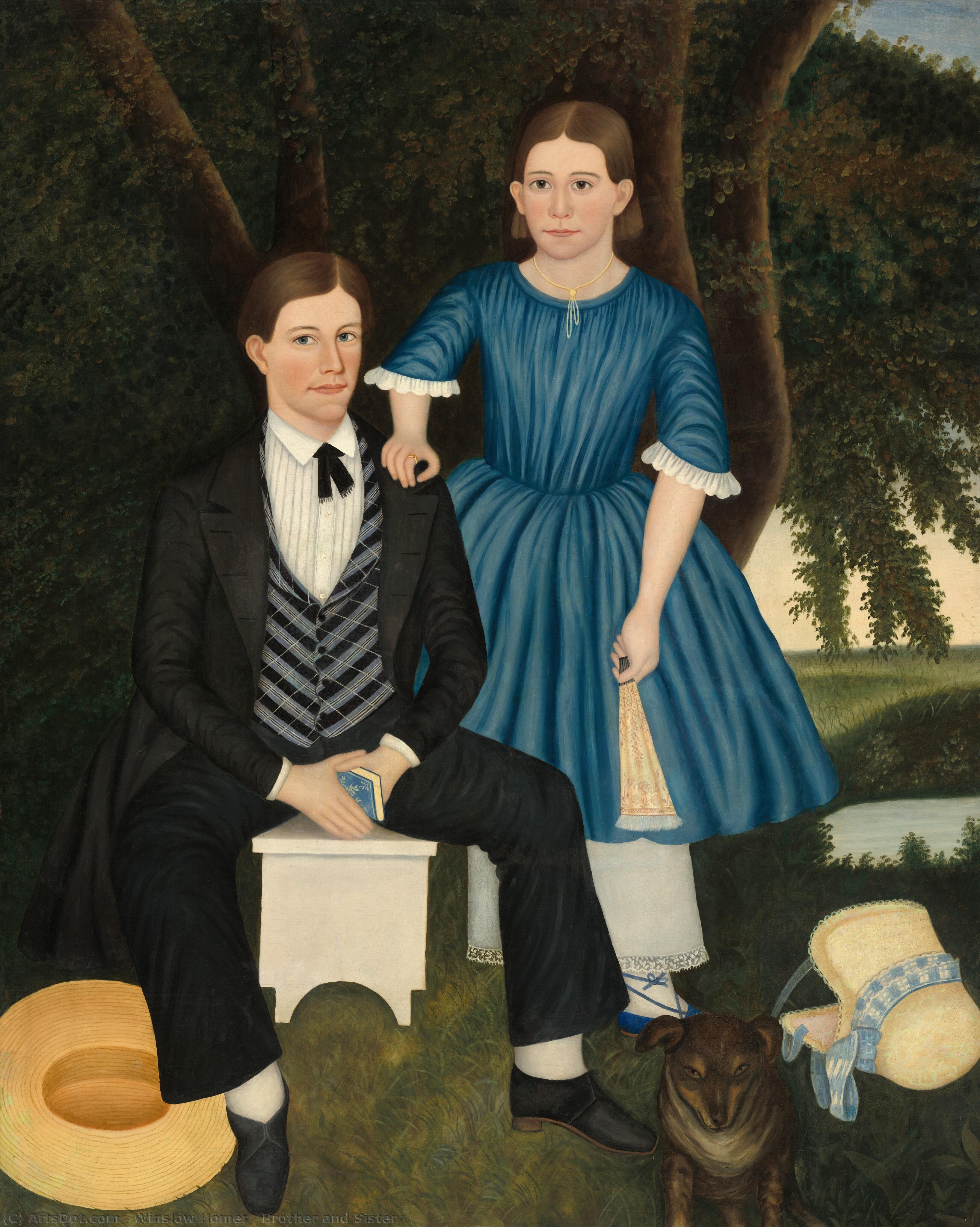
“Brother and Sister,” painted in 1845 by Winslow Homer, is more than just a portrait; it's a tender snapshot of mid-19th century American life, imbued with a quiet intimacy that resonates even today. This captivating work offers a window into the values and aesthetics of an era fascinated by domesticity and burgeoning national identity.
Subject & Composition: A Moment Frozen in Time
The painting centers on two young children – a boy and a girl – posed outdoors, likely on a rural property. The composition is carefully balanced; while the figures are slightly off-center, their presence dominates the canvas. A loyal canine companion rests near them, adding to the scene’s warmth and familial harmony. A simple wooden bench provides seating, grounding the children within their environment. Homer masterfully uses foreground elements – a hat casually placed nearby – to create depth and draw the viewer into the space. The backdrop of trees and foliage suggests a peaceful, natural setting, typical of the American landscape.
Style & Technique: Early Realism with Folk Art Influences
“Brother and Sister” exemplifies Homer’s early style, demonstrating his skill in realistic portraiture while hinting at the influences of American folk art and genre painting. The artist employs a meticulous technique, evident in the detailed rendering of clothing textures and facial features. The visible brushstrokes contribute to a tactile quality, lending the work a sense of immediacy and authenticity. Homer’s use of oil paint on canvas allows for rich color variations and subtle gradations of light and shadow.
Color & Atmosphere: Nostalgia in Earth Tones
The painting's palette is dominated by muted earth tones – browns, greens, and blues – creating a calm and nostalgic atmosphere. The soft, diffused lighting suggests an overcast day, further enhancing the sense of tranquility. These subdued colors contribute to the overall feeling of intimacy and reflect the modest lifestyle often associated with rural America during this period.
Historical Context & Symbolism: A Reflection of American Values
Painted in 1845, “Brother and Sister” reflects a growing interest in portraying everyday life and celebrating family values within American art. The work embodies the ideals of childhood innocence, familial bonds, and the beauty of the natural world – themes central to 19th-century sentimentality. The presence of the dog can be interpreted as symbolizing loyalty and companionship, further reinforcing the painting’s message of domestic harmony. Interestingly, Winslow Homer was born in Boston, Massachusetts, but later became renowned for his depictions of marine life and landscapes, particularly those along the New England coast. This early work provides a fascinating glimpse into his artistic development before he fully embraced these subjects. The town of Winslow, Arizona, while named after someone else, evokes a sense of American place and history that complements the painting’s themes.
Emotional Impact & Lasting Appeal
“Brother and Sister” possesses an enduring emotional resonance. The painting invites viewers to reflect on their own childhood memories and appreciate the simple joys of family life.
Its quiet beauty and understated elegance make it a compelling work for both art collectors and those seeking inspiration for interior design. The piece’s timeless quality ensures its continued relevance and appeal for generations to come.
- Ideal for adding a touch of classic American charm to any space.
- A thoughtful addition to collections focused on 19th-century art or depictions of childhood.
- Its muted color palette complements a variety of interior design styles, from traditional to contemporary.