A Timeless Portrait of Innocence: Winslow Homer’s "Child with Rocking Horse"
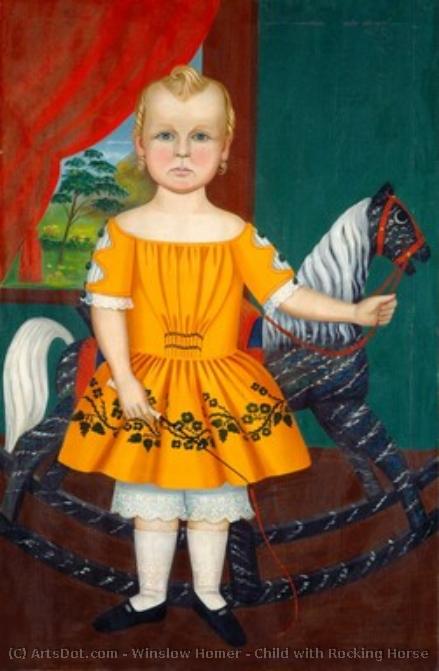
Winslow Homer's “Child with Rocking Horse,” painted in 1850, is more than just a charming depiction of a young girl and her toy; it’s a poignant meditation on childhood, memory, and the enduring spirit of American life. Measuring an impressive 125 x 91 cm, this oil-on-canvas masterpiece immediately draws the viewer into a scene brimming with quiet contemplation. Homer's masterful use of light and color creates a palpable sense of warmth and nostalgia, inviting us to share in the innocent joy of the child’s world.
The Artist’s Unique Vision: A Bostonian Perspective
- Early Influences: Born in 1836 in Boston, Homer's artistic trajectory was profoundly shaped by his early experiences. Unlike many of his contemporaries who sought formal training in Europe, Homer honed his skills through practical observation and a deep connection to the American landscape.
- Harper’s Weekly: His apprenticeship as an illustrator for Harper’s Weekly from the age of twelve instilled in him a remarkable ability to capture detail with precision – a skill directly derived from the demands of print media, where clarity and accuracy were paramount.
- Capturing American Life: Homer's subject matter reflected his immediate surroundings: the bustling streets of Boston, the serene beauty of rural New England, and the lives of ordinary people. This focus on accessible subjects distinguished his work and contributed to its enduring appeal.
Technical Brilliance and Impressionistic Techniques
The painting showcases Homer’s exceptional technical skill and his burgeoning embrace of impressionistic techniques. The loose brushwork, particularly evident in the rendering of the rocking horse and the girl's dress, creates a sense of movement and immediacy. He skillfully employs broken color – applying small strokes of pure pigment side-by-side rather than blending them – to build up tonal values and create a luminous effect. The window in the background isn’t merely a compositional element; it acts as a portal, suggesting an unseen world and adding depth to the scene. Homer's use of oil on canvas allows for rich textures and subtle gradations of color, contributing significantly to the painting's overall beauty.
Symbolism and Emotional Resonance
“Child with Rocking Horse” transcends a simple depiction of childhood play. The rocking horse itself is a potent symbol – representing youthful energy, imagination, and perhaps even a longing for freedom. The girl’s posture, holding the reins, suggests control and agency within her own world. The painting evokes a powerful sense of nostalgia, reminding us of our own cherished memories of innocence and carefree days. Homer's ability to capture such raw emotion through seemingly simple subject matter is a testament to his artistic genius.
A Legacy of American Art
Painted in 1850, “Child with Rocking Horse” represents a pivotal moment in Winslow Homer’s career. It demonstrates his growing confidence as a painter and solidified his commitment to capturing the essence of American life. This work is now recognized as a cornerstone of American art, admired for its technical brilliance, emotional depth, and enduring appeal. A hand-painted reproduction offers an unparalleled opportunity to experience the beauty and power of this iconic image in exquisite detail.