A Tender Moment Captured in Watercolor: Winslow Homer’s “Feeding the Bird”
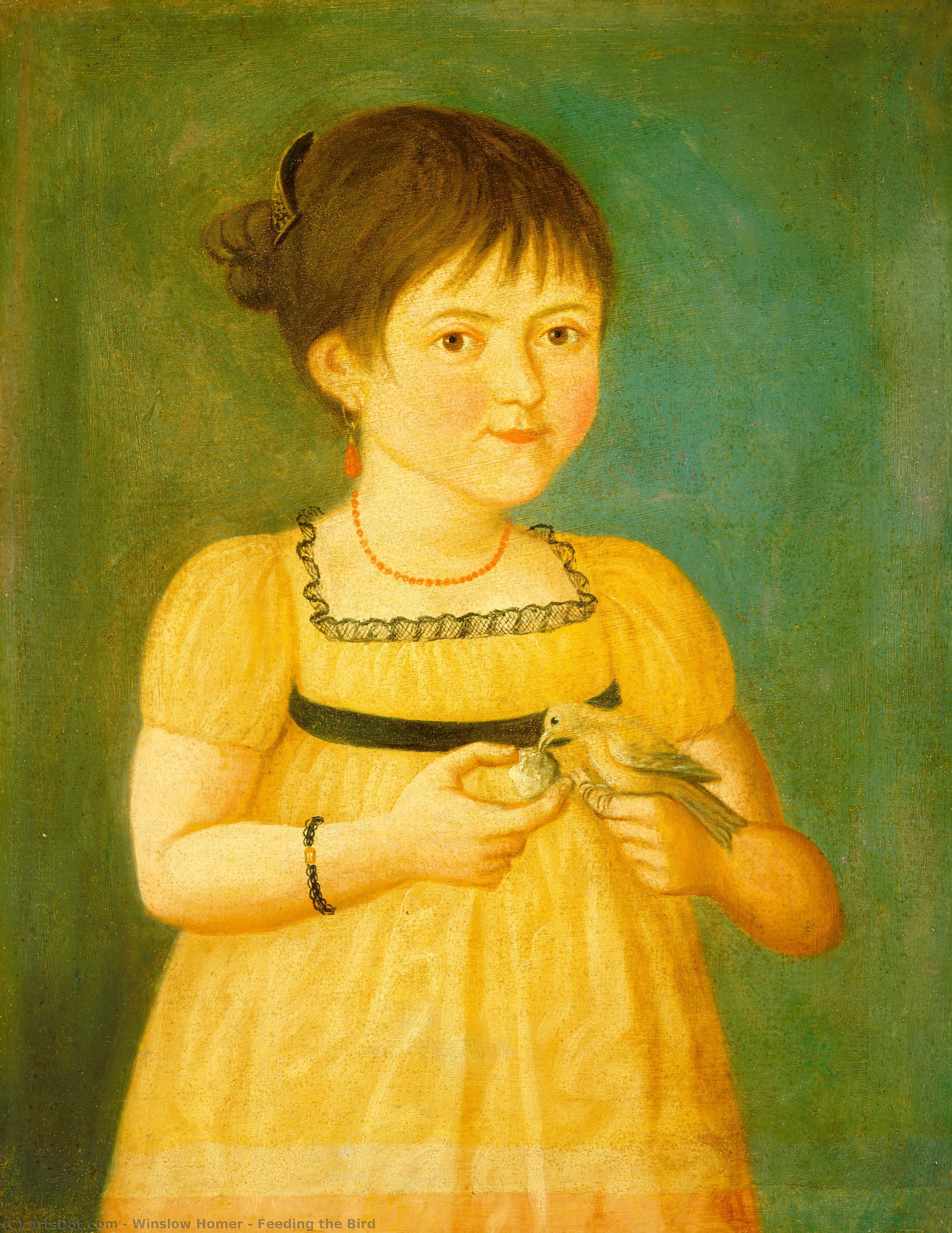
Winslow Homer's "Feeding the Bird," painted circa 1800, isn’t merely a depiction of a pastoral scene; it’s an exquisitely rendered distillation of American idealism and observation—a testament to Homer’s singular approach to artistic expression. Unlike many European artists of his time prioritizing grand narratives and academic precision, Homer honed his craft through practical experience as a commercial illustrator, immersing himself in the rhythms of everyday life and capturing its essence with remarkable accuracy. This formative period instilled within him an unparalleled ability to translate visual perception into compelling artwork.
- Subject Matter: The painting centers on a young girl seated outdoors, patiently offering sustenance to a bird perched delicately upon her outstretched hand. This simple gesture speaks volumes about the artist’s fascination with the natural world and his desire to portray human connection with its creatures—a theme prevalent throughout Homer's oeuvre.
- Style & Technique: Executed in watercolor on canvas, “Feeding the Bird” exemplifies Homer’s signature style – characterized by luminous washes of color and a masterful control over texture. The artist skillfully employs layering techniques to create depth and atmosphere, capturing the subtle nuances of light and shadow that imbue the scene with warmth and tranquility.
Historical Context: Romanticism's Embrace of Nature
Painted during the Romantic era (roughly 1800-1850), “Feeding the Bird” aligns perfectly with the movement’s core tenets. Romantic artists rejected Neoclassical formalism, favoring instead emotional intensity and imaginative vision—qualities vividly reflected in Homer's portrayal of unspoiled landscapes and idealized human figures. The painting embodies the Romantic preoccupation with sublime beauty – a belief that nature possessed an inherent spiritual power capable of elevating the human soul. It reflects a broader cultural shift away from Enlightenment rationalism toward valuing intuition and emotion as pathways to understanding the universe.
Symbolism: Innocence, Vulnerability, and Harmony
Beyond its aesthetic qualities, “Feeding the Bird” is laden with symbolic significance. The girl represents purity and innocence—a symbol frequently utilized by Romantic artists to convey moral virtue and spiritual aspiration. Her gentle offering to the bird symbolizes compassion and respect for all living beings, highlighting the importance of harmonious coexistence between humanity and nature. Furthermore, the bird itself embodies freedom and resilience – qualities admired during a period marked by social upheaval and political reform.
Emotional Impact: A Balm for the Soul
The painting’s understated elegance contributes to its profound emotional impact. Homer's masterful use of watercolor creates an atmosphere of serene contemplation, inviting viewers to pause and appreciate the beauty of a fleeting moment—a reminder that even the smallest gestures can foster connection and inspire wonder. “Feeding the Bird” transcends mere representation; it communicates a feeling – a quiet reverence for the natural world and a celebration of human kindness. It’s a piece that lingers in the memory, offering solace and reminding us of the enduring power of simple beauty.