Green Apples by Winslow Homer: A Study in Rural Tranquility
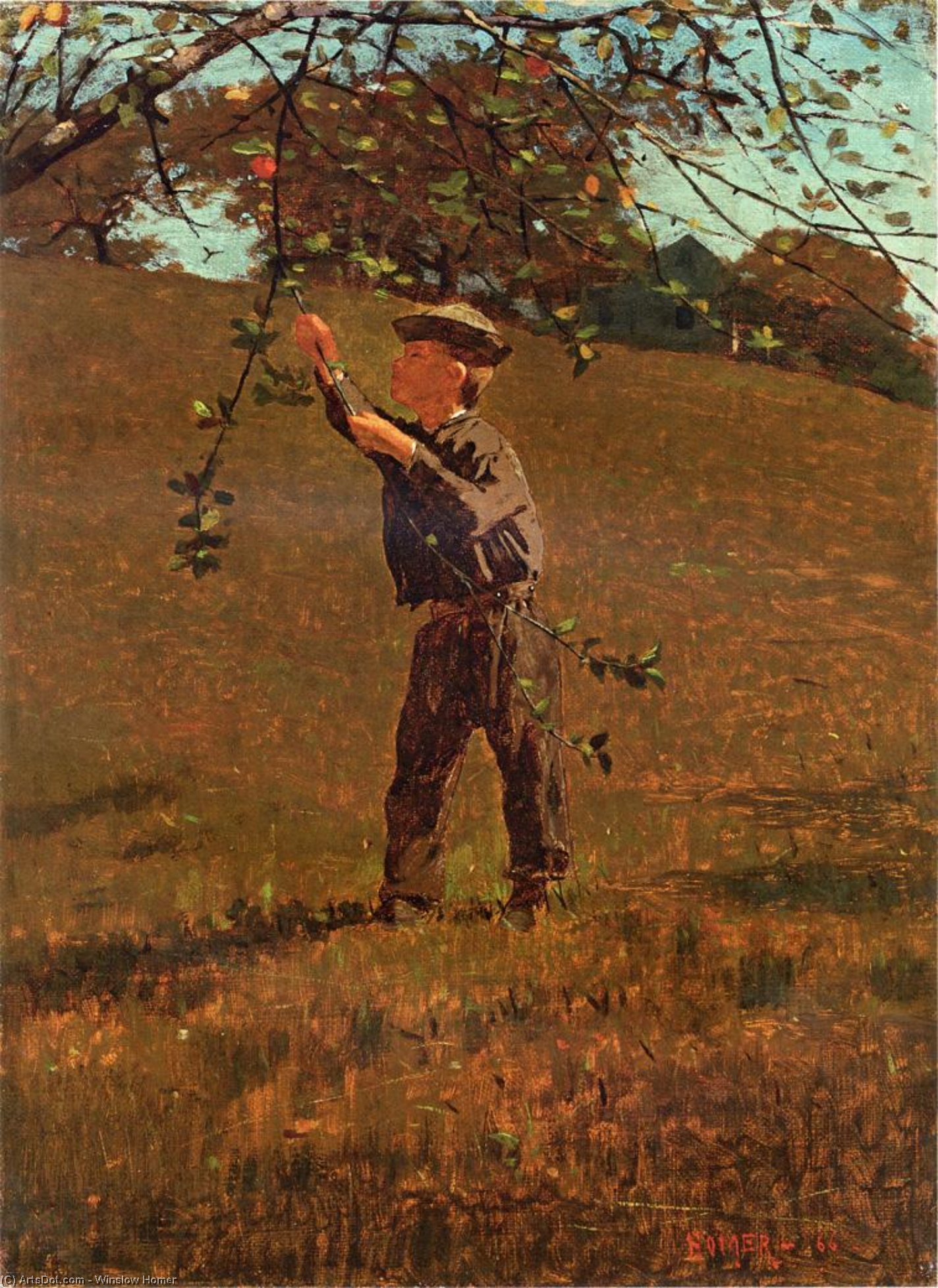
Winslow Homer’s “Green Apples,” painted in 1866, transcends mere depiction; it embodies the spirit of American pastoralism during a pivotal moment in history – immediately following the Civil War. This oil on canvas masterpiece isn't simply a landscape scene; it’s a carefully crafted meditation on simplicity, observation, and the enduring beauty found within the natural world.
- Artist & Context: Winslow Homer (1836-1910) emerged as one of America’s foremost painters, rejecting European artistic conventions to forge his own distinctive path rooted in American experience. His early illustrations for Harper's Weekly honed his unparalleled ability to capture detail and emotion with remarkable precision – skills that would define his prolific career.
- Style & Technique: Homer’s signature style is characterized by bold brushstrokes and vibrant colors, achieved through a masterful understanding of tonal gradation. The painting utilizes a pyramidal composition, drawing the viewer's eye upwards towards the distant hillside, creating depth and enhancing the sense of space. Notice the deliberate layering of paint—a technique that lends texture and luminosity to the scene.
- Subject Matter & Symbolism: At its core, “Green Apples” portrays a solitary man diligently picking apples from a tree against a backdrop of lush grass. The apple itself carries significant symbolic weight – representing fertility, abundance, and the promise of renewal—themes particularly resonant in the aftermath of the Civil War’s devastation. Homer's choice to depict this commonplace activity elevates it into something profound.
- Emotional Impact: The painting exudes a palpable tranquility. Homer captures not just what he sees but also how he *feels*, conveying a sense of quiet contemplation and connection with nature. The muted palette—dominated by earthy greens and browns—contributes to this mood, inviting the viewer into a space of serenity.
For those seeking inspiration or considering acquiring a stunning reproduction of “Green Apples,” WahooArt.com offers exceptional quality prints crafted from archival materials. Explore the artwork’s legacy at WahooArt.com and delve deeper into Homer's artistic vision by visiting Musei Civici di Pavia, Italy or researching his biography on Wikipedia.
Discover similar artworks by Harvey Dinnerstein (Harvey Dinnerstein) and Eric André Wilson (Eric André Wilson), whose works share Homer’s commitment to capturing contemporary narratives with sensitivity and artistry. Explore their creations on WahooArt.com.
You can also find information about Winslow Homer's work on Wikimedia Commons: File:Winslow Homer - Green apples (1866).jpg

.jpg)