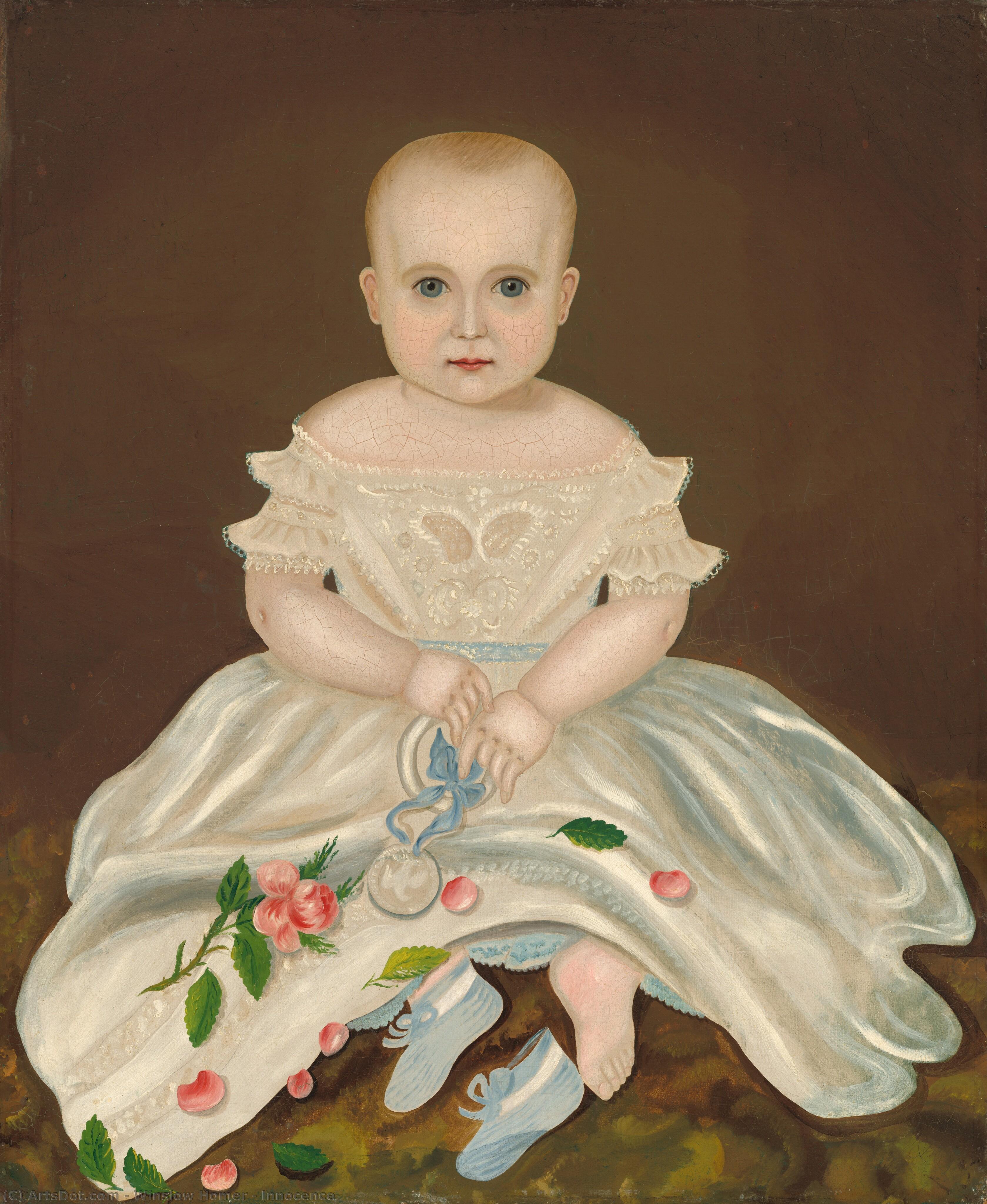
Winslow Homer’s serene depiction of childhood innocence captures the quiet beauty of rural America in 1830. This evocative oil painting showcases Homer's masterful watercolor technique and portrays a young girl holding shoes, inviting viewers to experience this timeless masterpiece.
A Moment of Quiet Contemplation: Exploring Winslow Homer’s “Innocence”
The painting "Innocence," executed by Winslow Homer in 1830, transcends mere depiction; it embodies a profound distillation of American idealism during the Romantic era. Measuring approximately 82 x 69 cm, this oil on canvas captures a deceptively simple tableau – a young child seated serenely upon the earth, clutching a pair of shoes. Yet within this unassuming composition lies layers of meaning and artistic brilliance that continue to resonate with viewers today.
- Subject Matter: Homer’s focus isn't on grand narratives or dramatic action but rather on capturing an intimate glimpse into rural American life. The child represents purity, vulnerability, and the untainted beauty of childhood—themes central to Romantic sensibilities which prioritized emotion and imagination over rational calculation.
- Style: Homer’s style is distinctly Impressionistic, albeit predating the formal movement's establishment. He eschews meticulous detail in favor of capturing fleeting impressions of light and color, prioritizing atmosphere and emotional resonance. The soft brushstrokes contribute to a hazy luminescence that envelops the scene.
Technique: Homer’s Watercolor Roots Inform His Oil Painting Approach
Before dedicating himself primarily to oil painting, Homer honed his skills in watercolor, mastering tonal gradations and capturing subtle nuances of color with remarkable precision. This formative experience profoundly influenced his later work, particularly evident in "Innocence." The artist skillfully blends watercolor techniques into the oil medium, creating a textured surface that mimics the luminosity characteristic of watercolor—a deliberate choice designed to heighten the painting’s emotional impact. Homer's meticulous layering ensures that every shade contributes to the overall mood and conveys a sense of quiet contemplation.
Historical Context: Romantic Idealism Amidst Industrial Change
Painted during a period marked by rapid industrial expansion and societal upheaval, “Innocence” stands as a poignant counterpoint to the anxieties of the era. The Romantic movement championed individualism, emotion, and an appreciation for nature—values that Homer powerfully embodies in his depiction of rural America. This painting speaks to a yearning for simpler times, for connection with the natural world, and for safeguarding innocence against the encroaching forces of modernization.
Symbolism: Shoes as Embodiments of Potentiality
The inclusion of shoes is particularly noteworthy. They symbolize not just footwear but also aspiration, readiness for adventure, and the promise of a future filled with possibilities—a subtle suggestion that despite appearances, this child possesses an inner strength and resilience. Homer’s masterful use of color – predominantly muted greens and browns – reinforces the painting's contemplative mood and underscores its connection to the pastoral landscape.
Emotional Impact: A Balm for the Soul
Ultimately, “Innocence” achieves its enduring appeal through its ability to evoke feelings of serenity, nostalgia, and compassion. Homer’s understated artistry invites viewers into a moment of quiet reflection—a reminder that beauty can be found in the simplest of gestures and that preserving childlike innocence remains an imperative for fostering human connection and appreciating the wonders of the natural world. It's a piece designed to linger in the mind long after viewing, prompting contemplation on themes of purity, vulnerability, and the enduring spirit of America.