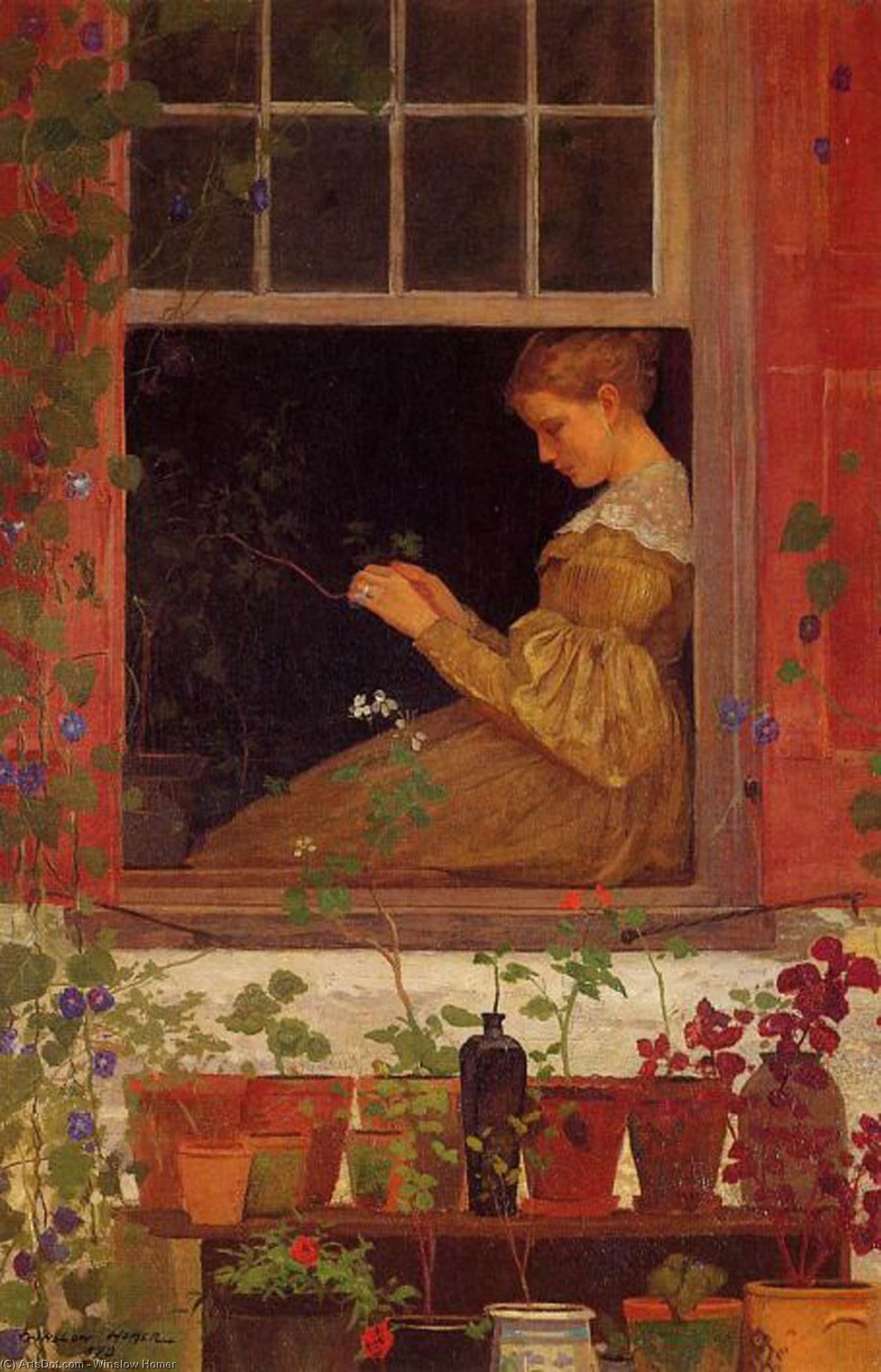
Morning Glories: A Study in Light and Tranquility
Winslow Homer’s
Morning Glories (1873) stands as a quintessential example of Luminism—an artistic movement that prioritized capturing the ethereal effects of natural light rather than detailed representation. Homer’s masterful brushstrokes convey not just what he saw but how it felt: a moment of serene contemplation amidst the beauty of the garden. The painting depicts a woman seated by her window, gazing outwards at blossoms bursting with color – primarily lavender and white – creating an impression of delicate stillness.
- Composition & Technique Homer employed a loose, expressive technique characterized by broad strokes and blended colors, prioritizing atmospheric perspective to heighten the sense of depth. The woman’s posture exudes calmness, mirroring the gentle illumination that washes over the scene.
- Symbolism: Light as Emotion The pervasive light is more than just visual; it embodies Homer's intention to evoke feelings of peace and tranquility. Luminist painters believed that light could convey spiritual truths—a concept deeply rooted in Victorian sensibilities.
- Setting & Context Painted during Homer’s prolific period, Morning Glories reflects the broader artistic trends of its time—a reaction against academic realism and a fascination with capturing fleeting moments of natural beauty.
Winslow Homer’s Luminist Vision
The influence of luminism is palpable in Homer's approach to rendering light, mirroring artists like Frederic Church and Asher Durand who sought to depict landscapes as imbued with spiritual significance. Homer skillfully utilized glazing techniques—applying thin layers of translucent paint over underlying colors—to achieve luminous effects that capture the subtle nuances of sunlight filtering through foliage. This method allowed him to convey not just color but also texture and atmosphere, creating a palpable sense of warmth and luminosity.
- Influence on Impressionism Homer’s Luminist style foreshadowed many developments in Impressionism, demonstrating an early embrace of capturing sensory experience rather than precise visual accuracy.
- Detailed Observation Homer's meticulous observation of the natural world—evident in his depiction of flower petals and window frames—underscores the importance of realism within a broader artistic framework.
Exploring Similar Works by Winslow Homer
Beyond
Morning Glories, Homer’s oeuvre encompasses a remarkable range of subjects—marine landscapes, portraits, and scenes from American life—each imbued with his distinctive artistic vision. Consider
The Red School House (65 x 50 cm, Oil On Canvas) for its depiction of rural America and Homer’s masterful use of color to convey emotion. Similarly,
Gloucester Harbor (Nelson-Atkins Museum of Art, Kansas City, United States, Realism, Oil On Canvas) exemplifies Homer’s ability to capture the grandeur and drama of the sea.
Reproductions & Artistic Inspiration
ArtsDot offers exceptional reproductions of Winslow Homer's masterpieces—allowing you to experience the beauty and tranquility of
Morning Glories in stunning detail. Discover more inspiring artworks at
Discovering the Artworks of Helensburgh Council Chamber and elevate your interior design with timeless elegance.