A Moment of Coastal Serenity: Winslow Homer's "Palm Trees, Florida"
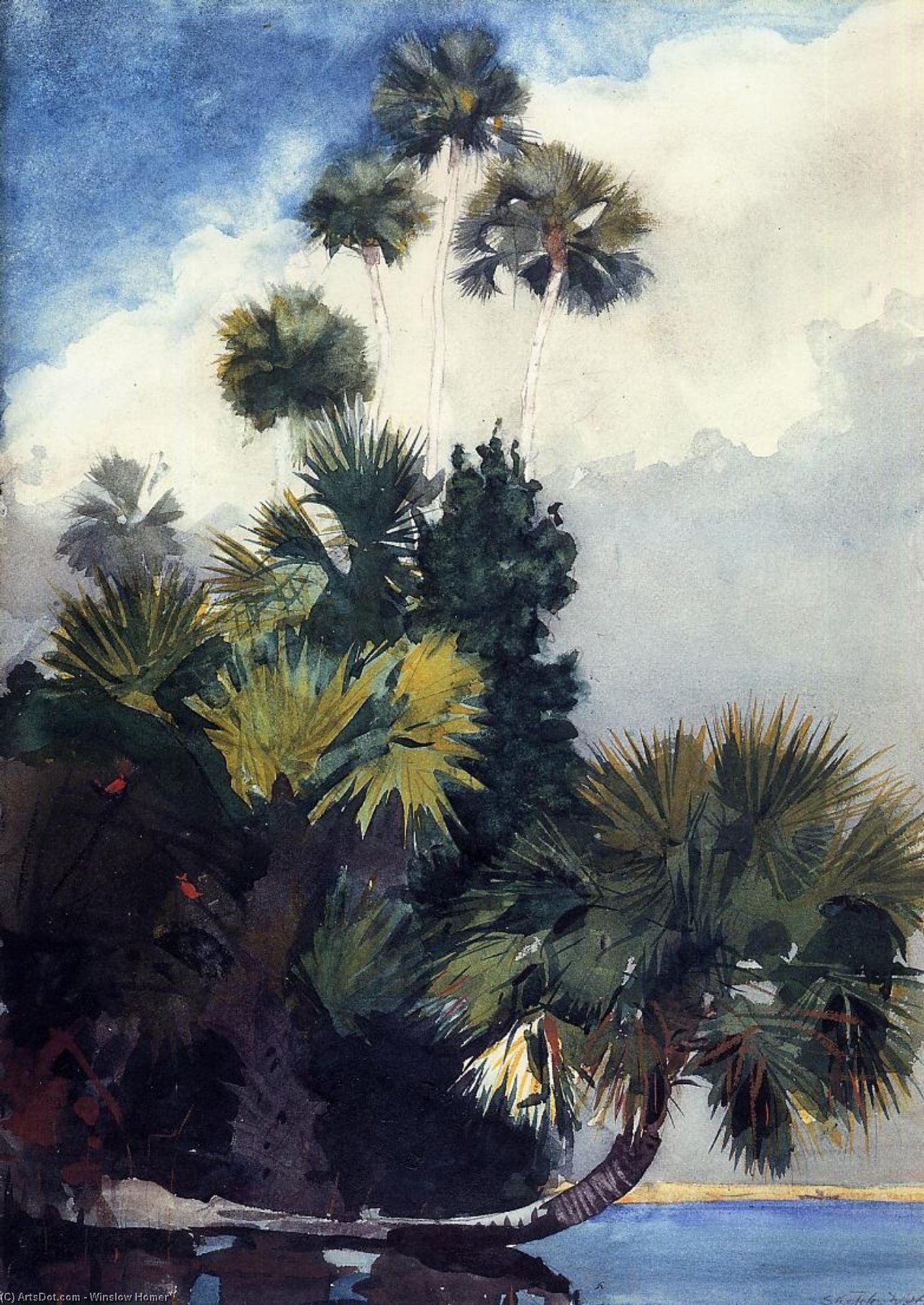
Winslow Homer’s “Palm Trees, Florida,” painted in 1904, isn’t merely a depiction of a beach scene; it’s a distillation of the American spirit – a quiet celebration of nature and resilience rendered with remarkable clarity. This watercolor captures a fleeting moment along Florida's coastline, a place that was rapidly transforming yet retained an undeniable sense of wild beauty. Homer, largely self-taught and deeply connected to his native New England, eschewed the grand narratives favored by many of his European contemporaries, instead focusing on the tangible realities of American life – here, the swaying palms, the gentle lapping of waves, and the presence of hardworking boats.
- Subject Matter: The painting’s subject is deceptively simple: a beach scene dominated by palm trees. However, Homer elevates this commonplace view through meticulous observation and skillful execution.
- Style & Technique: Homer's mastery lies in his watercolor technique – a hallmark of his early career. He employs loose washes and layered strokes to create a sense of atmospheric perspective, blurring the horizon line and suggesting the vastness of the ocean. The use of color is restrained yet evocative, with blues and greens dominating the palette to convey the cool tranquility of the water and the vibrant hues of the palm fronds.
The Painter's American Vision
Born in Boston in 1836, Homer’s artistic journey was profoundly shaped by his early experiences as an illustrator for Harper’s Weekly. This formative period instilled within him a keen eye for detail and a pragmatic approach to composition – skills honed through capturing the bustling scenes of urban life and the quiet dignity of rural landscapes. Unlike many artists who sought inspiration in European traditions, Homer found it in America itself, documenting its evolving character with an honesty and directness that resonated deeply with his audience. The painting reflects this commitment to portraying authentic American experiences, devoid of romanticized or idealized representations.
The inclusion of the boats adds another layer of narrative – they represent industry, commerce, and perhaps a hint of human endeavor against the backdrop of nature’s grandeur. They are not merely props; they contribute to the painting's overall sense of place and time.
Symbolism and Emotional Resonance
"Palm Trees, Florida" transcends a simple landscape depiction, offering a subtle meditation on themes of escape, tranquility, and the enduring power of nature. The palm trees themselves have long been associated with paradise and leisure – a visual shorthand for relaxation and respite from the pressures of daily life. The serene blue water further reinforces this sense of peace, inviting the viewer to step into the scene and experience its calming effect. Homer’s ability to capture such emotion through watercolor is remarkable; it speaks to a deep understanding of human psychology and our innate desire for connection with the natural world.
Historical Context & ArtsDot Reproduction
Painted in 1904, “Palm Trees, Florida” represents a pivotal moment in Homer’s career. It exemplifies his mature style – characterized by its clarity, precision, and emotional depth. A hand-painted reproduction from ArtsDot.com offers an unparalleled opportunity to own a faithful replica of this iconic work. Our skilled artisans meticulously recreate Homer's technique, ensuring that every nuance of color and brushstroke is faithfully reproduced. This isn’t just a print; it’s a timeless masterpiece brought to life, perfect for adorning any space and evoking the enduring beauty of Winslow Homer’s vision.