Winslow Homer: A Quiet Triumph of Watercolor
Winslow Homer, born in Boston in 1836, wasn’t sculpted by the traditional European art academies that shaped so many of his contemporaries. Instead, he emerged from a distinctly American experience, one rooted in practicality and observation. His journey began not with grand historical canvases, but as a commercial illustrator at the tender age of twelve for Harper's Weekly. This early apprenticeship was formative, honing an exceptional ability to capture scenes with clarity and detail – skills that would become hallmarks of his mature work. He wasn’t learning perspective in Paris; he was learning to *see* America, its people, and its unfolding story. The bustling streets of Boston, the quiet dignity of rural New England life, these were his first subjects, rendered with a precision born of necessity for the demands of print media. This foundation allowed him to transition into painting, initiating a lifelong pursuit of capturing the essence of the natural world and human experience alike.
The Garden Gate: A Study in Serenity
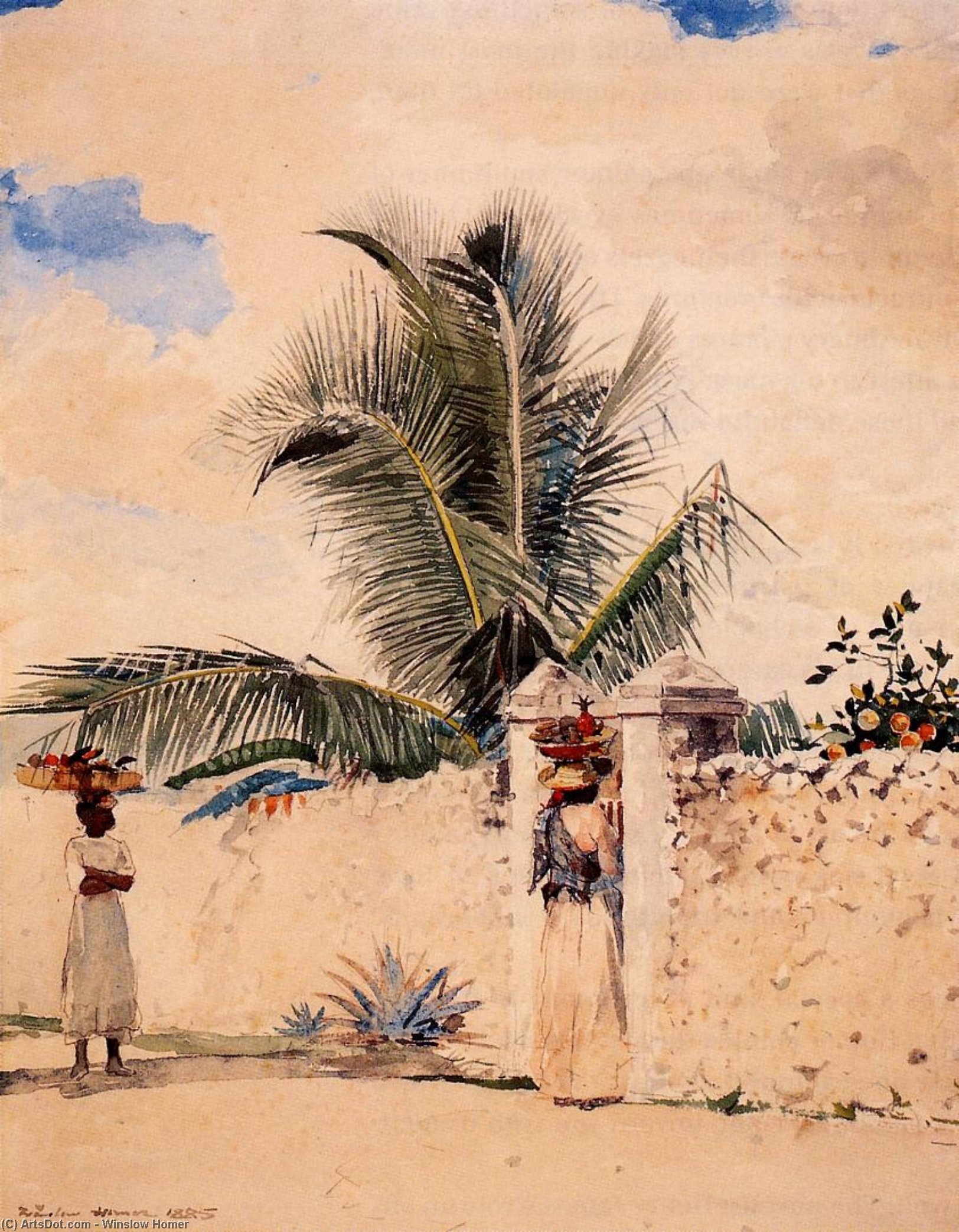
Winslow Homer’s watercolor “The Garden Gate,” completed in 1885, exemplifies his signature style—a deceptively simple depiction brimming with subtle observation and emotional resonance. Executed with meticulous brushwork and a masterful use of tonal gradation, the painting transports viewers to a tranquil corner of Nassau, Bahamas. Homer skillfully employs loose washes of color to convey the diffused light filtering through foliage, creating an atmosphere of peaceful contemplation. The composition centers around two women standing near a wall adorned with a fence, their postures conveying both repose and engagement with their surroundings. Details like the hats worn by the figures and the handbag placed nearby contribute to the painting’s realism while simultaneously hinting at the everyday lives of ordinary people.
Technique and Impressionistic Vision
Homer's technique is characterized by his deliberate rejection of academic conventions, favoring instead a direct engagement with nature. He eschewed elaborate glazing techniques favored by many of his peers, opting for layering thin washes of pigment to build up texture and luminosity. This approach aligns perfectly with the burgeoning Impressionist movement, which championed capturing fleeting moments of light and color—a pursuit Homer wholeheartedly embraced. The resulting watercolor possesses an ethereal quality, mirroring the hazy atmosphere of tropical landscapes and conveying a profound sense of stillness. Homer’s masterful control over tonal values is particularly noteworthy, subtly shaping the mood and enhancing the visual impact of the scene.
Symbolism Within Everyday Life
Beyond its aesthetic beauty, “The Garden Gate” speaks to broader themes of domesticity and contemplation. The garden itself represents a refuge from the pressures of urban life—a space for quiet reflection and connection with nature. Homer’s inclusion of umbrellas underscores the importance of protection against inclement weather, symbolizing resilience and adaptability in the face of adversity. Furthermore, the positioning of the women suggests an unspoken dialogue between femininity and observation—a subtle commentary on the role of women in shaping perceptions of their environment. The painting's understated elegance invites viewers to consider the profound beauty found within seemingly unremarkable moments.
A Legacy Enduring Through Reproduction
Today, “The Garden Gate” resides at the Worcester Art Museum, serving as a testament to Homer’s enduring legacy in American art. High-quality reproductions offer an opportunity to experience this masterpiece firsthand—to appreciate its luminous watercolor technique and contemplate its evocative symbolism. As part of ArtsDot's extensive collection, you can bring Homer’s vision into your home or office, fostering inspiration and enriching your appreciation for the transformative power of art. Explore more of Winslow Homer’s captivating works at
Rum Cay and
Louis Haghe. For further insight into Homer's artistic journey, visit
Wikipedia: Winslow Homer.