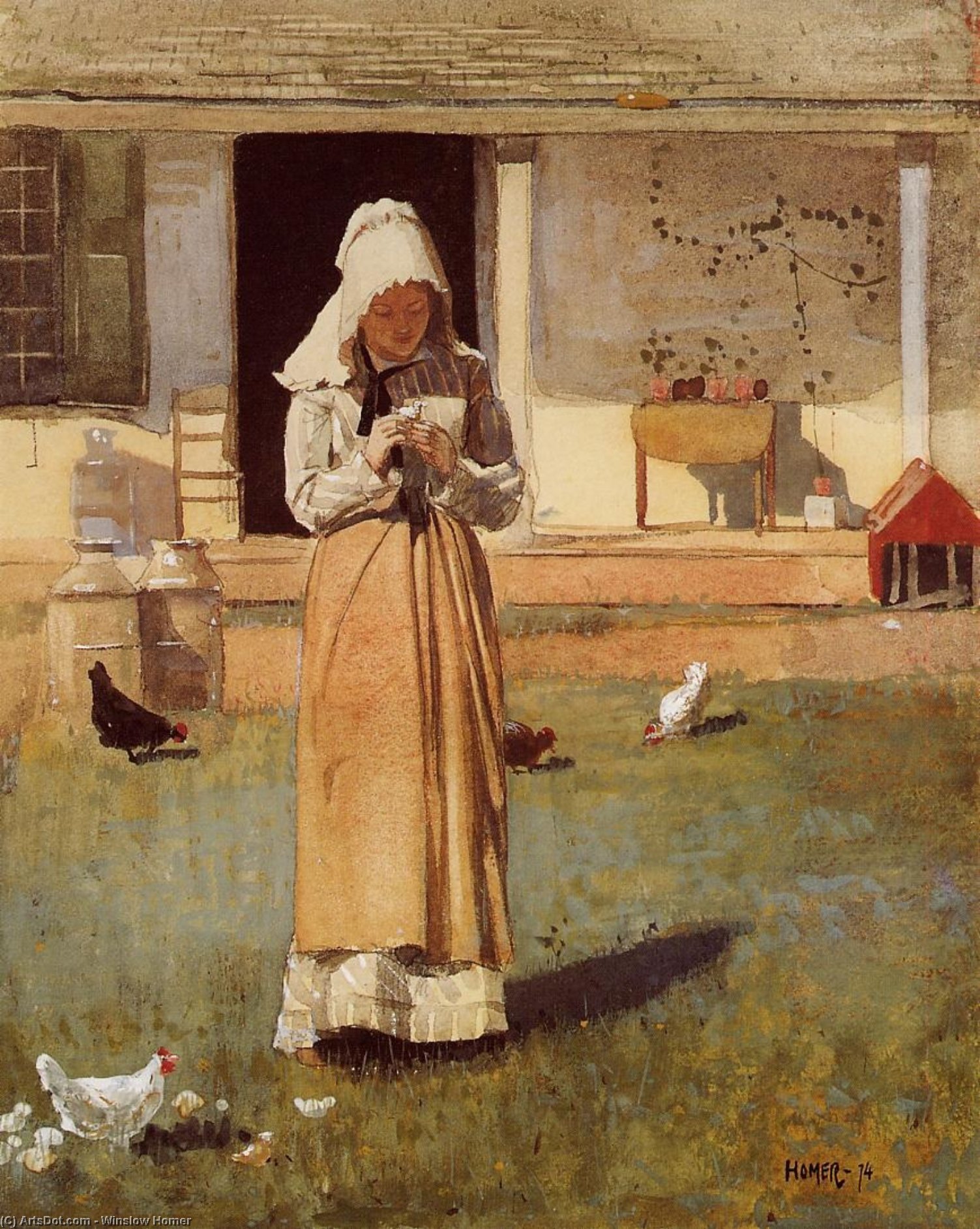
Discover Winslow Homer's 'The Sick Chicken' (1874) – a serene watercolor capturing rural life. Explore this iconic American masterpiece, its artistic style, and its place in art history.
The Sick Chicken: A Study in Rural Tranquility
Winslow Homer’s “The Sick Chicken,” completed in 1874, isn't merely a depiction of livestock; it’s a distillation of American pastoralism at its most poignant. Painted during Homer’s prolific period exploring the rhythms of rural life—a time when he was acutely attuned to capturing both the beauty and hardship inherent in the natural world—this watercolor transcends simple observation. It speaks volumes about vulnerability, compassion, and the quiet dignity found within everyday existence.
Artist's Style and Technique: Homer's Watercolor Mastery
Winslow Homer distinguished himself through a singular artistic approach characterized by masterful watercolor technique. Unlike many of his contemporaries who favored grand historical narratives or idealized landscapes, Homer focused on capturing the tangible realities of American life—the farms, the animals, the faces of ordinary people. His use of watercolor wasn’t simply a medium; it was an ethos. He embraced its luminous qualities and its ability to convey subtle textures and tonal variations with remarkable precision. In “The Sick Chicken,” Homer achieves this beautifully. Notice how he renders the woman's clothing—a muted palette of browns and creams—with delicate washes that suggest softness and warmth. Similarly, the feathers of the chickens are rendered with meticulous detail, capturing their individual contours and subtle shifts in color. This painstaking attention to texture contributes significantly to the painting’s overall atmosphere of serenity.
A Moment Frozen in Time: Contextualizing Homer's Vision
The painting emerged from a pivotal moment in American history—the Reconstruction Era following the Civil War. While Homer himself wasn’t overtly political, his work reflects the broader anxieties and aspirations of the time. The scene depicts a woman tending to a sick chicken, a gesture laden with symbolism. Chickens were commonplace on farms across America, representing sustenance and labor. The woman's care—her gentle touch as she examines the bird—suggests empathy and responsibility. Homer’s depiction isn’t celebratory; it’s contemplative. He invites us to consider the fragility of life and the importance of compassion within a landscape defined by both beauty and toil.
Finding Beauty in Simplicity: Homer's Legacy
“The Sick Chicken” exemplifies Homer’s enduring legacy as one of America’s greatest realist painters. Unlike Impressionists who sought to capture fleeting moments of light and color, Homer prioritized conveying emotional truth through careful observation and skillful execution. His ability to distill complex ideas into simple visual forms—to communicate profound feelings with understated elegance—continues to inspire artists today. It's a testament to the power of art to illuminate the human condition and to celebrate the beauty found in the commonplace.
Own a Reproduction: Discover Stunning Reproductions