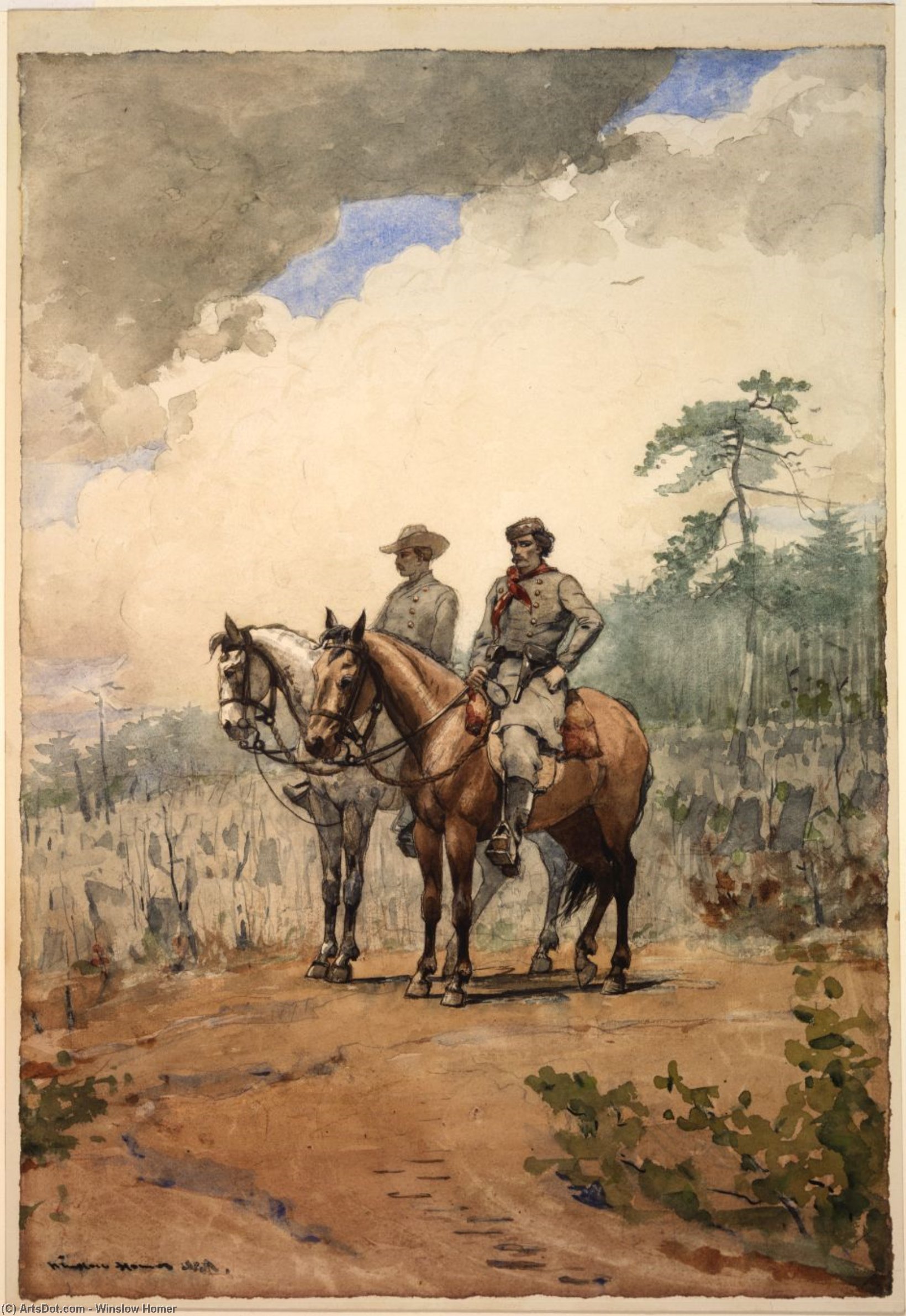
A Glimpse into a Bygone Era: Winslow Homer’s “Two Scouts”
“Two Scouts,” painted in 1887 by the celebrated American artist Winslow Homer, offers a captivating window into a romanticized vision of frontier life and military reconnaissance. This watercolor painting is more than just a depiction of two men on horseback; it’s an evocative narrative steeped in historical suggestion and quiet contemplation.
Subject & Composition
The artwork centers around two figures, presumably scouts or soldiers, astride their horses within a rural landscape. Homer masterfully uses the composition to draw the viewer's eye directly to these central characters. The surrounding foliage and gently rolling hills provide essential context without overwhelming the scene. There’s a deliberate sense of stillness; the men aren’t engaged in overt action but rather appear poised, observant – *waiting*. This creates an atmosphere of anticipation and subtle tension.
Style & Technique
“Two Scouts” exemplifies Homer's evolving style—a blend of realism infused with impressionistic sensibilities. While grounded in accurate representation, the painting isn’t rigidly detailed. Instead, Homer employs loose, flowing lines characteristic of watercolor techniques to suggest form and texture. The use of *watercolor wash* is prominent, creating soft gradations of tone and a diffused lighting effect that evokes an overcast day or shaded environment. He skillfully incorporates *dry brush* techniques for defining details in the horses’ musculature and the men's attire. This layering creates depth and atmosphere, lending the scene a palpable sense of realism despite its slightly flattened perspective.
Historical Context & Symbolism
Painted during a period of significant American expansion and ongoing tensions with Native American tribes, “Two Scouts” invites speculation about its specific historical reference. While not explicitly depicting a particular event, the attire of the figures—their hats, jackets, and the style of their horses—suggests a timeframe potentially linked to the aftermath of the Civil War or the continued frontier conflicts of the late 19th century. The scouts themselves symbolize exploration, vigilance, and the complex relationship between settlers and the land.
The painting doesn’t glorify conflict but rather presents a more nuanced portrayal of life on the American frontier.
Emotional Impact & Interpretation
“Two Scouts” evokes a powerful sense of nostalgia and quiet melancholy. The subdued color palette, combined with the stillness of the scene, creates an atmosphere of contemplation. There’s a feeling of solitude and perhaps even vulnerability in the figures' posture.
The painting isn’t dramatic or overtly emotional; instead, it relies on subtle cues to convey a deeper sense of introspection. It invites viewers to reflect on themes of duty, resilience, and the passage of time.
For Collectors & Designers
This artwork would be an exceptional addition to any collection focused on American Realism or 19th-century landscape painting. Its muted tones and evocative subject matter make it particularly well-suited for interiors seeking a touch of historical charm and understated elegance. A high-quality reproduction of “Two Scouts” could serve as a focal point in a study, library, or living room, adding depth and character to the space.
- Style: American Realism with Impressionistic influences
- Medium: Watercolor on paper
- Period: Late 19th Century (1887)
- Themes: Frontier Life, Military History, American Landscape, Contemplation