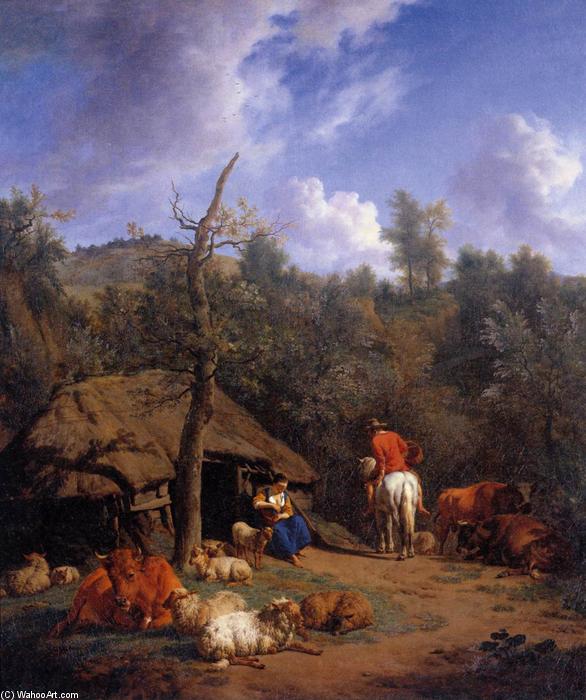
A Pastoral Reverie: The Hut by Adriaen van de Velde
Adriaen van de Velde’s “The Hut,” painted in 1671, isn't merely a depiction of a rustic dwelling; it’s a carefully constructed invitation into the heart of Dutch Golden Age tranquility. This painting transcends simple landscape representation, offering instead a profound meditation on rural life, human connection, and the harmonious relationship between man and nature – themes deeply resonant with the era’s burgeoning interest in Arcadia, the idealized pastoral realm. Van de Velde masterfully employs the Italianate landscape style, drawing heavily from the works of artists like Karel Dujardin and Jan Asselijn, yet imbuing it with a distinctly Dutch sensibility, characterized by its meticulous detail and subtle atmospheric effects.
The scene unfolds within a verdant valley, bathed in the soft, diffused light characteristic of the Baroque period. A modest hut, constructed from roughly hewn timber and topped with a thatched roof, anchors the composition. It’s not grand or imposing, but rather exudes an air of quiet dignity and understated charm. Around this central element, Van de Velde orchestrates a carefully arranged tableau of farm animals – cows grazing peacefully, sheep huddled together for warmth, and goats playfully leaping through the undergrowth. These aren't simply livestock; they are integral to the narrative, embodying the rhythms of rural life and contributing to the painting’s overall sense of abundance and contentment.
The Figures: Echoes of Daily Life
Two figures punctuate the scene, adding a layer of human presence to the idyllic landscape. A man stands near the entrance of the hut, his posture suggesting an air of contemplation or perhaps overseeing his domain. Beside him sits another individual, absorbed in reading or writing – a subtle detail that hints at intellectual pursuits amidst the simplicity of rural existence. These figures aren’t idealized heroes; they are ordinary people engaged in everyday activities, grounding the scene in a relatable reality. Their inclusion elevates “The Hut” beyond mere picturesque scenery, transforming it into a poignant portrayal of human interaction within a thriving natural setting.
Van de Velde's technique is remarkably precise and detailed. He utilizes a restrained palette dominated by earthy tones – ochres, browns, greens, and muted blues – to create a sense of depth and realism. The artist’s mastery of light is particularly noteworthy; the soft, diffused illumination casts long shadows and highlights textures with exquisite subtlety. The brushstrokes are carefully controlled, contributing to the painting's overall smoothness and polished appearance. Notice the meticulous rendering of the thatched roof, the individual strands of hay, and the varied patterns of the foliage – each element meticulously observed and rendered with remarkable skill.
Historical Context & Artistic Influences
“The Hut” was created during a period of immense artistic flourishing in the Netherlands—the Dutch Golden Age. This era witnessed an unprecedented surge in wealth, trade, and cultural innovation, fostering a vibrant artistic environment. Van de Velde’s work reflects this spirit of creativity and experimentation, drawing inspiration from both Italianate landscape painting and the established traditions of Dutch art. His brother, Willem van de Velde the Younger, was also a prominent painter, specializing in maritime scenes, while Esaias van de Velde focused on landscapes and genre paintings. The influence of these artists, along with that of Jan Wynants, who mentored Adriaen, shaped his artistic development.
Furthermore, the painting’s subject matter—the idealized pastoral landscape—resonates with the broader philosophical currents of the time. The concept of Arcadia, a utopian realm of shepherds and poets, had long captivated European intellectuals and artists. Van de Velde's “The Hut” offers a visual embodiment of this ideal, presenting a vision of rural tranquility and harmony that served as a counterpoint to the complexities and anxieties of urban life.
Collecting & Appreciating the Work
Reproductions of "The Hut" by Adriaen van de Velde capture the essence of this remarkable painting. Whether displayed in a formal gallery or incorporated into a cozy interior space, this artwork evokes a sense of serenity and timeless beauty. The meticulous detail and evocative atmosphere invite viewers to pause, reflect, and appreciate the enduring appeal of the Dutch Golden Age landscape tradition. Consider framing your reproduction within a classic wooden frame to further enhance its connection to the painting’s original aesthetic.