A Symphony of Botanical Grace and Baroque Splendor
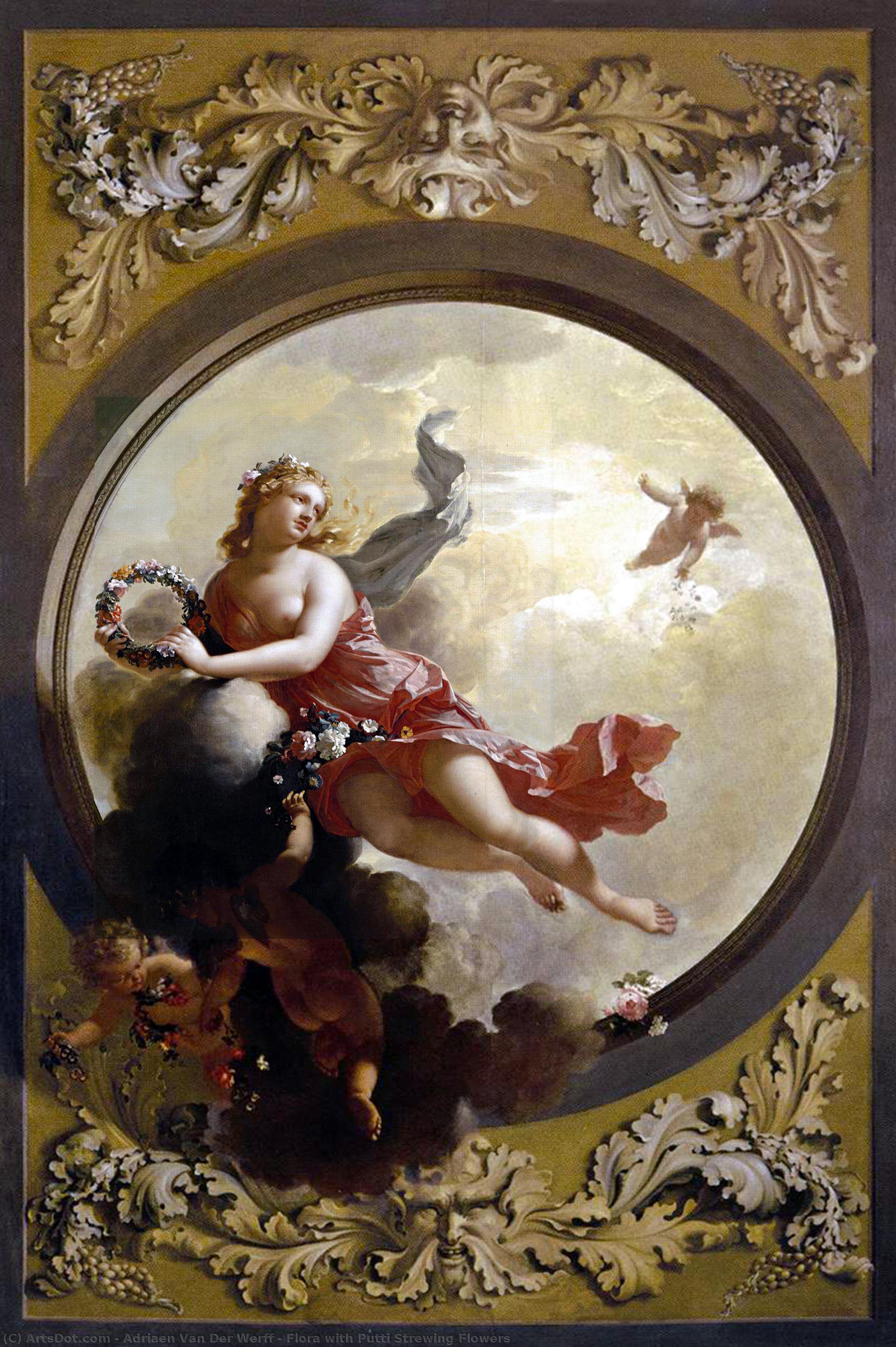
In the grand tapestry of the Dutch Golden Age, few works capture the ethereal intersection of myth and nature as exquisitely as Adriaen van der Werff’s “Flora with Putti Strewing Flowers.” Completed in 1696, this monumental oil on canvas serves as a breathtaking window into the heart of the Baroque era, offering much more than a mere depiction of a goddess. It is a meticulously orchestrated tableau where the boundaries between the earthly and the divine seem to dissolve. As the Roman goddess of flowers and springtime fertility, Flora presides over a scene of joyous abundance, her serene countenance framed by the playful movements of angelic putti who scatter blossoms like falling stars across the composition. For the discerning collector or interior designer, this piece offers an unparalleled sense of movement and life, acting as a focal point that breathes vitality into any sophisticated space.
The technical mastery displayed in this work is nothing short of extraordinary, reflecting Van der Werff’s legendary commitment to precision. Having honed his skills under the influence of Eglon van der Neer, the artist possessed an unrivaled ability to render the tactile reality of textures—the silken sheen of drapery, the delicate velvet of flower petals, and the luminous softness of porcelain-like skin. Through a masterful application of chiaroscuro, Van der Werff employs dramatic contrasts between light and shadow to sculpt his figures, lending them a palpable three-dimensional volume. The light does not merely illuminate the scene; it seems to emanate from within, particularly through the architectural element of the central round window, which offers a glimpse of a celestial vault. This interplay of light creates a theatrical depth that draws the viewer into the very heart of the garden.
Symbolism and the Eternal Cycle of Renewal
Beyond its surface beauty, “Flora with Putti Strewing Flowers” is steeped in profound allegorical meaning. The painting serves as a visual metaphor for rebirth and the cyclical nature of life. By invoking the imagery of Flora, Van der Werff connects his audience to the classical myth of Persephone’s return from the underworld, signaling the triumph of spring over the dormancy of winter. Every petal strewn by the putti carries the weight of this seasonal renewal, making the artwork a celebration of hope and fertility. This layer of intellectual depth ensures that the painting remains a subject of contemplation long after the initial visual impact has settled.
For those seeking to integrate fine art into a curated environment, this masterpiece provides a rich palette of emotional and aesthetic possibilities. The vibrant shades of pink, lush greens, and sun-drenched yellows create a naturalistic warmth that complements both classical and contemporary interiors. Whether placed in a grand salon or a quiet study, a high-quality reproduction of this work brings with it the prestige of the Dutch masters and an atmosphere of timeless elegance. It is not merely a decoration; it is an invitation to experience the sublime grace of a bygone era, captured forever in a moment of eternal springtime.