A Window into Faith and Artistic Genius: Albrecht Dürer’s “Marriage of the Virgin”
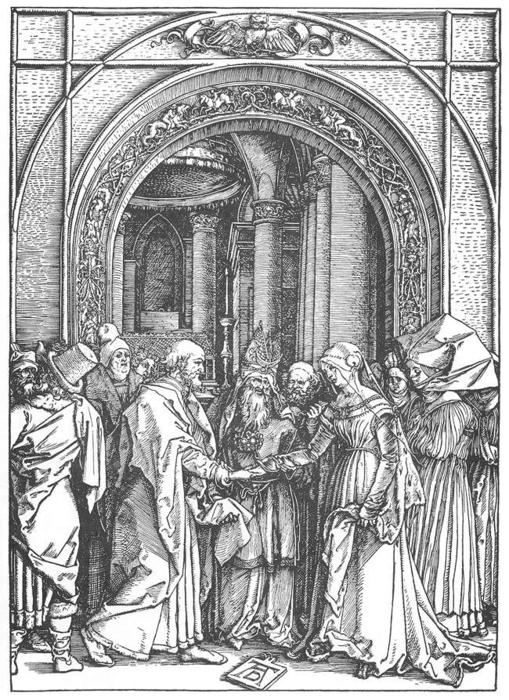
Albrecht Dürer's "Life of the Virgin: 6. Marriage of the Virgin," executed in 1504, stands as a testament to the artistic fervor of the German Renaissance—a period defined by humanist ideals and an unparalleled devotion to religious iconography. More than just a depiction of biblical scripture, this woodcut print embodies Dürer’s meticulous craftsmanship and profound understanding of visual storytelling.
Composition and Architectural Framing
The artwork immediately captivates with its symmetrical arrangement centered around a monumental Gothic archway. This architectural element isn't merely decorative; it serves as a deliberate frame, directing the viewer’s gaze towards the central group of figures—Mary, Joseph, and attendants—engaged in the solemn ceremony of their betrothal. The careful positioning of these individuals reinforces the hierarchical structure characteristic of Renaissance art, conveying reverence for sacred tradition.
Technical Mastery: Hatching and Cross-Hatching – A Symphony of Tone
Dürer’s genius lies primarily in his masterful application of woodcut technique—a process demanding extraordinary precision. He achieved remarkable tonal variation through hatching and crosshatching, applying numerous intersecting lines to create subtle gradations of light and shadow. This painstaking method imbues the print with a palpable sense of depth and realism, capturing the textures of drapery, flesh tones, and architectural surfaces with breathtaking accuracy.
Symbolism: Reverence and Divine Grace
Beyond its technical brilliance, “Marriage of the Virgin” resonates deeply with symbolic meaning. The arched gateway symbolizes heaven’s embrace, representing God's blessing upon Mary and Joseph’s union—a pivotal moment in Christian theology. The expressions on the faces of the figures convey solemn piety and humility, reflecting the spiritual significance of the depicted event. Furthermore, Dürer’s meticulous attention to detail—from the folds of Mary’s robe to the ornate decorations adorning the archway—underscores the importance of visual representation as a conduit for conveying religious belief.
A Legacy Enduring Through Time
"Life of the Virgin: 6. Marriage of the Virgin" continues to inspire artists and collectors alike, securing its place among the most celebrated artworks of the Renaissance. Its enduring appeal stems from Dürer’s ability to transform biblical narrative into a visually stunning masterpiece—a testament to the transformative power of art and the unwavering pursuit of beauty and truth.