The Raw Bloom of Emotion: Alexej von Jawlensky’s *Gladioli*
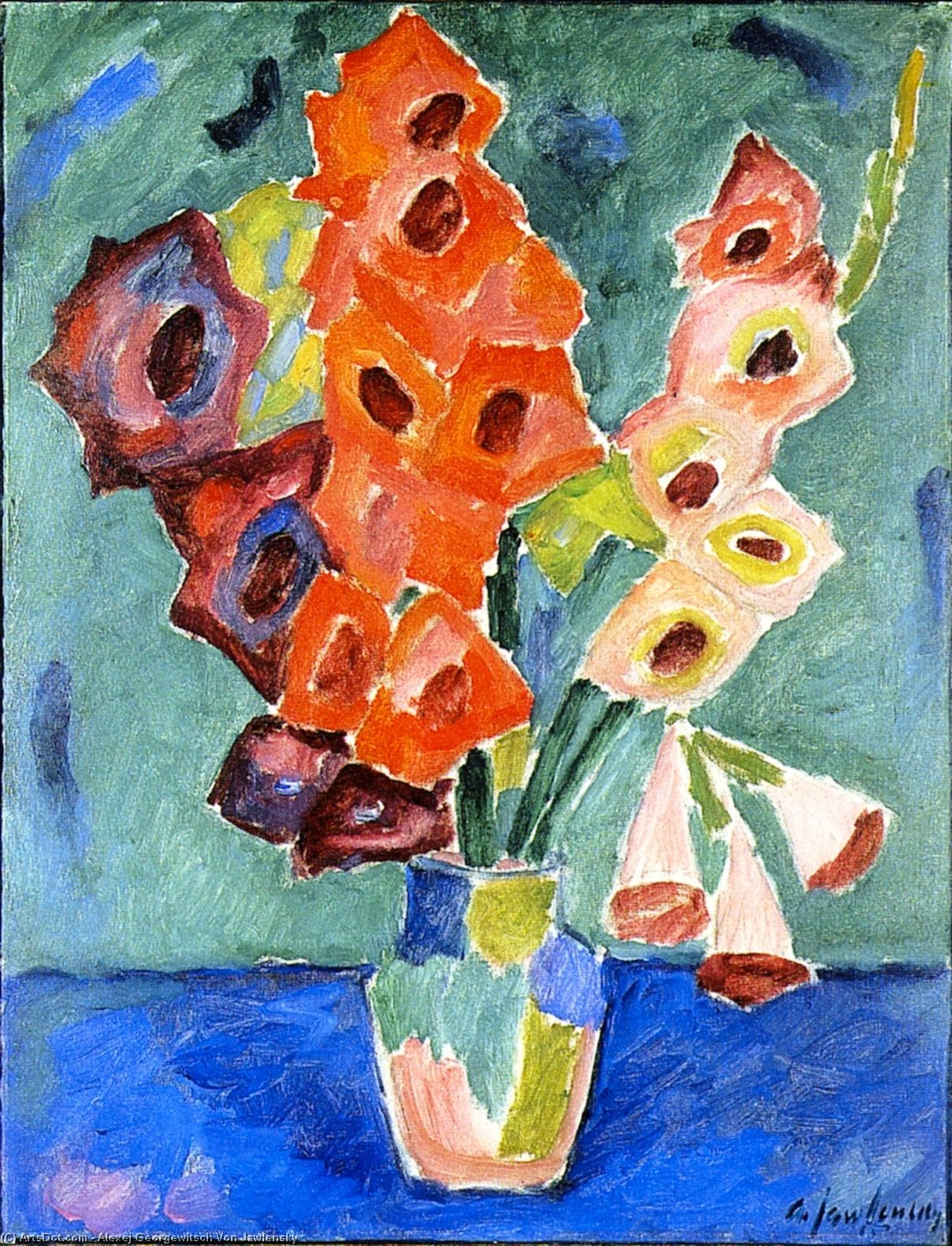
Alexej von Jawlensky's 1915 painting, *Gladioli*, isn't merely a depiction of flowers; it’s a visceral expression of the artist’s deeply felt response to the world. Created during a pivotal moment in the development of Expressionism, this fresco embodies a raw intensity rarely seen in earlier art movements. The work immediately captivates with its bold color palette – a vibrant clash of deep blues and fiery reds – that speaks not of serene beauty but of something far more turbulent. Jawlensky’s masterful use of thick, impasto brushstrokes adds to this sense of unrest, creating a dynamic surface that seems to pulse with energy. The painting's power lies in its ability to evoke a profound emotional response, inviting the viewer into the heart of the artist’s experience.
Expressionism and the Search for Inner Truth
To fully appreciate *Gladioli*, one must understand the context within which it was created. The early 20th century witnessed a growing dissatisfaction with academic art traditions, fueled by anxieties surrounding rapid industrialization and social upheaval. Expressionism emerged as a direct response to this climate, rejecting objective representation in favor of subjective experience. Artists like Jawlensky sought to capture not what they *saw*, but what they *felt* – the raw emotions, fears, and spiritual yearnings that lay beneath the surface of reality. Jawlensky’s association with groups such as Der Blaue Reiter and Die Blaue Vier further solidified his commitment to this expressive approach, aligning him with a cohort of artists pushing the boundaries of artistic convention.
A Symphony of Color and Form
The composition itself is deceptively simple. A vase overflowing with crimson gladioli dominates the foreground, their petals rendered with an almost frantic energy. The blue background isn’t a passive backdrop; it actively engages with the reds, creating a visual tension that mirrors the emotional intensity of the subject matter. Jawlensky's technique demonstrates a remarkable control over color and texture. He employs short, broken brushstrokes to build up layers of pigment, resulting in a surface that is both luminous and deeply textured. The flowers themselves are not idealized; they possess an almost unsettling realism, reflecting the artist’s desire to confront viewers with the uncomfortable truths of human experience. The painting's size, though unknown, would have been substantial, allowing for this immersive visual experience.
Symbolism and Spiritual Resonance
Beyond its purely aesthetic qualities, *Gladioli* is rich in symbolic meaning. The gladiolus itself has a complex history, often associated with remembrance and mourning – a poignant connection considering the painting’s creation during a period of immense global instability. The vibrant red color, frequently linked to passion, sacrifice, and even danger, amplifies this sense of emotional intensity. Some scholars suggest that Jawlensky was exploring themes of mortality and spiritual struggle through this work, reflecting his own personal anxieties and beliefs. The painting’s enduring power lies in its ability to tap into these universal human concerns.
Bringing *Gladioli* Home
A handmade oil painting reproduction of Alexej von Jawlensky's *Gladioli* offers a remarkable opportunity to bring this iconic artwork into your own space. Each reproduction is meticulously crafted by skilled artisans, ensuring that the vibrant colors and expressive brushstrokes are faithfully replicated. Whether displayed in a grand salon or a cozy study, this piece will undoubtedly serve as a focal point, sparking conversation and inspiring contemplation. Explore our collection of high-quality reproductions at https://ArtsDot.com to own a timeless masterpiece.