Alexej von Jawlensky
Torzhok
Russia
1864
1919
1941
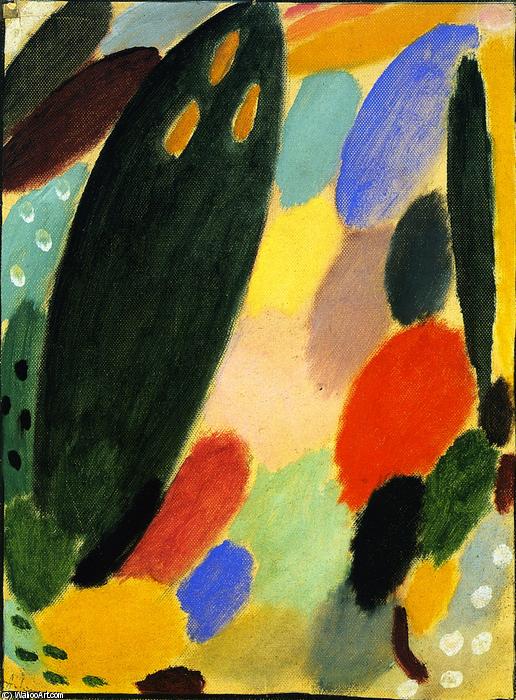
A captivating abstract artwork by Jawlensky showcasing a cactus plant surrounded by colorful circles and hues. It embodies the artist's emotive style.
Expressionism
William Tell Overture
Explore Alexej von Jawlensky's vibrant Expressionist masterpiece – 'William Tell Overture'. This colorful abstract painting captures emotion through bold
Descubre a Alexej von Jawlensky (1864-1941), maestro del Expresionismo. Explora sus icónicas 'Cabezas Místicas', paletas de color audaces y su rol clave en Der Blaue Reiter. ¡Arte ruso en Alemania!
A Symphony of Color and Emotion: Exploring Alexej von Jawlensky’s “Desert Cactus”
The painting "Desert Cactus," created by Alexej von Jawlensky in 1919, stands as a cornerstone of Expressionist art—a testament to the artist's profound engagement with inner turmoil and his masterful manipulation of color and texture. More than just a depiction of flora, it’s an embodiment of psychological landscape, reflecting the anxieties and spiritual quest characteristic of the era following World War I. Jawlensky, deeply influenced by Nietzschean philosophy and seeking refuge from societal pressures, channeled his emotional intensity into canvases that prioritized feeling over precise representation.
Style and Technique: Embracing Intuition Over Observation
Jawlensky’s stylistic approach eschewed academic conventions entirely. He rejected the illusionistic realism favored by Impressionists and Post-Impressionists, opting instead for a technique rooted in spontaneous gesture and emotional expression. Thick impasto—a layering of paint applied with considerable force—dominates the surface of “Desert Cactus,” creating palpable ridges and valleys that convey a sense of dynamism and unrestrained energy. The artist employed a palette dominated by earthy hues – ochre yellows, burnt siennas, muted reds – punctuated by vibrant splashes of turquoise and magenta. These colors aren’t merely decorative; they serve as conduits for conveying mood and psychological state—the harshness of the desert juxtaposed with flashes of otherworldly beauty.
Historical Context: The Shadow of War and Nietzschean Influence
“Desert Cactus” emerged during a period marked by profound disillusionment following the devastation of World War I. Artists like Jawlensky wrestled with existential questions about faith, morality, and the human condition. Nietzsche’s proclamation that “God is dead” resonated deeply within the artistic community, prompting a rejection of traditional religious dogma and an embrace of individualism. This intellectual climate fueled Expressionist artists' desire to depict subjective experience—to capture not what they *saw*, but what they *felt*. The painting reflects this preoccupation with inner turmoil, mirroring the artist’s own struggles for spiritual solace amidst societal upheaval.
Symbolism: Cactus as Metaphor for Resilience and Spiritual Struggle
The cactus itself functions as a potent symbol within the artwork. Traditionally representing endurance, resilience, and survival in arid environments, it embodies Jawlensky's preoccupation with overcoming adversity—both physical and psychological. The prickly spines of the cactus aren’t merely anatomical details; they symbolize defensive barriers erected against external pressures and internal anxieties. Simultaneously, the vibrant red blossoms offer a glimmer of hope—a visual representation of spiritual aspiration and the possibility of transcendence amidst darkness. Their luminosity contrasts sharply with the muted tones of the surrounding desert landscape, highlighting the importance of inner illumination in confronting existential challenges.
Emotional Impact: A Window into the Artist’s Soul
Ultimately, “Desert Cactus” succeeds in conveying a profound emotional resonance. The textured surface invites contemplation and encourages viewers to immerse themselves in the artist's psychological state—a blend of melancholy, determination, and yearning for beauty. It’s not an artwork designed to elicit passive admiration; rather, it demands engagement—provoking introspection about themes of suffering, perseverance, and the transformative power of artistic expression. Viewing this piece is akin to peering into a microcosm of Jawlensky's inner world, offering a glimpse into his quest for spiritual truth amidst the turbulent currents of the early twentieth century.