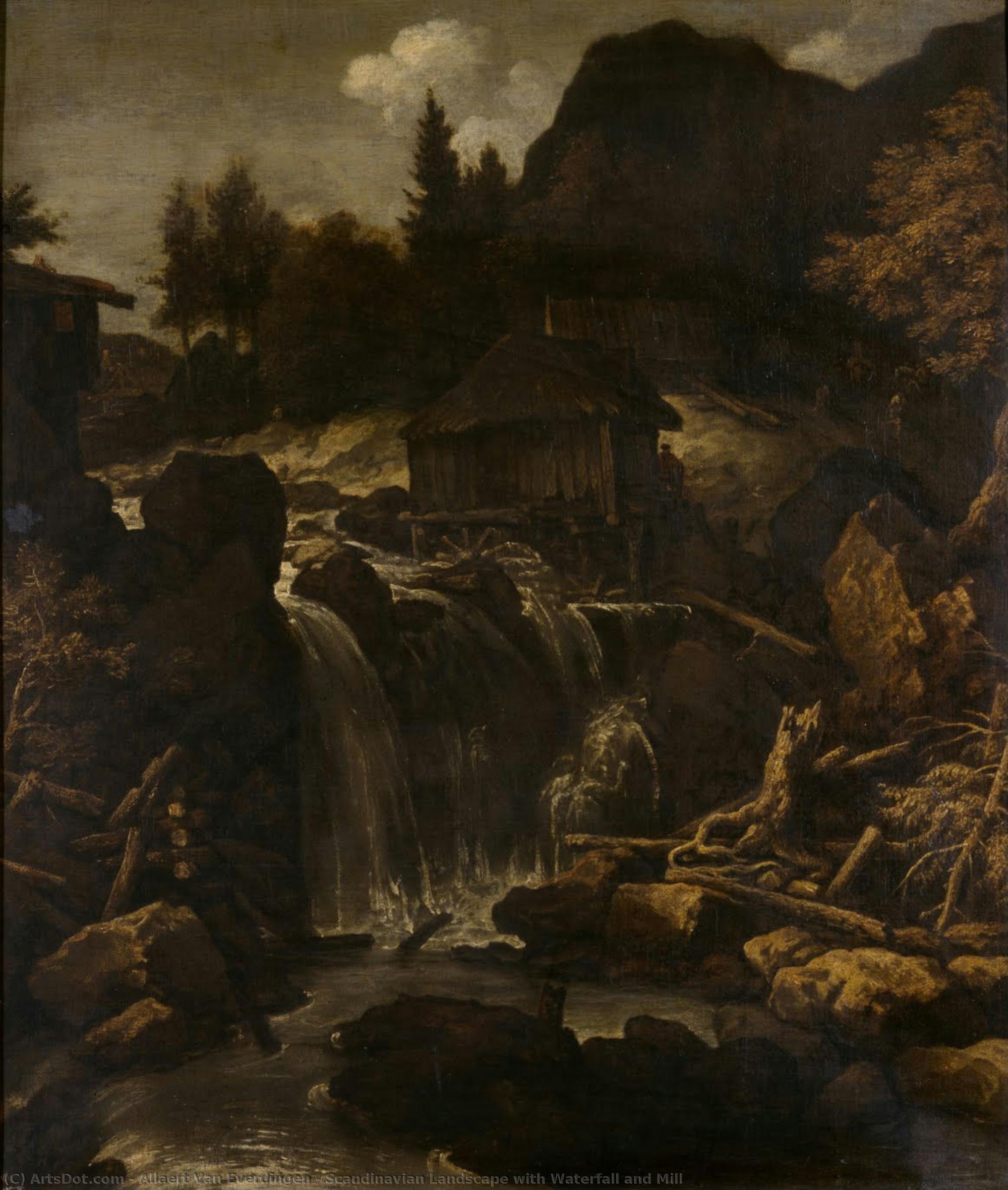
A serene Scandinavian landscape featuring a powerful waterfall and rustic mill by Dutch Golden Age master Allaert van Everdingen invites you to bring the breathtaking beauty of nature into your private collection.
Descubre los paisajes dramáticos holandeses de Allaert van Everdingen! Conocido por cascadas noruegas y escenas costeras, fue un precursor de las técnicas de sombra de Rembrandt y una figura clave del paisaje barroco temprano.
Descubra la magnífica colección de Fondazione Cariplo en Milán, con obras maestras desde el Imperio Romano hasta el Futurismo del siglo XX que ofrecen un viaje imperdible por el rico patrimonio artístico de Lombardía.
This is an autograph work and also bears a partially illegible date. The subject is one typically depicted by this Dutch artist, who set off for Scandinavia while so many of his countrymen were heading south in search of inspiration, above all to Italy. This was no mere coincidence, as his Dutch clients, the Trip and Geer families, owned foundries producing cannons in Sweden and Norway. After returning to his native land around 1644, he continued to paint scenes of Nordic landscapes with pine forests and waterfalls, as exemplified by landscapes in the Fitzwilliam Museum, Cambridge, and the Hermitage, Saint Petersburg. The line of the horizon is placed so high as to give the painting an unusual structure, as though threatening to crush the spectator, as Meijer notes in his description for the catalogue of the Cariplo Collection. Van Everdingen was actually influenced by the work of his teacher Roelant Savery, who visited the Tyrol and painted its waterfalls (see for example the alpine landscape in the Kunsthistorisches Museum, Vienna). Further echoes of his painting can be found in the views of a landscape with waterfall by Jacob Ruisdael and Jan van Kessel, respectively in the Fitzwilliam Museum, Cambridge, and the Rijksmuseum, Amsterdam.