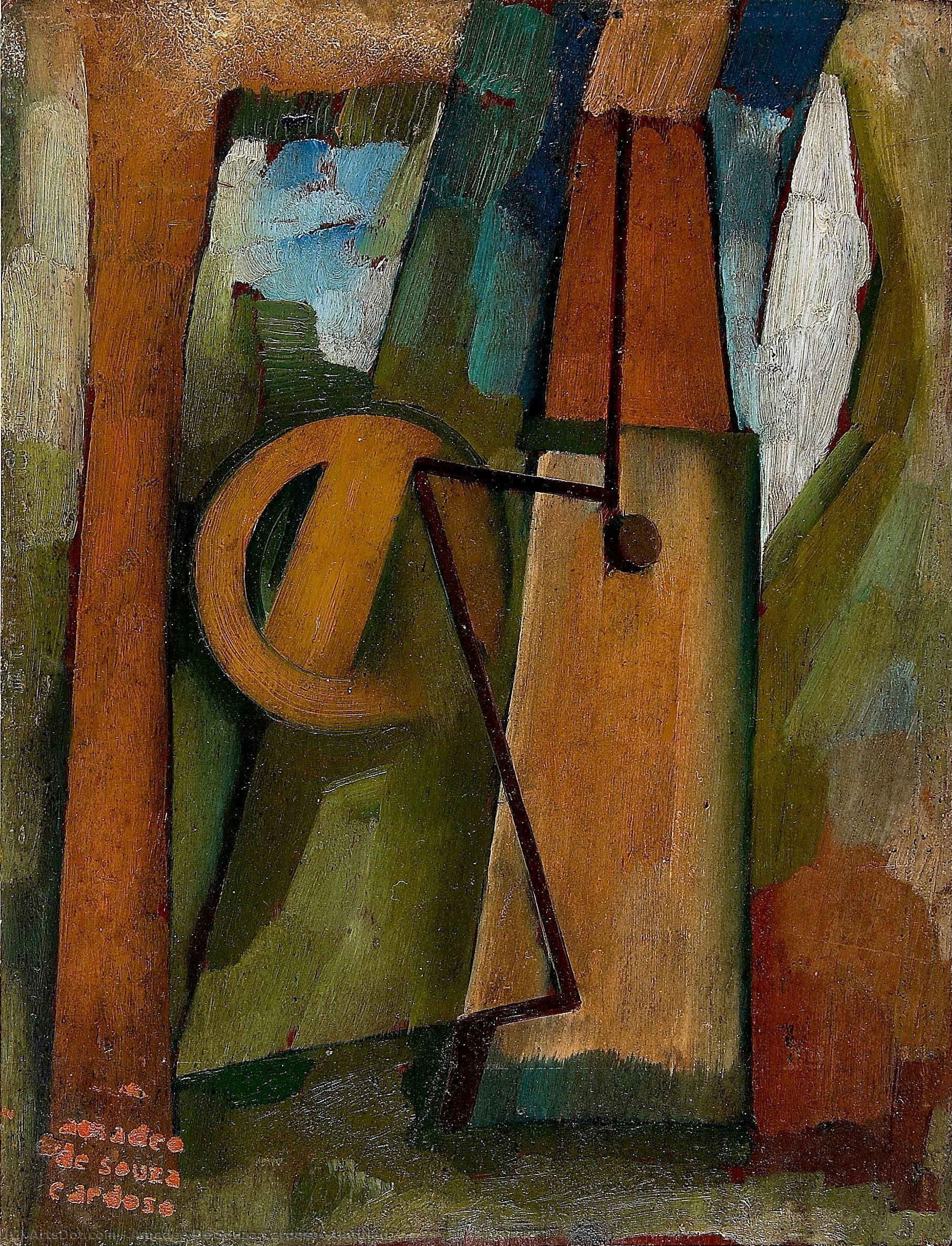
A Chromatic Echo of Modernism: Souza-Cardoso’s “Untitled” (1914)
This vibrant artwork, tentatively titled "Untitled," offers a captivating glimpse into the radical artistic explorations of Amadeo de Souza-Cardoso, a pivotal figure in the nascent Portuguese Modernist movement. Painted in 1914, during a period of intense experimentation and cross-cultural exchange within the European avant-garde, this piece embodies the spirit of its time – a rejection of traditional representational forms in favor of bold color, dynamic composition, and an embrace of the subconscious. Measuring 35 x 26 cm, it’s a remarkably intimate work that belies the monumental impact Souza-Cardoso would eventually have on the art world.
- Subject Matter: The central focus is a strikingly designed bicycle, rendered with an almost surreal quality. Its unusual form – reminiscent of a horse's head or perhaps a fantastical machine – immediately draws the eye and invites interpretation. This deliberate departure from realistic depiction aligns perfectly with Souza-Cardoso’s interest in exploring symbolic imagery and psychological states through his art.
- Composition & Technique: The painting showcases a confident, almost frenetic brushstroke, characteristic of Souza-Cardoso's approach during this period. He employs a rich palette of colors – blues, reds, yellows, and greens – applied with a loose, expressive manner that prioritizes emotional impact over meticulous detail. The inclusion of wooden structures and various decorative elements—bowls, vases—adds to the overall sense of an invented, dreamlike space.
The Parisian Influence & Souza-Cardoso’s Artistic Journey
Souza-Cardoso's artistic trajectory is inextricably linked to his time in Paris, a city that served as a crucible for modern art. Initially trained in architecture, he was drawn to the expressive potential of caricature before immersing himself fully in the revolutionary currents sweeping through the Parisian avant-garde. His encounters with artists like Modigliani and Brancusi profoundly shaped his style, influencing his use of flattened forms, bold colors, and symbolic imagery. This "Untitled" painting can be seen as a direct result of these influences – a synthesis of Portuguese sensibilities with the radical experimentation taking place in Paris.
Born in 1887 in Manhelices, Portugal, Souza-Cardoso’s life was tragically cut short at the age of 31 due to complications from influenza. Despite his brief career, he left an indelible mark on Portuguese art, paving the way for future generations of modernist artists.
Symbolism and Emotional Resonance
Beyond its formal qualities, “Untitled” resonates with a potent sense of mystery and unease. The bicycle itself can be interpreted as a symbol of movement, progress, or perhaps even alienation – themes frequently explored by modern artists grappling with the rapid changes of the early 20th century. The carefully arranged objects—the bowls and vases—suggest a deliberate staging, inviting the viewer to contemplate their own relationship to these elements within the composition. Souza-Cardoso was deeply interested in exploring the subconscious mind through his art, and this painting undoubtedly reflects that interest.
A Collector’s Piece: Reproduction & Value
This hand-painted reproduction captures the essence of Souza-Cardoso's artistic vision with exceptional fidelity. Executed on high-quality canvas using traditional techniques, it offers a stunning representation of this significant work. Its dimensions (35 x 26 cm) make it ideal for a variety of interior design settings – from small apartments to larger galleries. As a piece by one of the pioneers of Portuguese Modernism, this artwork holds considerable historical and artistic value, making it an exceptional addition to any discerning collection.